

House Approval of Protect Taiwan Act Raises Financial Stakes for Beijing, Analysts Say


.
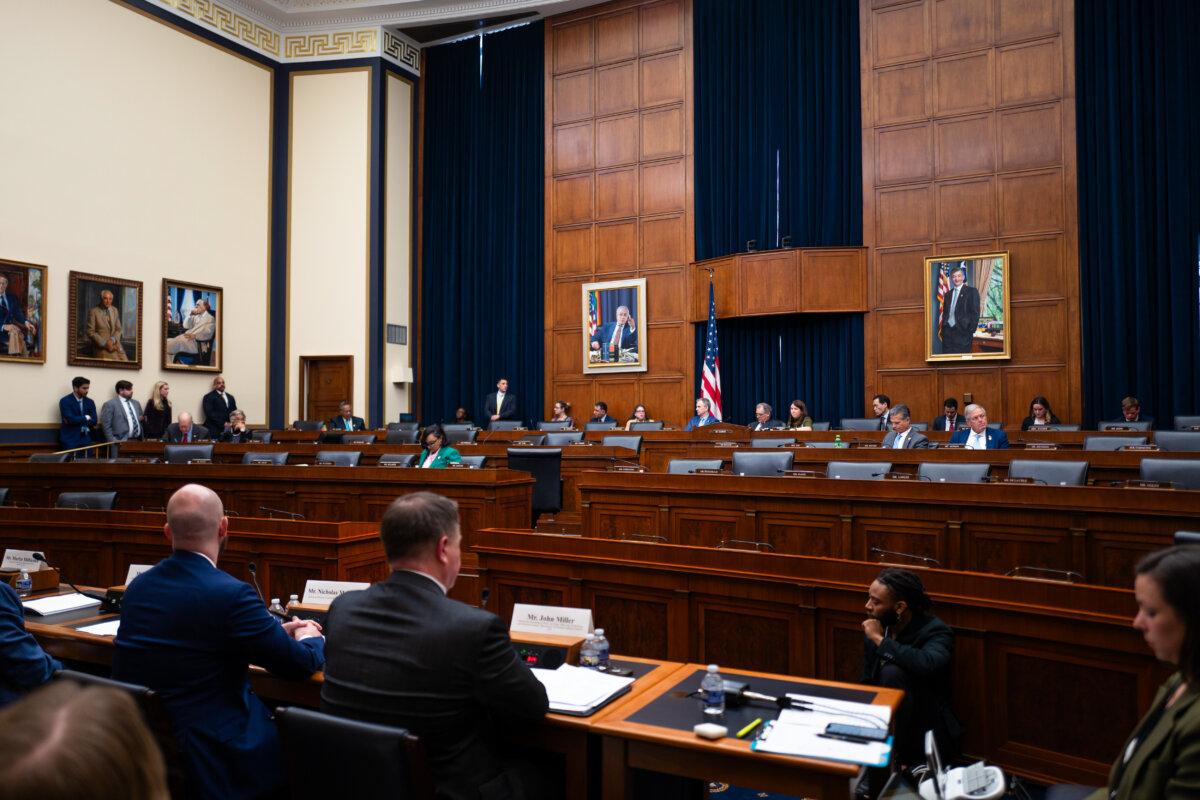
As the Chinese Communist Party (CCP) continues to escalate its military threats against Taiwan, the House of Representatives on Feb. 9 raised the economic stakes for Beijing.
The bill now heads to the Senate. If approved in the Senate and signed into law by President Donald Trump, it would formalize a strategy of economic retaliation designed to deter the CCP’s aggression against Taiwan.
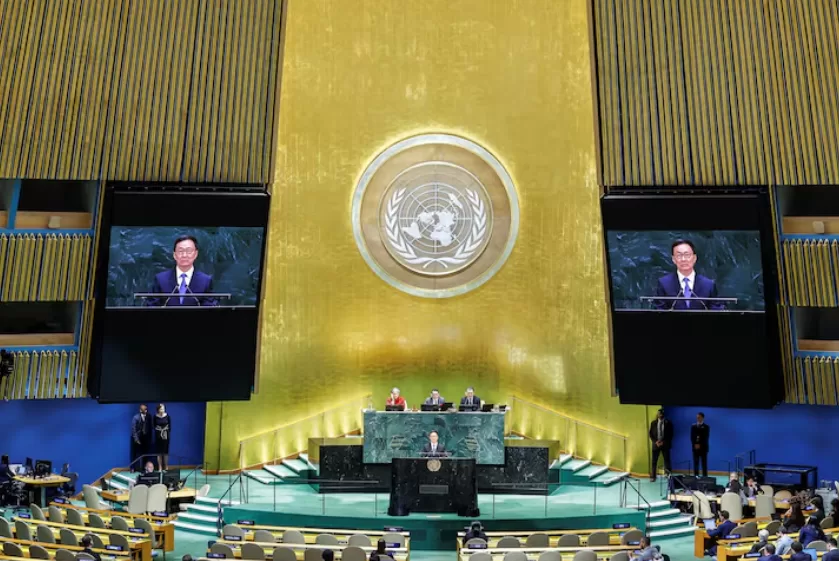
Introduced by Rep. Frank Lucas (R-Okla.), the legislation directs the federal government to seek the exclusion of China from key financial bodies—including the Group of 20 (G20), the Bank for International Settlements (BIS), and the Financial Stability Board (FSB)—should Beijing threaten Taiwan’s security or its democratic system of governance.
“We must take the necessary steps to ensure Beijing would be subject to significant financial, diplomatic, and economic consequences should it threaten our allies in Taiwan,” Lucas said when he reintroduced the bill a year ago.
Taiwanese lawmaker Chen Kuan-Ting said the bill is more than symbolic. He said it represents an effort by the international community to institutionalize the costs of aggression, transforming deterrence from a political statement into a response mechanism.
Arms Sales to Taiwan
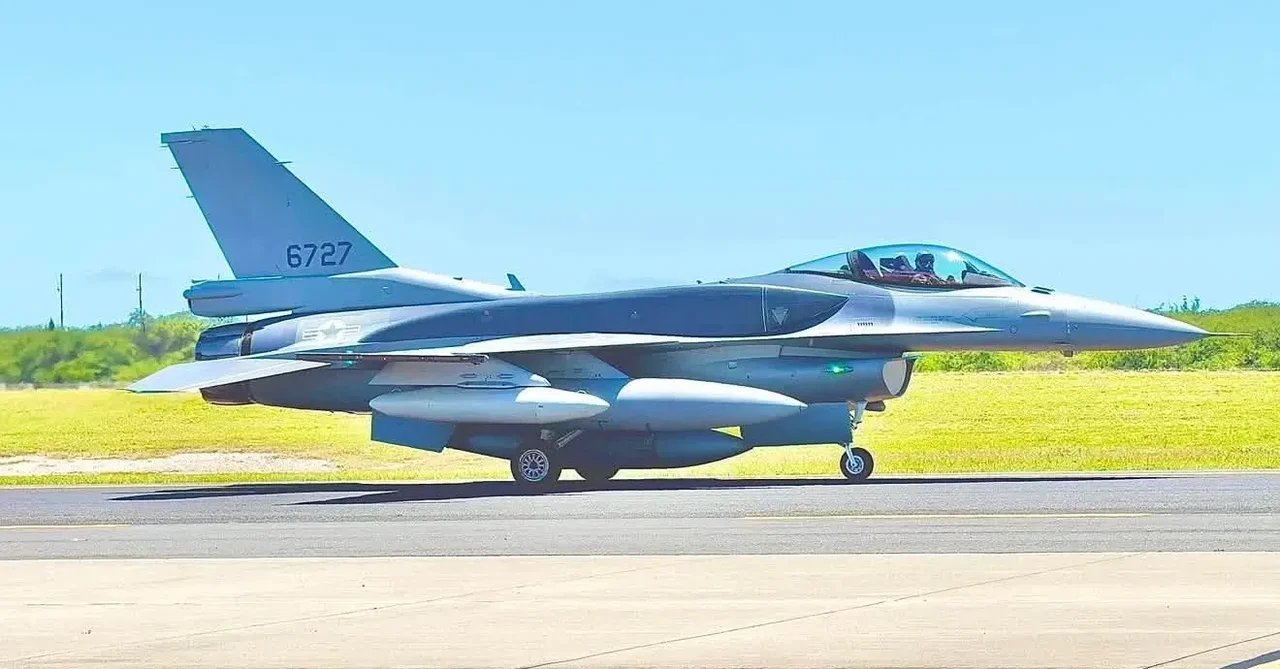
While Congress advances financial deterrence, U.S. arms sales to Taiwan remain a central point of friction in U.S.–China relations.In December last year, the Pentagon announced an $11.1 billion arms package for Taiwan—the largest package in Taiwan’s history—featuring advanced systems such as HIMARS rocket launchers and howitzers. Beijing swiftly issued formal protests.
.
On Feb. 4, Trump held a phone call with Chinese leader Xi Jinping. According to the CCP’s Taiwan Affairs Office, Xi urged Washington to handle the Taiwan arms sales issue with prudence.
The CCP has often treated arms sales as leverage in broader diplomatic negotiations, at times linking the issue to high-level visits. Trump has said he plans to visit China in April, raising questions about whether Beijing may attempt to use Taiwan as a bargaining chip.
Analysts say Beijing’s pressure tactics are unlikely to shift U.S. policy.
Su Tzu-yun, a research fellow at Taiwan’s Institute for National Defense and Security Research, told The Epoch Times that Washington’s Taiwan commitments are both institutional and strategic.
“The United States will not adjust its arms sales policy simply because of Beijing’s pressure,” Su said, noting that Taiwan has been integrated into a broader Indo-Pacific security framework.
Mark Cao, a U.S.-based military tech analyst, former materials engineer, and host of Chinese-language military news YouTube channel Mark Space, told The Epoch Times that Taiwan policy is viewed in Washington primarily as a security red line rather than a bargaining chip.
“Since his first term, Trump has maintained an open stance toward arms sales to Taiwan,” Cao said. “If Taiwan submits a request, the United States has generally approved it.”
Cao said that Beijing’s efforts to tie arms sales to diplomatic concessions reflect domestic pressures facing Xi’s leadership.
“If Beijing could pressure Washington into delaying a major arms announcement, Xi could present that domestically as a diplomatic victory,” he said.
.

Beijing’s Influence Campaign
As Washington increases its support for Taiwan, analysts say Beijing may shift emphasis from military intimidation to political influence operations.Lai Jianping, a former Beijing lawyer and president of the Canada-based Federation for a Democratic China, told The Epoch Times that China may lean more heavily on what he calls “public opinion warfare,” seeking to exploit internal divisions within Taiwan rather than escalating military threats.
On the same day the House passed the PROTECT Taiwan Act, Beijing convened its annual two-day conference on Taiwan policy, according to Chinese state media. Wang Huning, a member of the CCP’s Politburo Standing Committee, called for strengthening “patriotic reunification forces” inside Taiwan and clamping down on what Beijing labels “Taiwan independence separatists.”
Shen Ming-shih, another research fellow at the Institute for National Defense and Security Research, told The Epoch Times that such rhetoric reflects a longstanding United Front strategy, which is to “win over the majority, [and] isolate the minority.”
The United Front is the CCP’s longstanding system for influencing foreign political actors and shaping opinion abroad.
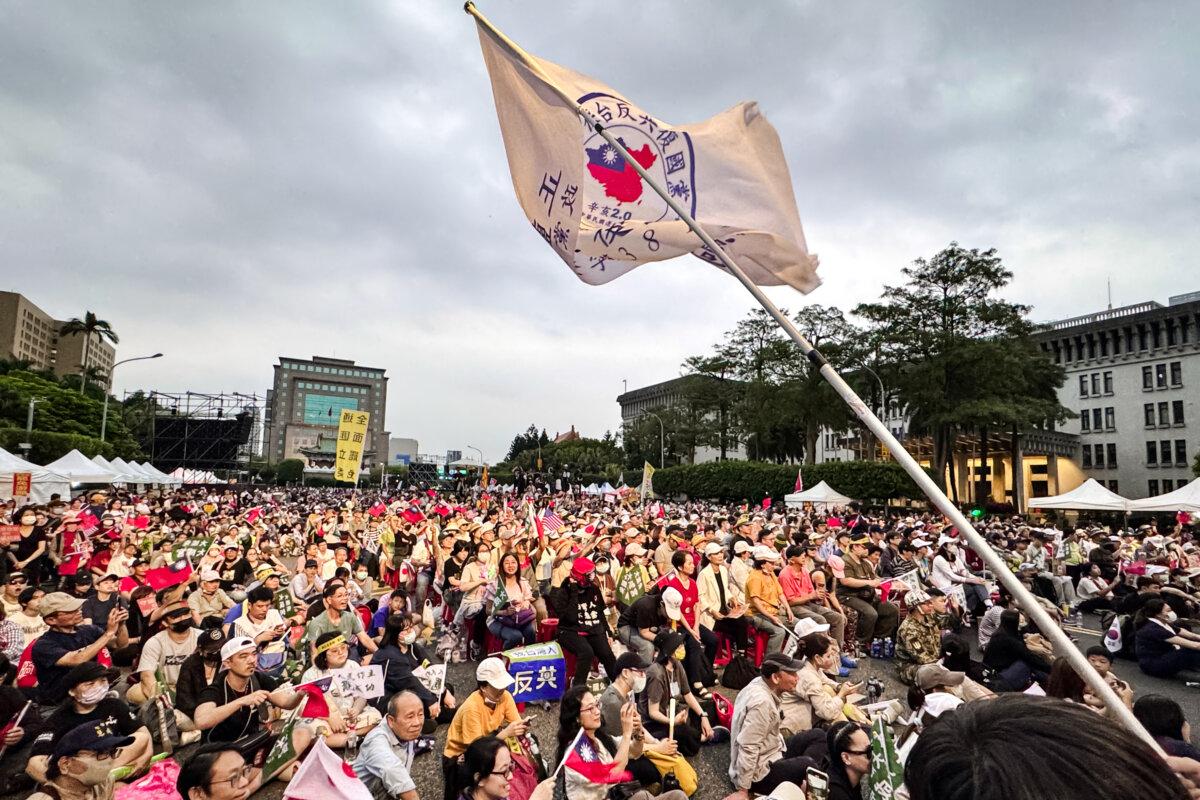
Beijing has long framed pro-independence forces as a small faction in Taiwan, but polling data tells a more complicated story.
By contrast, between 70 and 80 percent of respondents prefer either maintaining the status quo indefinitely or maintaining it while moving toward eventual independence.
“If Beijing continues crafting policy based on the assumption that ‘Taiwan independence forces are a minority,’ that assumption is increasingly out of step with Taiwan’s social reality,” Shen said.
.
Pressure Could Backfire: Analysts
Some analysts say that Beijing’s pressure campaigns may ultimately strengthen, rather than weaken, Taiwan’s political cohesion.Lai said coercive tactics often produce a rally-around-the-flag effect.
“When the CCP employs hardline intimidation, it frequently generates the opposite result—greater unity among the political parties and society of the targeted country,” he said.
A similar dynamic could emerge in Taiwan, Lai said, particularly with local elections scheduled for November this year.

Despite growing international backing, analysts emphasize that the island’s security ultimately depends on its own preparedness.
“International assistance is important,” Su said. “But Taiwan’s most critical task is strengthening its own defense capabilities. That is the fundamental path to ensuring security.”
Lai said that Taiwan’s decades-long democratic development has produced a politically aware electorate capable of distinguishing between domestic political competition and external influence.
As tensions continue to unfold, he said, public opinion in Taiwan may further consolidate around policies perceived as safeguarding the island’s autonomy.
What's Your Reaction?
 Like
0
Like
0
 Dislike
0
Dislike
0
 Love
0
Love
0
 Funny
0
Funny
0
 Wow
0
Wow
0
 Sad
0
Sad
0
 Angry
0
Angry
0

















Comments (0)