

Former Envoy Defends Japan’s Taiwan Warning as ‘Common Sense’


.
Shingo Yamagami, former Japanese ambassador to Australia, says current Prime Minister Sanae Takaichi’s comments about responding to aggression should not be viewed in an unusual light and were a reaffirmation of existing defence policy.
Yamagami, who served in Australia from December 2020 to April 2023, said Takaichi was speaking with “common sense and knowledge.”
“If China were to impose a blockade around Taiwan, and the U.S. tried to free Taiwan from such a predicament, the dispatch of Chinese warships into the Taiwan Strait under such circumstances could constitute an existence-threatening situation,” he told the “Why Should We Care About The Indo-Pacific” podcast.
“And [under] our national security legislation would allow the Japanese government to dispatch the [Japanese] Self Defence Forces (JShDF) on a military mission to defend our cross-strategic interests and act in support of Japan’s principal ally, e.g. the United States.”
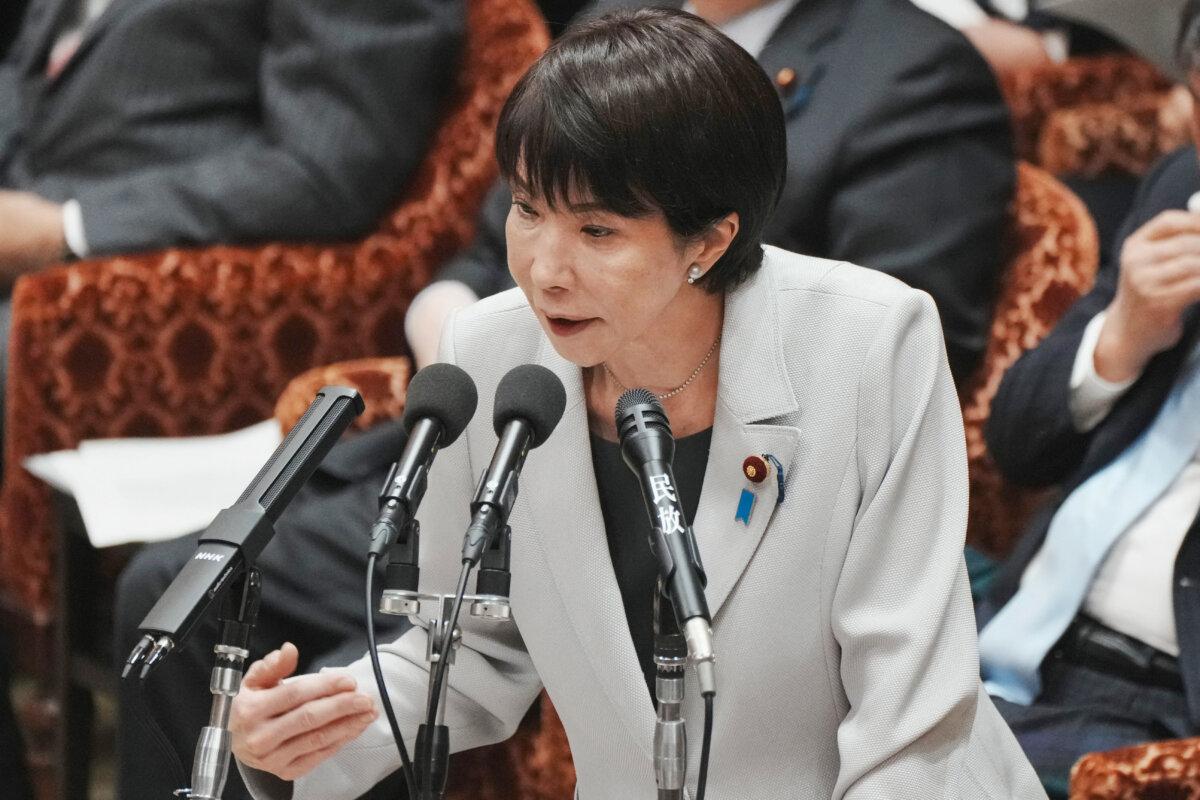
Japanese Prime Minister Takaichi’s was asked by an opposition MP about how her government would react to a threat to Taiwan.
Takaichi replied, “If there are battleships and the use of force, no matter how you think about it, it could constitute a survival-threatening situation”—a term defined in Japan’s 2015 security law as an armed attack on its allies that poses a serious threat to Japan.
When that occurs, the government can activate the JSDF to respond to the threat.
.
In response, Beijing called the remarks “egregious” and “blatantly provocative.”
In the days following, the Japanese ambassador was summoned to Beijing to meet with the Foreign Ministry, and official spokespeople have repeatedly demanded that Takaichi rescind her statement.
On social media, the Chinese Communist Party’s (CCP) Foreign Ministry warned Japan to “stop playing with fire” and added that it would be an “act of aggression” if Japan “dares to meddle in the ”cross-Strait situation.”
Taiwan Critical to Japan’s Security
Meanwhile, former Ambassador Yamagami said the prime minister’s comments said the CCP response was out of proportion.He also said Taiwan was vital to Japan’s security and survival.
Yamagami speculated that if Beijing were to successfully take over Taiwan, its proximity to Okinawa could cause the United States to reduce its military presence on that island rather than put its personnel in harm’s way.
That would imperil Japan not just from CCP aggression, but also that of other rogue states in the region.
“[American forces] could retreat to the islands of Guam or Hawaii, even to California or Darwin [Australia], which could significantly weaken Japan’s defence against the DPRK (North Korea) or possibly Russia,” he pointed out.
“Former Prime Minister [Shinzo] Abe rightly pointed out that a Taiwan contingency is a Japan contingency.”
.

Australia No Longer on the Same Page as Japan, Former Envoy Says
The attack on Takaichi should spur countries within the Indo-Pacific to recommit to standing firm against Beijing—a stance that has been watered down under the Albanese Labor government in Australia, he said.“Under the [Liberal-National] Coalition government, there were a lot of meetings of minds between Australia and Japan when it comes to our China policies. But apparently, right now, although we do share values and strategic interests, are we on the same page about China? I don’t think so,” Yamagami revealed.
“So I want to urge the Australian government and the Japanese government to compare notes and get themselves united against China. That is a very, very important thing for us to do at every possible opportunity, not only between Japan, Australia and the U.S.; it could include India.
Since the accession of the Labor government, Australia has largely pursued a “normalisation” of relations with Beijing, which has seen the restarting of high-level meetings between leaders, the repeal of several trade sanctions against Australian imports, and the release of Chinese-Australian journalist Cheng Lei.
Free of the restrictions that come with being a diplomat, Yamagami was blunt about the CCP’s threats.
Referencing a Chinese idiom about making an example out of someone to threaten others, “Kill the chicken to scare the monkey,” Yamagami said, “We in Japan eat chickens, but we don’t kill monkeys. We are a peace-loving nation, unlike the CCP.
“China is once again trying to drive a wedge between Japan, Australia, the U.S., and Japan. And we [need to] get ourselves united, and this is really important when it comes to addressing the challenges posed by China.
.
What's Your Reaction?
 Like
0
Like
0
 Dislike
0
Dislike
0
 Love
0
Love
0
 Funny
0
Funny
0
 Wow
0
Wow
0
 Sad
0
Sad
0
 Angry
0
Angry
0
















Comments (0)