

China's Three-Front Assault on Taiwan: Chips, Cyber, and Ballot Boxes
Taiwan's National Security Bureau (NSB) has laid out a detailed picture of how Beijing is waging a silent war on the democratic island — not only through military maneuvers in the strait, but by systematically targeting its semiconductor industry, bombarding its government networks with cyberattacks, and preparing to meddle in upcoming local elections. The findings, presented to Taiwan's parliament on Monday, describe a strategy that is far broader than a conventional military standoff. Analysts say it reflects Beijing's determination to neutralize Taiwan's global advantages before the island can further entrench itself diplomatically and technologically.

.
Taiwan's top spy agency exposes a coordinated campaign of technology theft, digital warfare, and election manipulation
Taiwan's National Security Bureau (NSB) has laid out a detailed picture of how Beijing is waging a silent war on the democratic island — not only through military maneuvers in the strait, but by systematically targeting its semiconductor industry, bombarding its government networks with cyberattacks, and preparing to meddle in upcoming local elections.
The findings, presented to Taiwan's parliament on Monday, describe a strategy that is far broader than a conventional military standoff. Analysts say it reflects Beijing's determination to neutralize Taiwan's global advantages before the island can further entrench itself diplomatically and technologically.
Stealing Silicon: The Chip Talent War
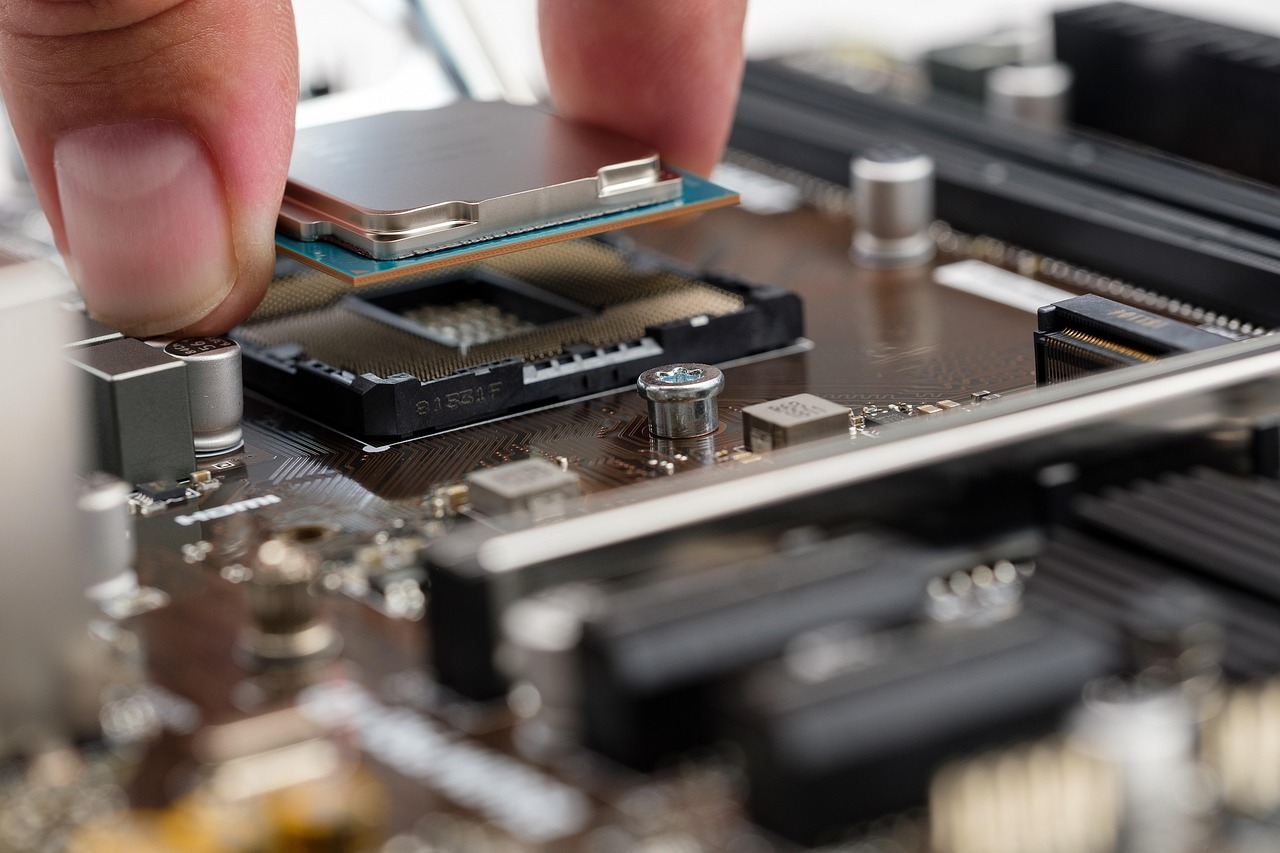
At the heart of the NSB's concerns is Taiwan's semiconductor industry — the backbone of the global technology supply chain and home to Taiwan Semiconductor Manufacturing Company (TSMC), the world's largest contract chipmaker and a critical supplier to companies including Nvidia and Apple.
Beijing is encouraging Taiwanese companies in sectors such as semiconductors and AI to set up or maintain operations in China, and is using indirect channels to poach talent, steal technology, and acquire controlled goods in order to obtain Taiwan's advanced chipmaking technologies.
The method is calculated: rather than frontal attacks on well-guarded R&D labs, Chinese companies disguise their ownership by setting up operations in Taiwan under the names of foreign-funded shell firms, or by establishing offices without authorization, to recruit talent and conduct business illegally.
The scale of the crackdown reveals just how widespread the problem has become. More than 185 agents recently searched 49 locations and questioned 90 people in a coordinated investigation targeting Chinese firms suspected of recruiting Taiwanese engineers without approval. Eleven companies were placed under investigation, including electronics manufacturer Huaqin Technology, chip designer SG Micro, and power semiconductor firm Yangzhou Yangjie Electronic Technology.
Since 2020, Taiwan has dealt with around 100 cases tied to mainland attempts to recruit its high-tech staff. Last year, Semiconductor Manufacturing International Corp (SMIC) — China's biggest foundry — also faced accusations of attempting to hire from Taiwan.
Why Taiwan's Engineers Are So Valuable
Analysts describe the situation as a "quiet tech war" — in contrast to the louder US-China fight over export controls. While Washington focuses on cutting off China's access to advanced chips, Beijing focuses on the human capital that powers innovation: engineers and researchers who know how to design and build the next generation of semiconductors.
Taiwan's government has strict laws preventing the transfer of advanced technology to China. But the lure of high salaries and career opportunities in China remains a persistent challenge. Prosecutors have urged workers in Taiwan's high-tech industry to remain vigilant and not to be lured by promises of high-paying jobs across the strait.
170 Million Cyber Intrusions in 90 Days
The chip-poaching campaign runs parallel to a relentless cyberattack operation. Taiwan's National Security Bureau reported that government networks faced more than 170 million attempted cyber intrusions in the first quarter of 2026 alone, with attacks targeting the Government Service Network.
Officials described the current efforts as part of a "state-level" strategy involving China's People's Liberation Army, Ministry of State Security, and Public Security Bureau — employing a mix of military, civilian, and private-sector hackers to conduct espionage, manipulate online discourse, and steal sensitive information.
The targets are not random. The attacks have focused on critical infrastructure, including defense, telecommunications, energy, and medical systems. Beijing has denied involvement in hacking operations, but Taiwan and Western governments have repeatedly attributed these so-called "grey-zone" tactics to the Chinese state.
Deepfakes and Fake Polls: The Election Interference Playbook
With Taiwan's local elections scheduled for November 2026, the NSB is sounding the alarm about a sophisticated influence operation already underway. The bureau warned that China may use AI-generated deepfakes and false opinion polls as part of its tactics, aiming to deepen social divisions and affect policy direction.
This is not a theoretical threat. Taiwan's intelligence community detected more than 45,000 fake social media accounts and more than 2.3 million pieces of disinformation circulated through those networks in the previous year alone. Chinese IT and marketing firms — some contracted directly by state agencies — are reportedly building automated systems to generate and distribute this content at scale.
The NSB alleged that firms such as China North Industries Group Corporation have been contracted to develop AI models and automated systems for public-opinion data collection and targeted content delivery — systems allegedly used to produce and spread disinformation in various forms.
The tactics have real precedent. During Taiwan's 2024 elections, Microsoft documented Chinese propaganda groups creating AI-generated news broadcasts with fake anchors — marking what Microsoft described as the first time a nation-state had used AI-generated content in attempts to influence a foreign election.
Military Pressure: A Constant Backdrop
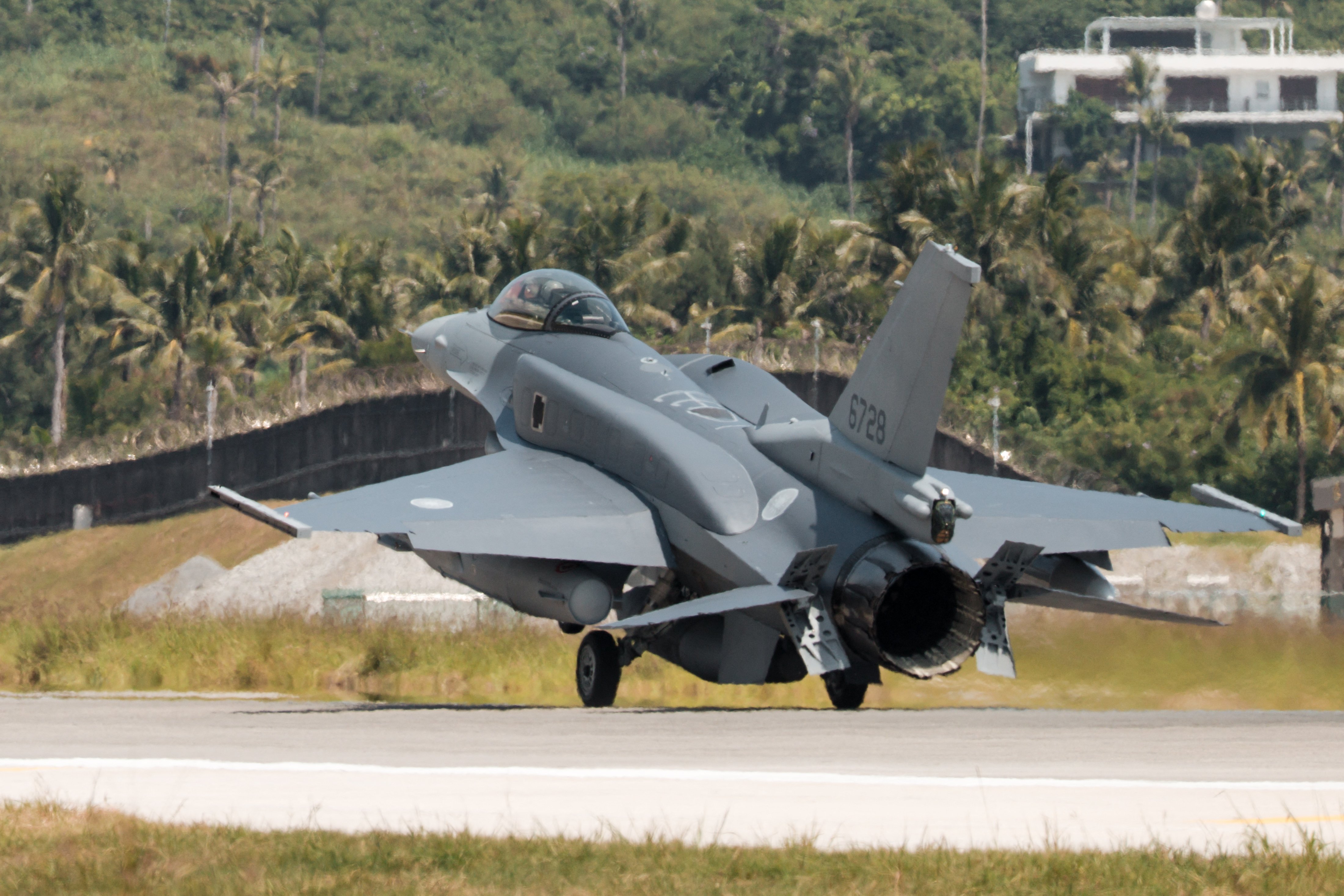
All of this unfolds against a backdrop of sustained military pressure. Large-scale Chinese military flights resumed around Taiwan in March 2026 after an unusual hiatus, with 26 People's Liberation Army aircraft detected in a single 24-hour period — a significant escalation from the preceding quiet period.
According to the NSB's report to parliament, more than 420 Chinese military aircraft were detected operating around Taiwan in the first quarter of 2026, with Chinese naval vessels joining in ten so-called "joint combat readiness patrols."
Analysts at The Diplomat have noted that Beijing is steadily normalizing PLA activity closer to Taiwan's shores — lowering thresholds, increasing the risk of miscalculation, and setting a potentially destabilizing precedent for future operations.
A Strategy Under Pressure
The NSB report notes that China's Communist Party faces mounting internal and external pressures, including economic weakness and geopolitical competition — yet continues to escalate its hybrid campaign against Taiwan.
Taiwan's government rejects Beijing's sovereignty claims entirely. President Lai Ching-te has repeatedly stated that only the Taiwanese people can determine the island's future.
Lai has highlighted Beijing's multi-domain pressure on Taiwan — combining military coercion, cyberattacks, economic pressure, and cognitive warfare — as part of a coordinated effort to sow division and weaken Taiwan's credibility among its international partners.
For now, Taiwan finds itself on the front line of a conflict that is fought not only in the air and at sea, but in server rooms, recruiting offices, and social media feeds — a war for chips, minds, and votes.
.
Sources
- Taiwan News – National Security Bureau says China targeting Taiwan tech sector (April 6, 2026): https://www.taiwannews.com.tw/news/6335148
- The Manila Times / AP – Taiwan probes 11 Chinese firms for illegal poaching of tech talent (March 31, 2026): https://www.manilatimes.net/2026/03/31/business/foreign-business/taiwan-probes-11-chinese-firms-for-illegal-poaching-of-tech-talent/2310437
- South China Morning Post – Semiconductor, AI talent race heats up as Taiwan tightens crackdown on alleged poaching (April 6, 2026): https://www.scmp.com/tech/tech-war/article/3349072/semiconductor-ai-talent-race-heats-taiwan-tightens-crackdown-alleged-poaching
- Taiwan News – Taiwan security bureau warns of cyberattacks, election threats (April 6, 2026): https://www.taiwannews.com.tw/news/6335043
- The Record from Recorded Future News – Taiwan reports surge in Chinese cyber activity and disinformation efforts: https://therecord.media/taiwan-nsb-report-china-surge-cyberattacks-influence-operations
- Cybernews – Taiwan warns China is launching AI and deepfakes campaigns run by marketing firms (January 12, 2026): https://cybernews.com/cyber-war/taiwan-china-ai-and-deepfakes-campaigns/
- CyberScoop / Microsoft Threat Intelligence – Chinese hackers turn to AI to meddle in elections (April 2024): https://cyberscoop.com/microsoft-ai-election-taiwan/
- The Diplomat – China's Taiwan Drills Are Crossing a New Line (January 3, 2026): https://thediplomat.com/2026/01/chinas-taiwan-drills-are-crossing-a-new-line/
- Taipei Times – Prosecutors probe China talent poaching (March 31, 2026): https://www.taipeitimes.com/News/front/archives/2026/03/31/2003854752
- Taipei Times – NSB forms task force to prevent foreign election interference (February 25, 2026): https://www.taipeitimes.com/News/taiwan/archives/2026/02/25/2003852854
.
What's Your Reaction?
 Like
2
Like
2
 Dislike
0
Dislike
0
 Love
0
Love
0
 Funny
0
Funny
0
 Wow
2
Wow
2
 Sad
0
Sad
0
 Angry
0
Angry
0













Comments (0)