

China’s Pigment Dumping Blamed for Critical Minerals Mining Shutdown, 200 Jobs on the Line


.
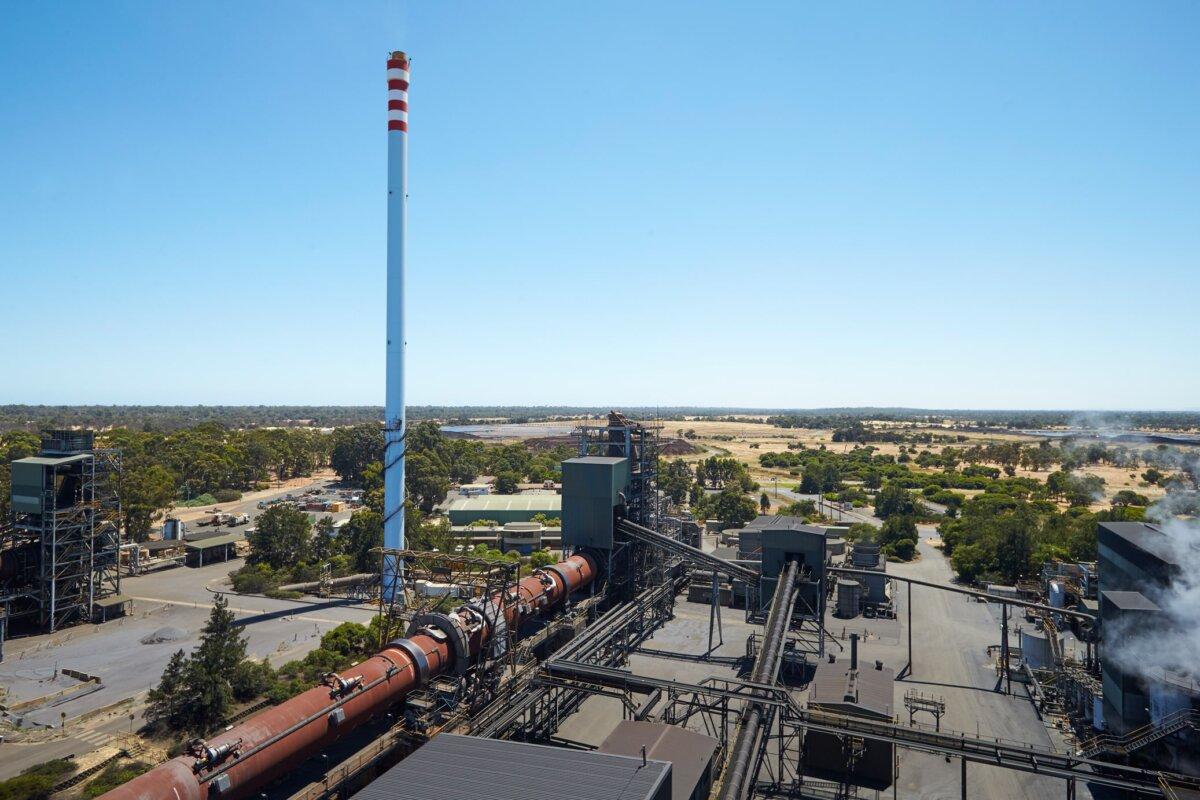
Australian critical minerals miner Iluka Resources will slow, then stop, production at its Cataby mine in Western Australia as it responds to falling worldwide demand, particularly from China.
The company primarily mines titanium, which is processed into pigments, and are then used as bright white colourants, opacifiers (used to make liquids and gels less transparent), and UV blockers in a wide range of products.
These include paints, coatings, plastics, paper, inks, cosmetics, sunscreens, food, and toothpaste.
It also extracts zircon and other rare earth minerals, which are critical components in the manufacture of clean energy and high-end technology solutions.
Demand for mineral sands is typically linked to activity levels in key markets, particularly construction, urbanisation, and other associated indicators.
The mine will reduce production between now and Dec. 1, 2o25, when it will cease operating for at least a year.
An associated kiln, used to process ore, will also be shut for six months. The company said in a statement that both will be restarted when market conditions warrant, and that it believes it has enough processed and raw material on hand to satisfy customer demand in the meantime.
It said the suspension would “enable inventory and cash liberation, cost savings, and the preservation of balance sheet strength.”
Speaking on a conference call with market analysts, Managing Director Tom O'Leary said both global economic uncertainty and existing levels of inventory had led to the decision.
“A key development in the pigment industry over the last decade has been the over-capacity established in China [and] there hasn’t been a material painting season in North America since 2022. While some had anticipated it would return this year, that hasn’t materialised,” he said.
Demand had been subdued for some time, “further complicated by geopolitical and trade tensions, which have also impacted the ability of customers to forecast reliably.”
.
China had been dumping rare earth minerals—resulting in anti-dumping duties targeting Chinese imports—but had now slowed exports of pigment by around 10 to 15 percent when compared to the same time last year, closing an estimated 20 small to mid-size pigment plants and putting mines with the capacity to produce around half a million tonnes a year into care and maintenance.
“It is clear that the rest of the world’s response to China’s overcapacity is still playing out, and I once again emphasise the relative strength of Illuka’s position to respond to improved demand conditions when they eventuate,” O'Leary said.
In response to a question from one analyst, Iluka’s Head of Major Projects Matthew Blackwell attributed the uncertainty in the United States to high interest rates, which meant the anticipated increase in housing construction and home sales that drive demand for paint, and thus pigment.
But the longer-term outlook is still positive, he pointed out.
“Demand, particularly pigment demand, tracks pretty well with GDP,” he said. “If you look at that, between 2024 and 2029, TZMI [a WA-based independent consulting company that specialises in the mineral sands, titanium dioxide, and coatings industries] are predicting that there’s going to be ... an additional 1 million ... tonnes required between now and [the] end of 2029.”
CFO Adele Stratton told the call that the company expected to save $110 million in operating costs through the move.
Because kiln operations require a skilled workforce, Iluka expects to retain staff over its six-month shutdown, but Stratton wasn’t able to say how workers at the Cataby mine, 150 kilometres north of Perth would be affected.
“This is no small setback. It’s a direct hit to the midwest [region of WA] economy and it highlights just how fragile confidence has become in our resources sector,” he said in a statement.
“I have already reached out to Iluka to seek clarity on this announcement and to press for assurances that every option will be explored to support the workforce, including redeployment opportunities at other sites.”
The company’s share price fell by 14 percent following the announcement, closing at $5.55.
.
What's Your Reaction?
 Like
0
Like
0
 Dislike
0
Dislike
0
 Love
0
Love
0
 Funny
0
Funny
0
 Wow
0
Wow
0
 Sad
0
Sad
0
 Angry
0
Angry
0













Comments (0)