

China’s Parade Reveals Limitations in Military Development: Analysts


.
The most striking characteristic of Chinese military weaponry and equipment displayed, besides the hypersonic weapons, was its imitation of U.S. military equipment, a Chinese American military analyst told The Epoch Times.
“U.S. military equipment is mostly combat-tested and then refined,” Mark, host of popular Chinese-language talk show “Mark Space,” said. Mark does not disclose his surname due to safety concerns.
The CCP skipped these steps, he said, and copied directly as a way of “overtaking on a curve” in the competition with the United States.
The shift from buying and copying former Soviet Union-style equipment to American-style equipment inevitably has limitations, he noted.
For example, the CCP’s medium-range missile defense system is modeled after the U.S. Standard Missile-3, and the KJ-600 is a copy of the U.S. E-2 Hawkeye early warning aircraft, according to Mark.
“Its performance remains to be seen, as it has only been tested on land and has not yet completed carrier-based takeoff and landing tests. Its practicality is questionable,” he said.
Su Tzu-yun, a researcher and director of the Division of Defense Strategy and Resources at Taiwan’s Institute for National Defense and Security Research, highlighted the new DF-61 intercontinental missile on display at the parade. It has a longer range and could potentially reach more than 9,300 miles.
“Furthermore, the improved warhead design allows for multiple warheads, allowing for simultaneous attacks on different cities or military targets,” he told The Epoch Times.
China has focused on developing intermediate-range and intercontinental missiles in recent years. The DF-61 intercontinental missiles displayed in Beijing have the range to reach Guam and Hawaii.
The U.S. military has invested heavily in Guam to strengthen its air defense system and establish an air defense network with more than three layers to ensure the safety of the base, in response to increasing threats, particularly from China.
Mark pointed out that the Chinese regime has many missile models, which makes maintenance difficult.
“Too many types actually create a huge logistical burden,” he said.
In contrast, the U.S. military only retains a few models to facilitate upgrades and life extensions, he said.
The actual effectiveness of the CCP’s armaments remains to be seen. Mark said the parade was more for propaganda.
“The CCP displays a large number of missiles, but most of them are just for show. Few of them can actually be put into service. Because missiles have a lifespan, they require continuous maintenance and system upgrades, which cost a huge amount of money,” he said.
On the naval front, Mark noted that its progress has been evident, but there are still many traces of imitation. For example, the Eagle Strike missile is based on a Russian design. When it comes to unmanned underwater vehicles, they are still in their infancy and cannot match the size and length of the U.S. military, he said.
The U.S. military already has an 80-ton Orca unmanned underwater vehicle in service, while “most of China’s unmanned vessels are only equipped with small rockets and artillery, and their functions are similar to those of ‘suicide boats,’” he said.
The United States already has layers of defense systems in the Pacific, which can counter the CCP’s possible aggression, Mark noted.
Nuclear Weapon
He warned that the Chinese regime’s nuclear arsenal is rapidly growing.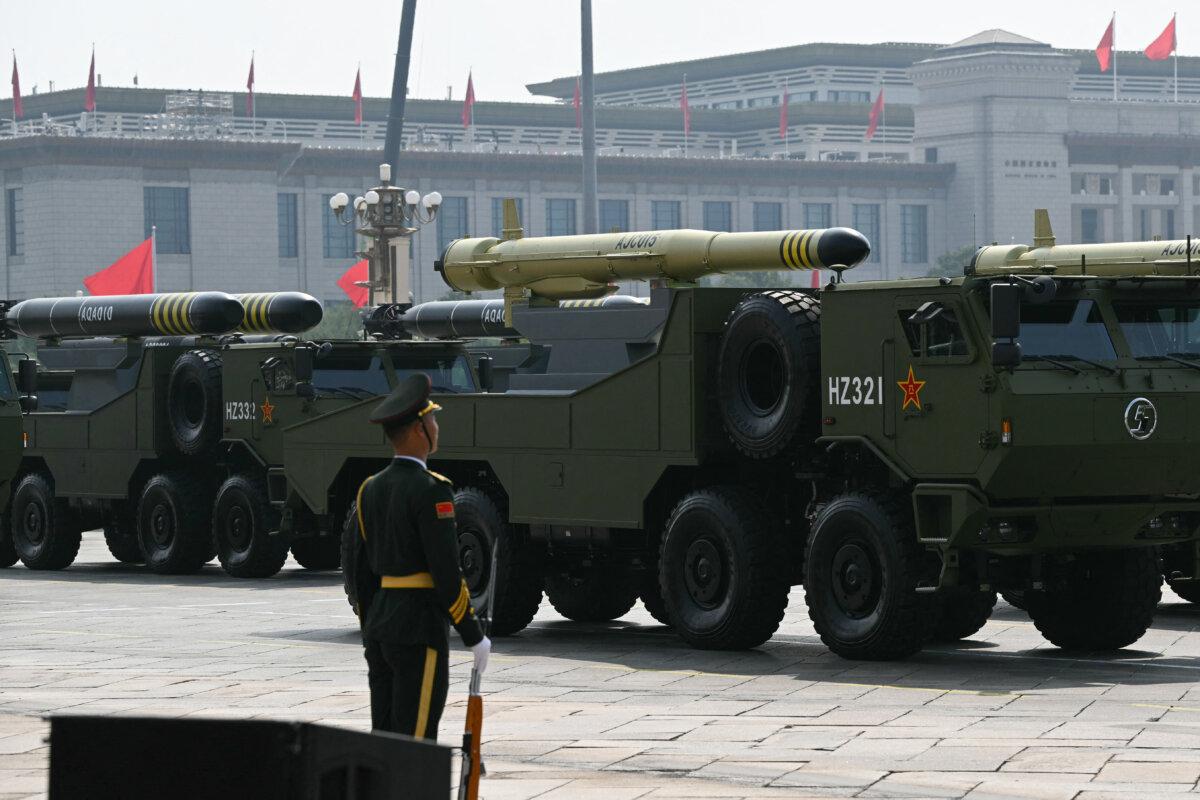
The United States and Russia maintain an arsenal of between 1,500 and 3,000 warheads due to arms control treaties, Mark said.
“If China reaches this target, it will possess nuclear capabilities comparable to those of the United States,” he said.
The United States is also accelerating the modernization of its nuclear weapons, Mark noted.
“The Navy is developing the Columbia-class strategic nuclear submarine, the Air Force is developing the B21 stealth bomber, and the Army is promoting the new ‘Sentinel’ intercontinental missile, which is expected to be put into service in 2030, comprehensively widening the gap with the CCP,” he said.
Since President Donald Trump’s first term, U.S. strategy shifted completely, with the CCP as its “number one adversary,” Mark said.
Questionable Actual Combat Capability
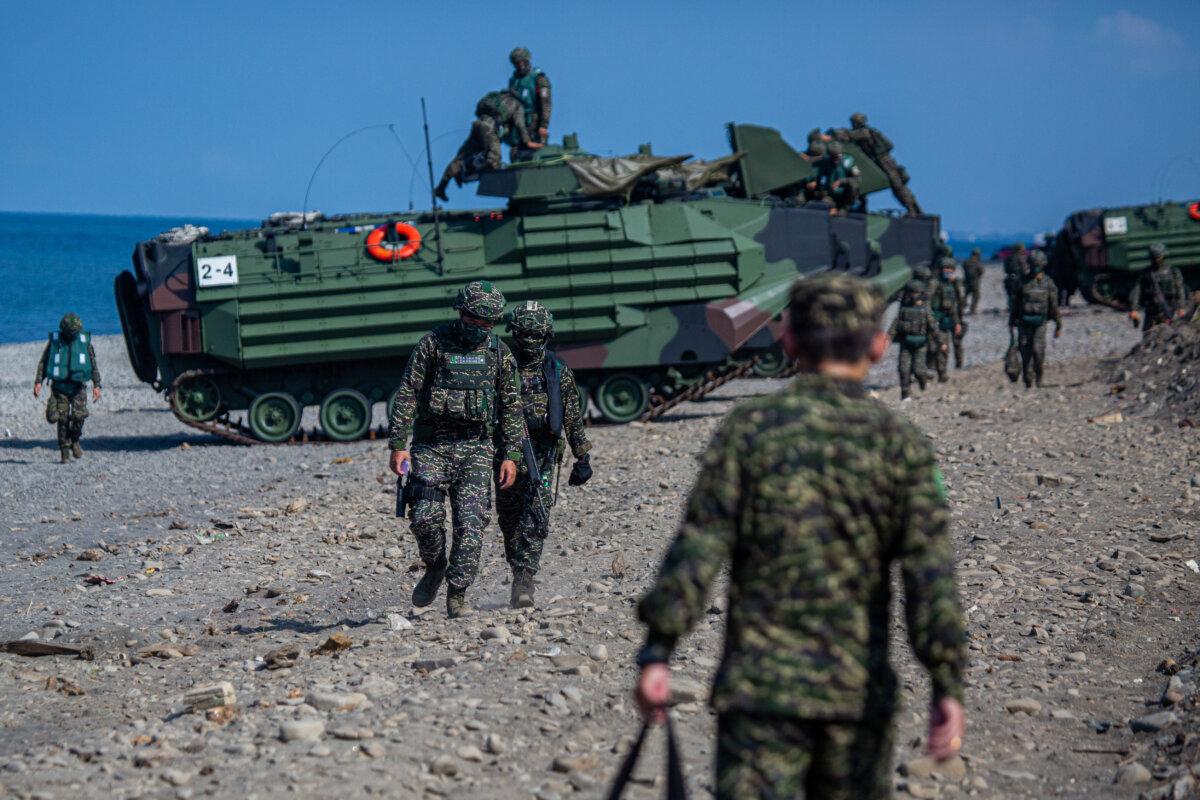
How well the Chinese military would perform in actual combat remains unknown. The Chinese regime has not fought a full-scale war since the 1979 conflict with Vietnam.CCP infighting has weakened its combat abilities, especially with many generals being taken down, according to analysts.
Su noted some irregularities in this year’s military parade.
.
Unlike previous years, this year, former Premier Zhu Rongji and former President Hu Jintao were notable for their absence, Su said.
“The parade’s chief commander position was downgraded from the previous General Commander of the Central Theater Command to Lieutenant General Han Shengyan, Commander of the Central Theater Command Air Force, suggesting a major shakeup within the Chinese military leadership,” Su said.
Su said that these unusual arrangements reveal the political and military unrest and struggle within the CCP, which will certainly affect its military’s morale and combat abilities.
He added that such a display of military strength through the parade reaffirms the “China threat theory,” which will prompt democratic countries to be more united to contain the CCP.
“In this regard, Beijing may lose more than it gains by putting on the parade,” he said.
What's Your Reaction?
 Like
0
Like
0
 Dislike
0
Dislike
0
 Love
0
Love
0
 Funny
0
Funny
0
 Wow
0
Wow
0
 Sad
0
Sad
0
 Angry
0
Angry
0












Comments (0)