

Canada ‘Disappointed’ Jimmy Lai Given 20-year Sentence: Anand


.
Foreign Affairs Minister Anita Anand says Canada is disappointed that democracy activist Jimmy Lai has been sentenced to 20 years in prison in Hong Kong.
“Mr. Lai is 78 years old and in poor health and we call for his immediate humanitarian release. Canada will continue to support free and independent media worldwide.”
Chong said the sentence is “more evidence” of China’s violations of Hong Kong’s rights and freedoms guaranteed under the Sino-British Joint Declaration registered with the United Nations.
“Sentencing Mr. Lai, who is 78 years old, for nothing more than exercising his rights and freedoms is evidence of the erosion of Hong Kong’s civil liberties and the rule of law,” Chong said.
.
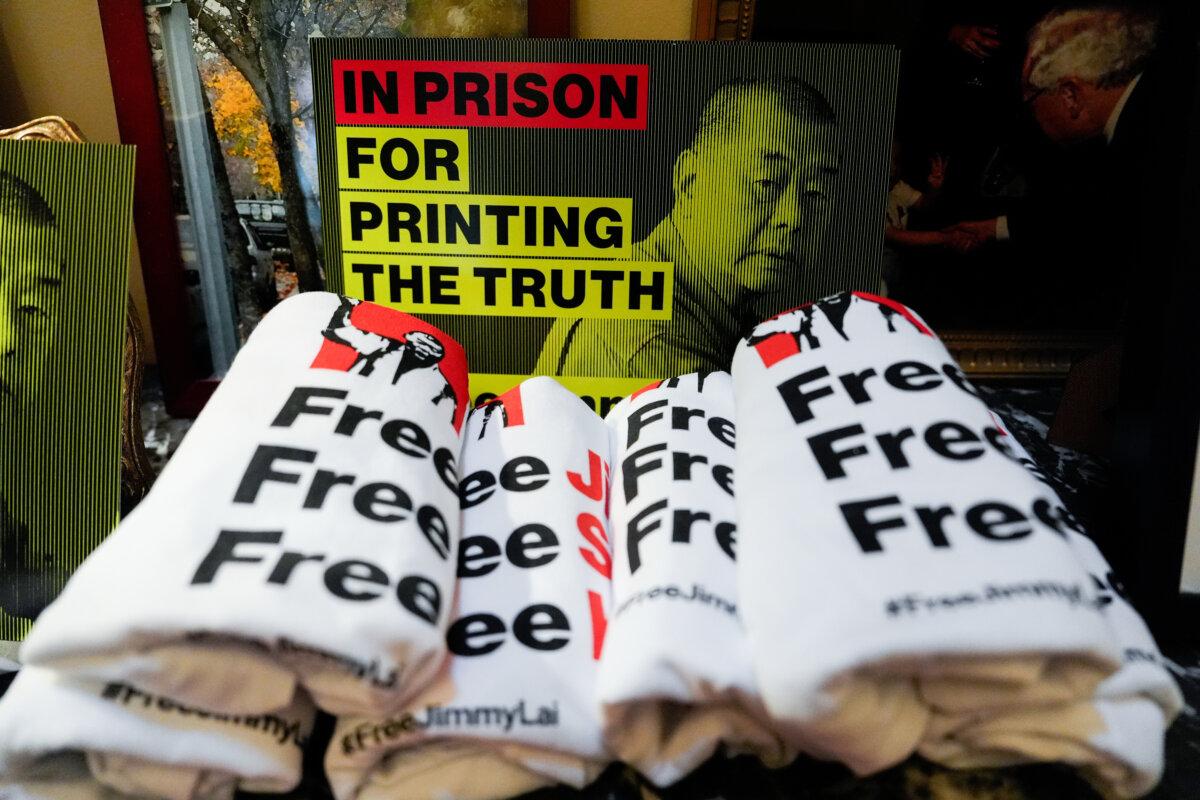
‘Death Sentence’
The Toronto Association for Democracy in China (TADC) released a statement condemning the 20-year sentence and calling on Canada to be the first among G7 countries to make an urgent appeal to Beijing for his immediate release.“We urge PM Carney to seize the momentum out of Davos to take the lead among G7 leaders to make a forceful call for the immediate release of Jimmy Lai,” TADC co-chair Cheuk Kwan said in the statement, adding that Lai has family in Canada and it’s “only appropriate that we welcome him to spend the rest of his life here in peace and security.”
Lai’s trial is among the most high-profile cases since Hong Kong’s national security law took effect on July 1, 2020, which “has basically outlawed any act of dissent,” TADC said. The national security law criminalizes what Beijing defines as secession, subversion, terrorism, and collusion with foreign forces, offences punishable by up to life imprisonment, and for the first time formally authorizes mainland security agencies to operate in Hong Kong.
Hong Kong democracy activist Joe Tay, a former Conservative candidate who was targeted in a Beijing-backed foreign repression operation during the last election, posted a video on social media ahead of Lai’s sentencing, saying the case demonstrates that Beijing is “criminalizing press freedom and dissent.”
Tay said that as Ottawa strengthens ties with Beijing on trade, Canada should consider the potential costs of this so-called “strategic partnership.”
“Prioritizing trade over Xinjiang abuses or Hong Kong crackdowns emboldens Beijing leaving our citizens vulnerable,” Tay said.
“[Lai’s] fight embodies the clash between democracy and authoritarianism that directly impacts Canadians abroad, our economic choices, and our role as a global defender of rights. If we ignore it, we risk losing the moral high ground that defines us as a nation.”
“It shows the world that Beijing will go to extraordinary lengths to silence those who advocate fundamental freedoms in Hong Kong, casting aside the international commitments Beijing made in the 1984 Sino-British Joint Declaration,” Rubio said.
“After enduring a trial lasting two years, and detention in prison for more than five, Mr. Lai and his family have suffered enough. The United States urges the authorities to grant Mr. Lai humanitarian parole,” Rubio said.
What's Your Reaction?
 Like
0
Like
0
 Dislike
0
Dislike
0
 Love
0
Love
0
 Funny
0
Funny
0
 Wow
0
Wow
0
 Sad
0
Sad
0
 Angry
0
Angry
0













Comments (0)