

Beijing’s Tactical Retreat Shows Why Xi Conceded in Latest Trade Talks With Trump


.
The meeting between U.S. President Donald Trump and Chinese Communist Party (CCP) leader Xi Jinping on Oct. 30 marked the most significant reset attempt in U.S.–China trade relations since the two powers resumed negotiations earlier this year.
Who Made the Major Concessions?
On tariffs, the United States agreed to lower the overall tariff rate on Chinese imports from 57 percent to 47 percent. This includes the 25 percent Section 301 tariffs from Trump’s first term targeting intellectual property theft and unfair trade practices, a 10 percent tariff on fentanyl imposed in his second term, additional national security-related tariffs under Section 232, and the “Liberation Day” reciprocal tariffs introduced on April 2.However, Washington has retained enough tariff pressure to maintain leverage, as Beijing appears to have made larger concessions. China announced it would suspend the 24 percent tariff imposed on U.S. goods in April and would suspend tariffs of up to 15 percent on certain U.S. agricultural imports starting on Nov. 10.
On rare-earth exports, a field long monopolized by China, Beijing agreed to delay its export control policy for one year. This buys the United States valuable time. China also agreed to resume purchases of American soybeans. These moves effectively weaken Beijing’s strongest bargaining chips in the trade war, as they remove the CCP’s previous retaliatory restrictions and signal an unusual willingness to compromise.
Of course, it would be unrealistic to expect the CCP to genuinely combat fentanyl trafficking. At best, Washington may see a temporary decline in fentanyl inflows. Still, these represent significant concessions on Beijing’s part.
Trump’s Push to Rebuild the Rare-Earth Supply Chain
Trump’s confidence going into the meeting with Xi partly came from his progress in rebuilding a global rare-earth supply chain independent of China.Before the meeting, Trump had signed agreements with Malaysia, Thailand, and Japan to cooperate on critical minerals. These agreements laid the groundwork for the Trump–Xi talks and served as critical negotiating leverage for Washington. These deals guarantee U.S. buyers priority access and promote domestic rare-earth processing, with clauses specifically designed to counter China’s dominance in the sector.
CCP Reacts to a Strengthened U.S.–Japan Alliance
Trump’s visit to Japan further strengthened the U.S.–Japan alliance, a move clearly directed at countering the CCP. Beijing’s reaction was telling. The Chinese foreign ministry resorted to invoking World War II history as a defensive measure.At a press briefing on Oct. 28, Chinese foreign ministry spokesperson Guo Jiakun criticized the U.S.–Japan security cooperation and urged Japan to “respect neighboring countries’ security concerns” and to “reflect deeply on its [World War II] history.”
In the CCP’s view, the U.S.–Japan alliance is a threat to China. However, this alliance is not meant to be offensive; its primary goal is to maintain peace and stability in the Indo-Pacific region. The only plausible conclusion is that the real source of destabilization is the CCP itself.
Guo went on to add, “Due to the history of Japanese militarist aggression, Japan’s military and security policies have long been a matter of serious concern for its Asian neighbors and the international community.”
This statement exemplifies the CCP’s typical rhetoric. In contrast, 80 years after World War II, no European country demands that Germany reflect on its wartime history.
The CCP prides itself on being a victor against the Japanese forces during World War II, or at least the CCP pretends to be. Perhaps deep down, the CCP never truly saw itself as a victorious power, which explains its persistent victim mentality. In fact, during the war, the Chinese communist forces often collaborated with Japanese troops against the Nationalist government in China, which makes the CCP’s claim of “victimhood” even more hollow.
A Tactical Truce After the Trump–Xi Meeting
Despite the announcement of a trade framework, some observers see it as merely a tactical truce instead of a long-lasting trade deal. There are two reasons for this. First, the agreement is subject to review after a year. Second, commitments regarding rare-earth elements and soybeans are short-term and may not even be fulfilled.During Trump’s first term, Beijing failed to honor similar promises. The real obstacle is not the difficulty of reaching agreements, but the absence of a foundation for normal trade between the two countries. If a lasting agreement is possible, there would be no need for repeated reviews.
The United States and China have gone through five rounds of such negotiations since May 2025. If a durable agreement were achievable, it would have been reached long ago. The sticking point lies in the CCP’s economic model, which cannot accommodate genuine market reciprocity. This means negotiations can proceed only item by item—such as over rare earths, soybeans, and semiconductors—leading to temporary truces rather than a lasting agreement.
In a way, both Trump and Xi are cleaning up the mess left by their predecessors. In China’s case, the problem dates back to the half-hearted reforms of the 1980s and the unfulfilled promises made upon joining the World Trade Organization (WTO). In America’s case, it began when Washington decoupled human rights from trade and enabled China’s entry into the WTO without sufficient safeguards.
Going forward, U.S.–China trade relations may continue along a pattern of tactical truces—temporary, transactional, and constantly renegotiated—rather than an enduring, enforceable deal.
.
Why Did Beijing Yield?
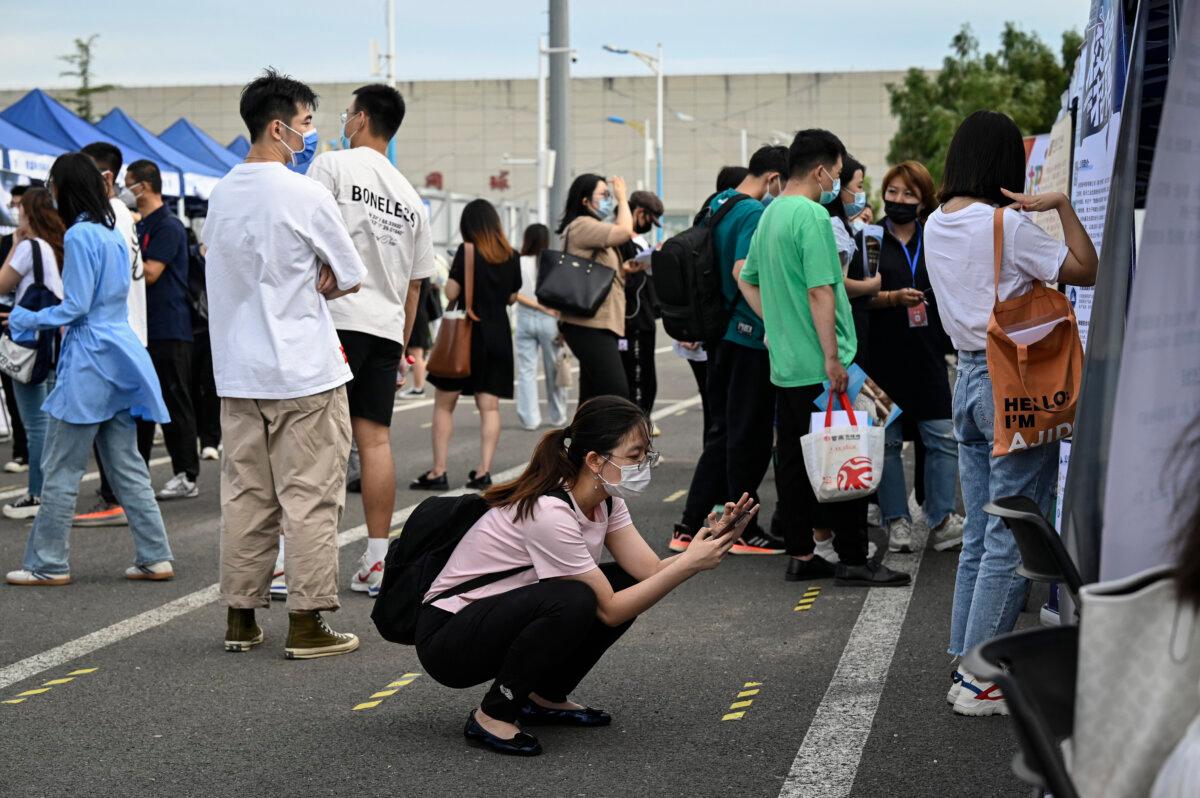
China’s current economy is one reason. Since the COVID-19 pandemic, the country’s economic recovery has consistently fallen short of expectations. Coupled with the weight of U.S. tariffs, the situation is putting immense strain on growth. Without tariff relief, the economy could deteriorate further, directly threatening the regime’s stability and grip on power.Another factor is political turmoil. Around the time of the CCP’s Fourth Plenum, high-ranking military officers and provincial-level officials were purged, signaling tension among Party members. Faced with simultaneous domestic and international challenges, Beijing could not fight on two fronts. A temporary tariff truce allows Xi to focus on consolidating control at home.
This also explains why Xi refrained from raising the Taiwan issue during the talks. At least for now, the CCP lacks the confidence and capacity to use Taiwan as a bargaining tool.
The Trump–Xi trade framework is not a breakthrough in U.S.–China relations but a brief tactical pause. This was born not of mutual trust, but of the CCP’s urgent need to catch its breath.
What's Your Reaction?
 Like
0
Like
0
 Dislike
0
Dislike
0
 Love
0
Love
0
 Funny
0
Funny
0
 Wow
0
Wow
0
 Sad
0
Sad
0
 Angry
0
Angry
0












Comments (0)