

Australia Can Expect More ‘Close Contact’ with Chinese Military, Defence Warns


.
Australia’s defence force is expected to come into contact more often with the People’s Liberation Army (PLA) as the Chinese Communist Party (CCP) works to further its influence in the Indo-Pacific region, the Defence Department’s representatives revealed at a recent Senate Estimates hearing.
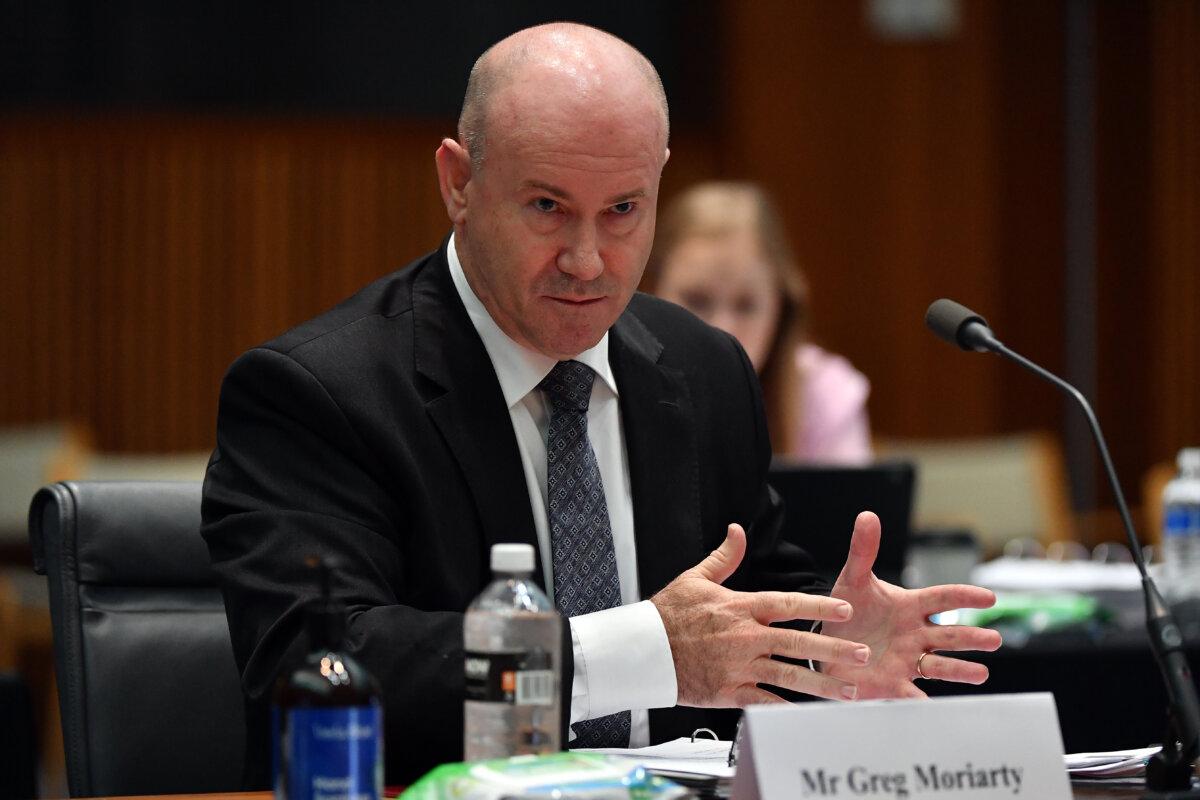
“We are seeing the People’s Liberation Army continue to expand its military capability reach and operational tempo as the PLA operates further afield,” Defence Secretary Greg Moriarty said.
“We expect the Australian Defence Force will come into close contact more often, including in waters proximate to Australia.”
Moriarty’s comment highlighted the growing tension in the region following a series of aggressive behaviour by the PLA in 2025.
The vessels were first spotted travelling the north and eastern coastline of Australia while remaining within the country’s Exclusive Economic Zone.
They then passed near Sydney and entered the Tasman Sea to conduct live fire naval exercises.
After that, the warships continued west toward the Great Australian Bight and traversed around Australia before heading north and exiting the country.
During their journey, the vessels passed through Australia’s important defence bases, including Garden Island in Western Australia—the country’s largest navy base, which is expected to house AUKUS nuclear submarines.
While the Labor government said the warships were operating in accordance with international law, the incident marked the first time that PLA vessels appeared so close to Australia’s east coast.
Defence’s Views on Future PLA’s Activities
Shadow Foreign Affairs Minister Michaelia Cash questioned defence representatives about whether the Department expected to see an incident similar to the circumnavigation repeated by the PLA Navy.In response, Moriarty said it was difficult to predict the PLA’s future activities in the region.
“But I think that the broader point is that as China’s power grows and as the power of the PLA and its capabilities expands, it is conducting more and more operations beyond its territorial areas,” he said.
He added that the PLA has increased the frequency of its deployments outside the first and second island chains.
“We certainly are of the view that those will continue to grow,” Moriarty said.
“As the capabilities of the PLA increase, we see additional deployments South, including into waters around Indonesia and other parts of Southeast Asia, and we expect that there will continue to be increasing deployments in waters proximate to us.”
.
Cash then asked what the Australian Defence Force (ADF) could do to ensure that future live fire exercises by the CCP would not constitute a surprise to the government.
Admiral David Johnston, ADF chief, said it was not Australia’s responsibility but rather that of the nation conducting activities to ensure the safety of civilian aircraft and vessels in the area, and to provide adequate notification to minimise disruption.
Upgrading ADF’s Defence Assets
According to Moriarty, the Deputy Prime Minister and Defence Minister Richard Marles announced in August that the ADF would replace its current general-purpose frigate fleet with the upgraded Japanese Mogami-class frigates.“Together with the hunter class frigates, these ships will deliver a larger and more lethal surface combatant fleet to enable the critical capabilities in our maritime fleet,” he said.
.

At the same time, Moriarty highlighted the ADF’s goal to diversify its maritime capabilities by employing autonomous defence systems.
“In the air domain, the Royal Australian Air Force has put the uncrewed ‘Ghost Bat’ aircraft through over 130 live sorties,” Moriarty said.
“This is the first military combat aircraft to be designed, engineered, and manufactured in Australia in half a century as autonomous technology advances.
The Importance of International Partnerships
Apart from equipment upgrades, the defence secretary stated that international partnerships were essential to ensure stability in the region.He noted that the Department had actively engaged with long-term allies such as the United States and the UK regarding the AUKUS agreement, as well as other partners in the Indo-Pacific.
In addition, Moriarty stressed the importance of maintaining a dialogue with the CCP.
“In this environment, dialogue with China is vital to register our concerns and manage our differences,” he said.
Moriarty’s comments came as the CCP continues to display increasingly aggressive behaviour toward Australia, with the latest incident involving a Chinese jet’s disregard for aviation safety.
On Oct. 19, a PLA fighter jet released flares near a Royal Australian Air Force (RAAF) surveillance plane when it was patrolling in the South China Sea.
Fortunately, the RAAF crew suffered no injury and managed to land their aircraft safely.
After the incident unfolded, the Labor government condemned the Chinese jet’s behaviour, calling it an “unsafe and unprofessional manoeuvre.”
.
What's Your Reaction?
 Like
0
Like
0
 Dislike
0
Dislike
0
 Love
0
Love
0
 Funny
0
Funny
0
 Wow
0
Wow
0
 Sad
0
Sad
0
 Angry
0
Angry
0















Comments (0)