

Allied Forces Close Ranks in the South China Sea — And Beijing Is Not Happy
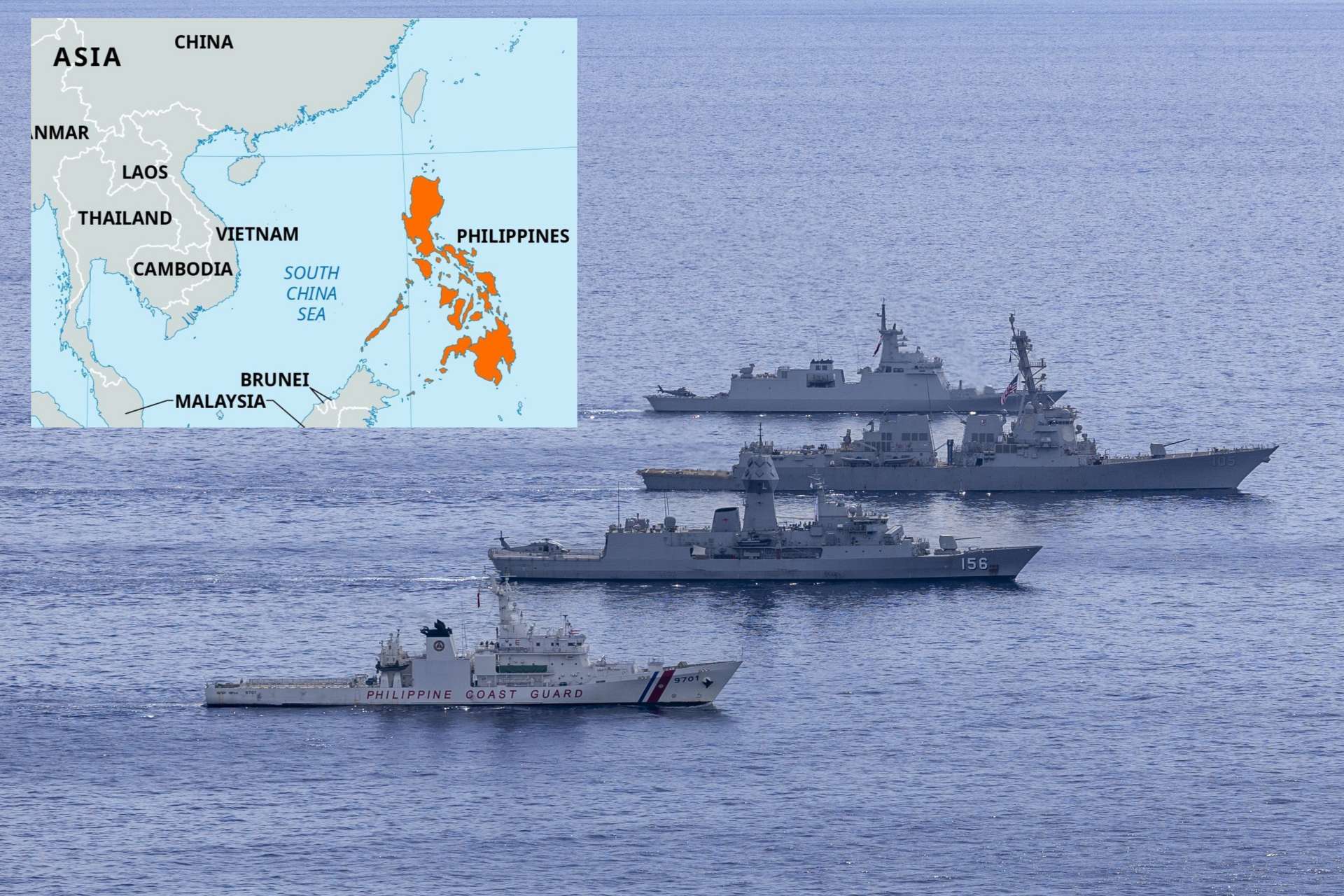
For the second time this year, the navies and air forces of the United States, Australia, and the Philippines have conducted coordinated military exercises in the South China Sea — one of the world's most contested stretches of water. The drills, which ran from April 9 to 12, 2026, brought together warships, fighter jets, and surveillance aircraft in a clear show of allied resolve. China's military responded with its own patrol — and sharp words.

.
U.S., Australian, and Philippine Warships Complete Four-Day Joint Drills — With Much Bigger Exercises Still Ahead
For the second time this year, the navies and air forces of the United States, Australia, and the Philippines have conducted coordinated military exercises in the South China Sea — one of the world's most contested stretches of water. The drills, which ran from April 9 to 12, 2026, brought together warships, fighter jets, and surveillance aircraft in a clear show of allied resolve. China's military responded with its own patrol — and sharp words.
.
What Happened at Sea
The four-day exercises brought together warships, fighter jets, and surveillance aircraft in a series of coordinated operations designed to strengthen maritime defense capabilities, according to the Philippine military.
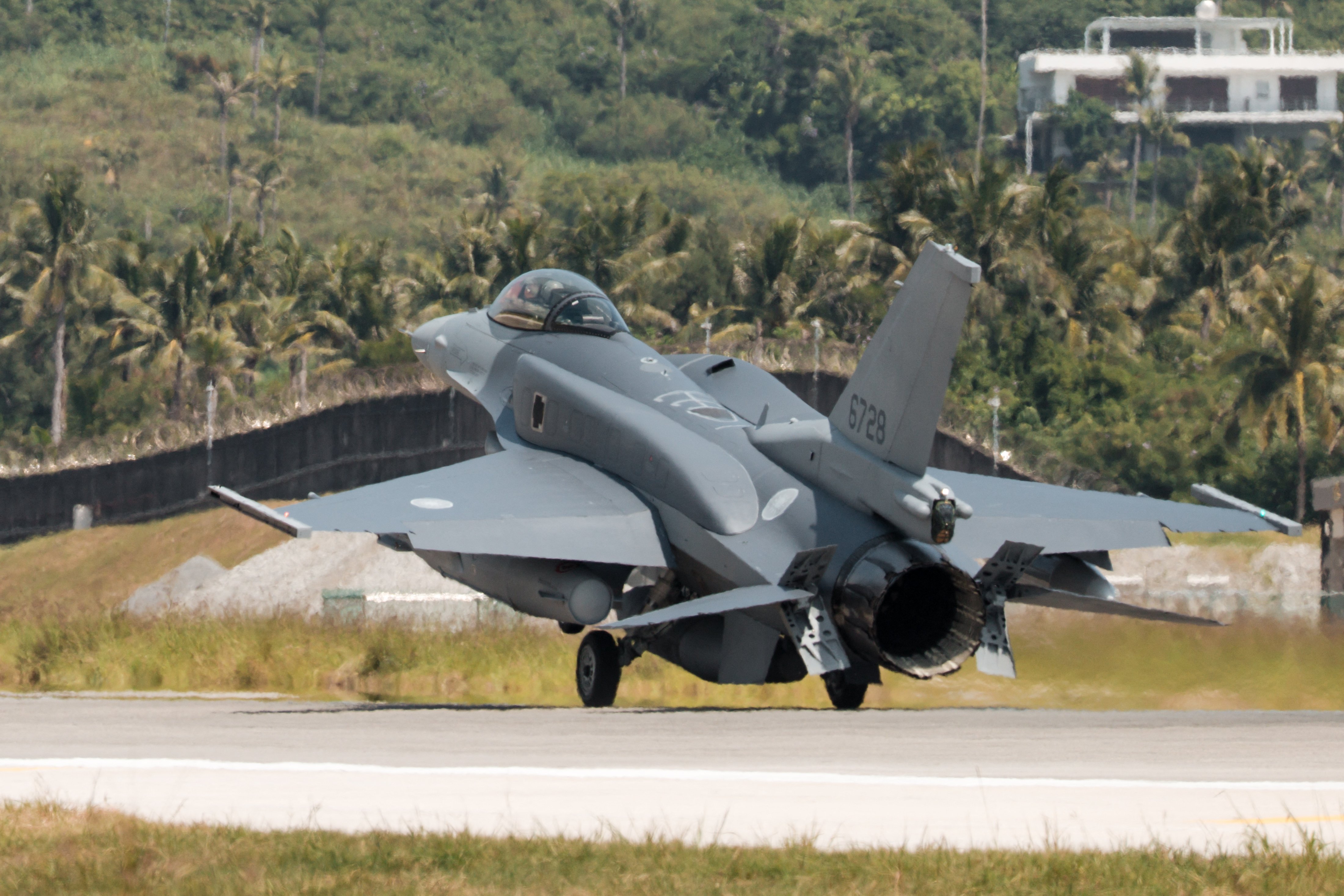
Each nation contributed distinct assets. The Philippines deployed its FA-50 light combat jets. Australia contributed P-8A Poseidon maritime patrol aircraft, while the United States sent the USS Ashland, a dock landing ship capable of transporting troops and equipment.
This was not an isolated event. The first trilateral maritime cooperative activity of 2026 had already taken place in mid-February, inside the Philippine Exclusive Economic Zone — part of a broader effort to consolidate naval cooperation and uphold a rules-based maritime order in one of the world's most contested seas.
Why This Matters: A Region Under Pressure
The South China Sea is no ordinary waterway. It carries roughly one-third of global maritime trade and is claimed — almost entirely — by Beijing. Those claims overlap with the sovereign maritime zones of the Philippines, Vietnam, Malaysia, and others. An international tribunal ruled in 2016 that China's sweeping claims have no basis in international law. Beijing has ignored that ruling ever since.
Tensions between Manila and Beijing have been escalating for years. Since 2023, the Philippines has stepped up its pushback against China's expanding presence within its maritime zone, at times leading to clashes and raising concerns that an incident could trigger the U.S.–Philippines Mutual Defense Treaty.
The most recent flashpoint: Chinese forces fired flares at a Philippine Coast Guard aircraft — a provocative act that drew international attention and condemnation.
Beijing Fires Back — With Words
China's military did not sit idle during the April drills. The spokesperson for China's Southern Theater Command stated that the Chinese navy conducted a "routine patrol" in the South China Sea during the exact same four-day window.
The timing was not coincidental. The message from Beijing was unmistakable: we are here, and we are watching.
Beijing's official response was characteristically combative. The Southern Theater Command accused the Philippines of "co-opting countries outside the region" to organize what it called "so-called joint patrols," claiming such exercises disrupt peace and stability in the South China Sea.
This line of argument — that it is the democratic allies, not China, who are destabilizing the region — has become a standard refrain from Beijing. Critics and security analysts widely dismiss it as an inversion of reality, given China's pattern of aggressive territorial expansion, construction of artificial islands, and use of coast guard and militia vessels to intimidate neighboring countries' fishermen and naval personnel.
A Rapidly Expanding Alliance Network
What makes the current moment especially significant is the speed at which the allied coalition is growing — and deepening.
The upcoming Balikatan exercises, set to begin April 20, will include not only the United States and the Philippines but also Japan and Australia, reflecting a broader shift toward multilateral defense cooperation in the Indo-Pacific.
Japan's involvement is particularly historic. Japan will deploy combat-capable units to Balikatan 2026 — the first time since World War II that Japanese combat troops will be on Philippine soil. At least 1,000 Japanese troops are expected to participate.
Balikatan 2026, running from April 20 to May 8, marks the 41st iteration of the exercise and will include participants from Australia, Japan, France, Canada, and New Zealand, covering scenarios from conventional warfare to foreign disaster response.
The Bigger Picture: Deterrence Through Numbers
The acceleration of multilateral exercises reflects a deliberate strategy: make the cost of Chinese aggression too high by ensuring that any confrontation with the Philippines quickly involves multiple powerful nations.
Analysts note that the South China Sea has become one of Asia's most contested strategic flashpoints, with China's use of so-called "grey zone" tactics — coercive actions that fall short of open conflict — pushing smaller Southeast Asian states to strengthen external security ties.
Since November 2023, the Philippines and its partners have conducted a total of 35 bilateral and multilateral maritime cooperative activities in the West Philippine Sea — a number expected to grow further.
The message from Manila and Washington is clear: the free and open Indo-Pacific is not negotiable.
.
Sources
- Reuters — US, Australia, Philippines hold second joint drills in South China Sea this year (April 13, 2026): https://www.reuters.com/business/aerospace-defense/us-australia-philippines-hold-second-joint-drills-south-china-sea-this-year-2026-04-13/
- Stars and Stripes — Beijing organizes patrol as US, Australia and Philippines drill in South China Sea (Feb. 17, 2026): https://www.stripes.com/theaters/asia_pacific/2026-02-17/south-china-sea-us-navy-philippines-australia-20770871.html
- The Diplomat — Japan to Send Combat Units to Philippines-US Balikatan Exercises for the First Time (March 2026): https://thediplomat.com/2026/03/japan-to-send-combat-units-to-philippines-us-balikatan-exercises-for-the-first-time/
- Radio Free Asia — Japan's combat role in Philippines war games signals shift in regional strategy (April 8, 2026): https://www.rfa.org/english/southchinasea/2026/04/08/japan-philippines-military-exercise-balikatan/
- DVIDS / U.S. Department of Defense — Exercise Balikatan 2026 official page: https://www.dvidshub.net/feature/Balikatan
- Army Recognition — U.S. Strengthens South China Sea Presence with Australia and Philippines (Feb. 20, 2026): https://www.armyrecognition.com/news/navy-news/2026/u-s-strengthens-south-china-sea-presence-with-australia-and-philippines-in-new-trilateral-naval-activity
- Newsweek — US Allies Send Warships to Contested Waters Claimed by China (Aug. 2025): https://www.newsweek.com/philippines-australia-canada-conduct-joint-drills-south-china-sea-2116146
.
What's Your Reaction?
 Like
1
Like
1
 Dislike
0
Dislike
0
 Love
1
Love
1
 Funny
0
Funny
0
 Wow
1
Wow
1
 Sad
0
Sad
0
 Angry
0
Angry
0












Comments (0)