

3 Military Tech Experts Removed From China’s Top Engineering Academy
3 Military Tech Experts Removed From China’s Top Engineering Academy - Radar, missile, and nuclear specialists disappear from China’s top engineering body as a broader shake-up spreads across the defense industry.

.
Radar scientist Wu Manqing, missile guidance specialist Wei Yiyin, and nuclear weapons engineer Zhao Xiangeng no longer appear on the academy’s list of 989 members.
Commentators on Chinese online media NetEase on March 14 were the first to report that the three academicians’ profiles had been removed from the academy’s website.
Their Backgrounds
Wu was removed from his position as vice president of the Chinese Academy of Engineering in July 2025 by China’s State Council, according to Chinese state media Xinhua News Agency.Chinese financial news outlet Caixin reported in October 2024 that Wu and former China Electronics Technology Group Corporation (CETC) Chairman Chen Zhaoxiong had both been taken away by authorities. The report was later removed from the website, and the company did not comment publicly.
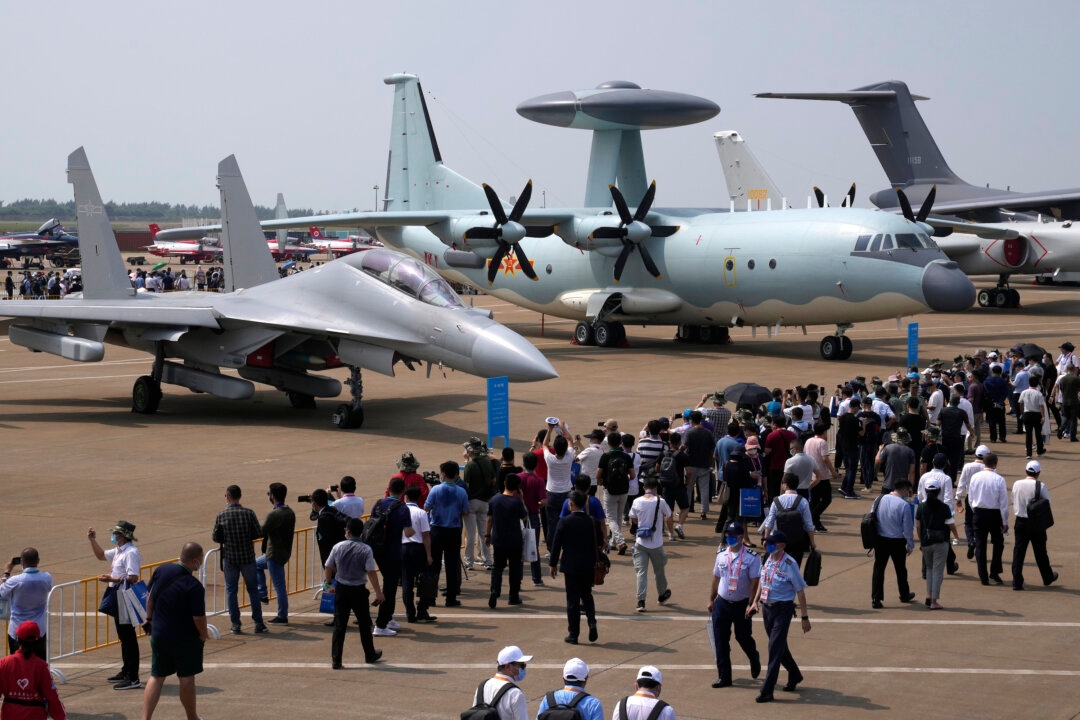
Wu, born in 1965, is widely known for his work in radar technology and networked information systems. He played a key role in developing radar systems for the Chinese airborne early warning aircraft KJ-500.
He spent more than three decades working at CETC, a major state-owned defense contractor involved in projects, including China’s satellite systems.
Wei spent much of his career at the state-owned defense conglomerate China Aerospace Science and Industry Corporation (SASIC).
Born in 1962, Wei worked on cruise missile design and guidance systems and later served as the corporation’s deputy general manager from 2014 to 2023.
Wei previously worked alongside several of these officials during his tenure at SASIC.
Zhao, born in 1953, previously served as president of the China Academy of Engineering Physics, the country’s primary research institution for nuclear weapons development.
Zhao was elected to the Chinese Academy of Engineering in 2011 and later served as one of its vice presidents from 2016 to 2018. He was also an alternate member of the Chinese Communist Party’s Central Committee.
Defense Sector Purge Expands
The removal of the three academicians comes as China’s anti-corruption and political discipline campaigns have increasingly extended into the country’s defense industry.According to official announcements and Chinese media reports, at least a dozen major state-owned defense contractors have seen senior executives investigated, removed from office, or disappear from public view in recent years.
What's Your Reaction?
 Like
0
Like
0
 Dislike
0
Dislike
0
 Love
0
Love
0
 Funny
0
Funny
0
 Wow
0
Wow
0
 Sad
0
Sad
0
 Angry
0
Angry
0













Comments (0)