

White House Calls Out China for 'Industrial-Scale' Theft of American AI Technology
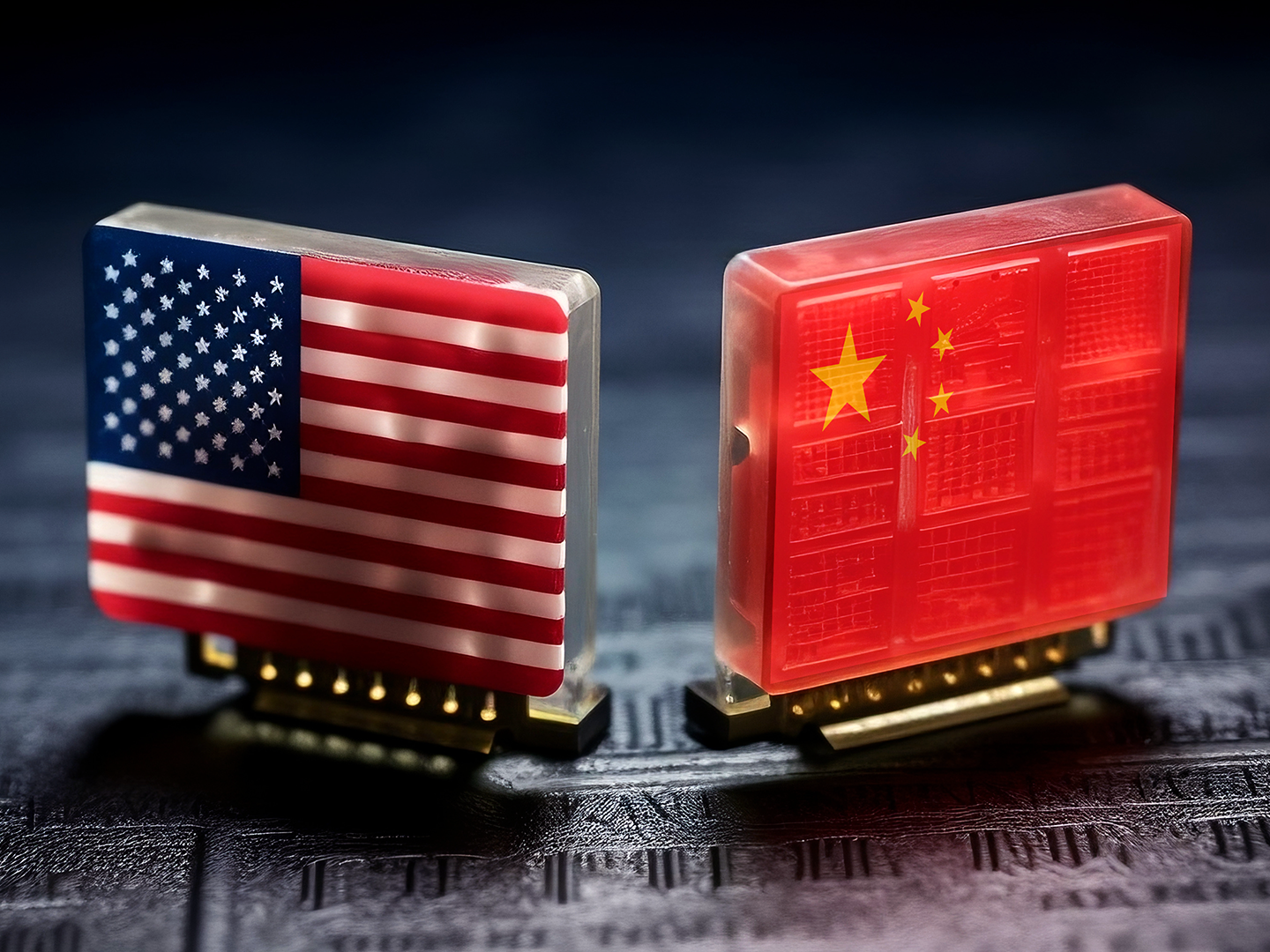
The Trump administration has formally accused China of running large-scale, organized campaigns to steal intellectual property from leading U.S. artificial intelligence companies. A White House memo warns of serious consequences and signals that the issue will be on the table when President Trump meets President Xi Jinping in Beijing.

.
Washington Puts Beijing on Notice
The White House has publicly accused China of conducting coordinated, deliberate, industrial-scale campaigns to extract the core capabilities of American AI systems — a practice known as "distillation." The accusation comes in an official memo from Michael Kratsios, director of the White House Office of Science and Technology Policy (OSTP), which was reviewed by the Financial Times.
Kratsios noted that these campaigns leverage tens of thousands of proxy accounts to evade detection and use jailbreaking techniques to expose proprietary information. "Jailbreaking" refers to manipulating an AI system into bypassing its built-in safety restrictions to reveal information it normally would not share.
What Is AI Distillation — and Why Does It Matter?
At the heart of the allegations is a technique called model distillation. In simple terms, it means training a new, cheaper AI model by feeding it massive amounts of data generated from a more powerful, existing one — effectively copying its intelligence without years of expensive research.
Chinese companies create fraudulent accounts, query American AI models on a massive scale to generate synthetic training data, and then use that data to build their own AI systems — all in violation of U.S. AI labs' terms of service.
Models created through such unauthorized distillation may not fully match the original systems, but they still offer a cost advantage that could significantly accelerate foreign competition. In other words: China gets advanced AI capabilities at a fraction of the cost of developing them independently.
National Security at Stake
U.S. officials stress that this is not just a commercial dispute. There are growing concerns that distilled models may lack safeguards embedded in the original systems — protections specifically designed to prevent misuse in areas such as bioweapons development or cyberattacks.
According to analyst Chris McGuire, Chinese AI firms are relying on distillation attacks to offset deficits in AI computing power and to illicitly reproduce the core capabilities of U.S. models. This matters because China faces significant restrictions on acquiring the advanced computer chips needed to train powerful AI from scratch.
All Major U.S. AI Companies Affected
The problem is not limited to one company or one incident. All major U.S. AI companies — including Google, Anthropic, and xAI — have accused Chinese companies of leveling distillation attacks against their systems. OpenAI, for its part, has previously described China's approach as using "sophisticated, multi-stage pipelines" to steal American AI capabilities.
China's DeepSeek carried out the first highly publicized distillation attack in early 2025, sending shockwaves through the tech industry when it released a model that appeared to match U.S. frontier systems at a dramatically lower cost.
Washington Plans to Fight Back
Kratsios' memo informed government departments that the administration would share information with American AI companies regarding attempts by foreign actors to conduct unauthorized distillation — with the aim of coordinating a joint defense against such attacks.
The U.S. also intends to explore measures to hold foreign actors accountable for industrial-scale distillation campaigns. Specific countermeasures have not yet been detailed publicly, but tighter export controls, sanctions, and legal action are widely expected.
Timing: A Message Before the Beijing Summit
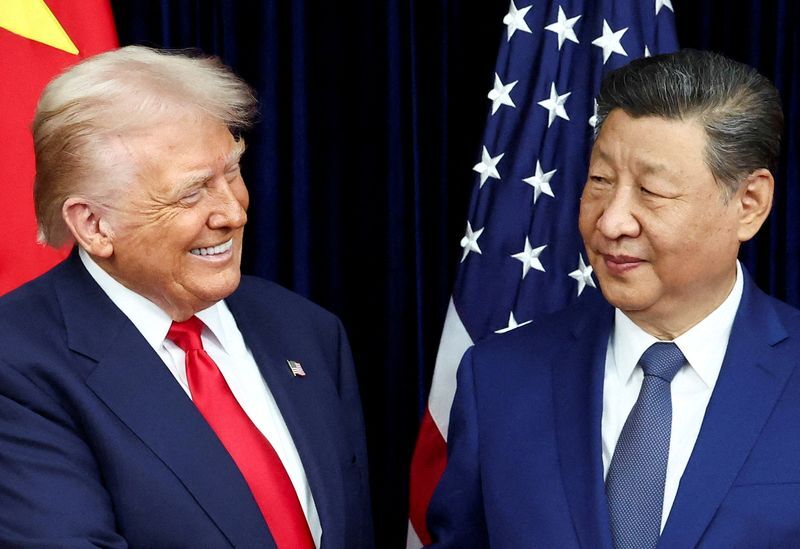
The issue comes into sharper focus ahead of a planned meeting between President Trump and Chinese President Xi Jinping in Beijing, where technology competition is expected to be a key topic. The timing of the memo's release appears deliberate — a clear signal to Beijing that AI theft will not be overlooked in diplomatic negotiations.
The broader context is a U.S.-China technology rivalry that has intensified over the past several years, with Washington increasingly viewing AI dominance as a matter of national security rather than simply economic competition.
.
Sources
- Reuters / U.S. News & World Report – White House accuses China of industrial-scale AI theft (April 23, 2026): https://www.usnews.com/news/top-news/articles/2026-04-23/white-house-accuses-china-of-industrial-scale-theft-of-ai-technology-ft-reports
- Invezz – White House alleges China stole AI at industrial scale (April 23, 2026): https://invezz.com/news/2026/04/23/white-house-alleges-china-stole-ai-at-industrial-scale-report/
- Investing.com / Financial Times – White House warns of industrial-scale AI IP theft (April 23, 2026): https://in.investing.com/news/economy-news/white-house-warns-of-industrialscale-ai-intellectual-property-theft--financial-times-93CH-5354997
- U.S. House Select Committee on the CCP – Congressional Testimony on China's AI theft campaigns (April 16, 2026): https://docs.house.gov/meetings/ZS/ZS00/20260416/119165/HHRG-119-ZS00-Wstate-MahmoodY-20260416.pdf
.
What's Your Reaction?
 Like
1
Like
1
 Dislike
0
Dislike
0
 Love
1
Love
1
 Funny
0
Funny
0
 Wow
1
Wow
1
 Sad
0
Sad
0
 Angry
0
Angry
0













Comments (0)