

US Treasury Hosts G7 Talks on Rare-Earth Supply Chain Risks


.
U.S. Department of the Treasury Secretary Scott Bessent convened a Jan. 12 meeting of finance ministers from G7 countries and other major economies to discuss ways to secure and diversify supply chains for critical minerals, especially rare earth elements.
.
The meeting was attended by G7 members from Canada, France, Germany, Italy, Japan, the United Kingdom, and the United States, along with representatives from Australia, India, Mexico, and South Korea, according to a Department of the Treasury statement.
.
“At today’s Finance Ministerial hosted by the @USTreasury, I was pleased to hear a strong, shared desire to quickly address key vulnerabilities in critical minerals supply chains,” said Bessent in a Jan. 12 post on X. “I am optimistic that nations will pursue prudent derisking over decoupling and understand well the need for decisive action.”
China’s Grip on Rare Earths
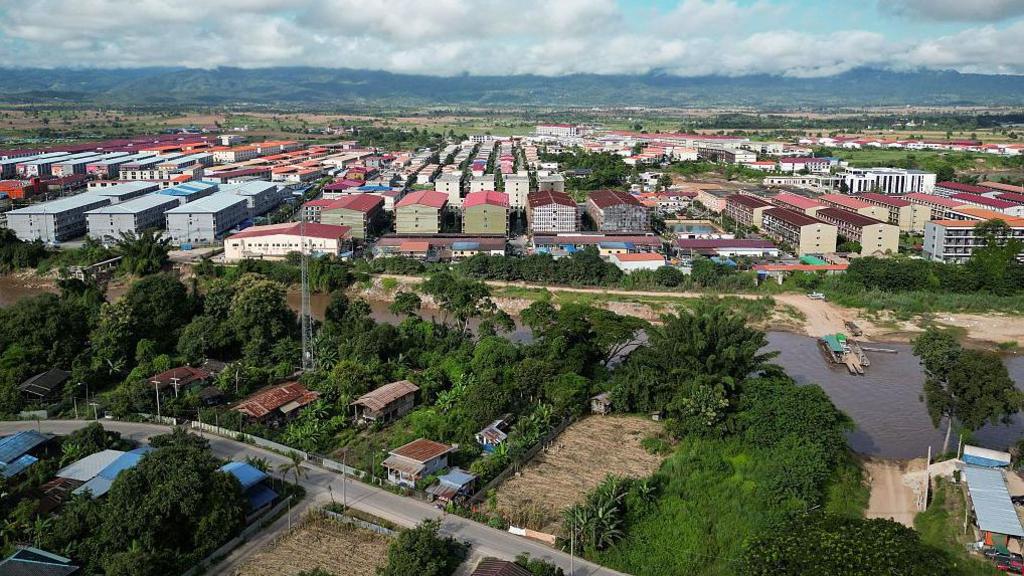
Rare earths are a set of 17 metallic elements that play a critical role in a nation’s security, energy independence, and economic growth. According to a 2025 report from the International Energy Agency, China dominates the rare earth industry, accounting for around 60 percent of global mining output in 2024. China controls around 91 percent of the elements’ separation and refining stages. After China, the major players are Burma (also known as Myanmar), Australia, and the United States.China often uses its position in the rare-earth market to negotiate deals and has imposed strict export controls on rare-earth exports, most recently on shipments to Japan.
On Jan. 6, Beijing imposed a ban on shipments to Japan of items that could be used for civilian or military purposes if the island nation were to pursue an enhancement of its military capabilities. Following the ban, Japanese Prime Minister Sanae Takaichi said she was working with other G7 countries to reduce dependency on any “single country” for critical supplies, while calling the restrictions “unacceptable.”
When President Donald Trump imposed a reciprocal tariff on China in April 2025, Beijing retaliated by restricting exports of a critical magnet, threatening key industries from automobiles to F-35 fighter jet production.
The Trump administration had to resort to exempting electronics from tariff fines for the Chinese Communist Party (CCP) to lift sanctions. Then, Trump had to negotiate a major deal in late October to prevent the CCP from restricting rare earth elements and other critical mineral exports.
‘Prudent Derisking’
Attendees of the Jan. 12 Treasury meeting “expressed a strong, shared desire to quickly address key vulnerabilities in critical minerals supply chains,” said the statement. The United States highlighted actions and investments it has already undertaken, and future plans, but the statement did not include any specific steps to overcome the mineral handicap.“Secretary Bessent expressed his optimism that nations will pursue prudent derisking over decoupling, and that they understand well the need to remedy current deficiencies in critical minerals supply chains,” the statement said.
German Finance Minister Lars Klingbeil said discussions at the meeting included a potential rare-earths price floor and partnerships to boost supplies, but noted the talks had just begun with many unresolved issues. He said that rare earths and critical mineral supplies would be a central topic during the French presidency of the G7 this year.
However, he warned against an anti-China coalition, stressing that Europe needs to move faster on its own to develop supplies of important raw materials.
“What is very important to me is that we in Europe do not sit back,” Klingbeil said. “Neither complaining nor self-pity helps us, we have to become active.”
Trump’s recent advocacy for taking control of Greenland for national security purposes is also seen as being based on the island’s abundant rare-earth resources. According to the Center for Strategic and International Studies, Greenland ranks eighth globally for rare earth reserves, with 1.5 million tons, and is home to two of the largest rare earth deposits in the world—Kvanefjeld and Tanbreez.
.
Reuters contributed to this report.
.
What's Your Reaction?
 Like
0
Like
0
 Dislike
0
Dislike
0
 Love
0
Love
0
 Funny
0
Funny
0
 Wow
0
Wow
0
 Sad
0
Sad
0
 Angry
0
Angry
0













Comments (0)