

US Grants TSMC Export Licence for China Fab Amid Chip Supply Tensions


.
The United States has granted Taiwan Semiconductor Manufacturing Co. (TSMC) an annual export licence allowing U.S. chipmaking equipment to be supplied to its Nanjing fabrication plant in China, preserving operations at the facility even as Washington intensifies scrutiny of Beijing’s semiconductor ambitions.
TSMC said in a Jan. 1 statement that the U.S. Department of Commerce had approved an annual licence covering U.S. export-controlled items shipped to TSMC Nanjing, eliminating the need for individual vendor licences and ensuring “uninterrupted fab operations and product deliveries.”
The Nanjing facility manufactures 16-nanometre and other mature-node chips used in a wide range of applications, including consumer electronics and automotive components, rather than the most advanced semiconductors that are the primary target of U.S. export controls.
The licence comes as validated end-user exemptions that had allowed certain foreign chipmakers to import U.S. equipment into China without case-by-case approvals expired on Dec. 31, forcing companies to seek new authorizations for 2026. South Korea’s Samsung Electronics and SK Hynix have also received similar annual licences, according to earlier disclosures.
Although mature-node chips like those made at the Nanjing plant are widely used in consumer electronics, vehicles, and industrial systems, they do not fall into the category of cutting-edge semiconductors targeted by U.S. export controls, which are designed to limit China’s access to advanced technologies with military or strategic applications.
US–China Semiconductor Tensions
The Commerce Department decision to grant TSMC an export license for its Nanjing plant comes amid heightened tensions over Beijing’s industrial policies.The investigation found that the Chinese regime has formulated more than 100 plans outlining such non-market practices targeting semiconductors over the past 25 years and warned that Beijing seeks to create global dependencies it can later exploit.
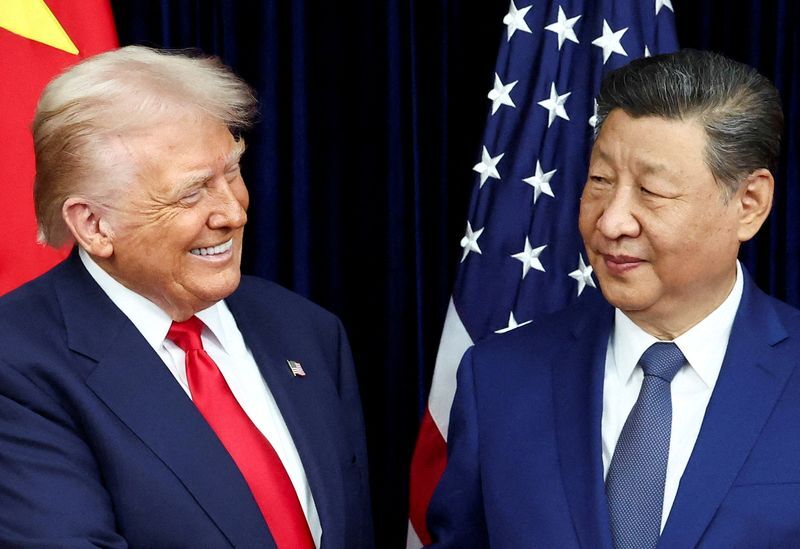
While the USTR determined that semiconductor tariffs were warranted, it delayed their implementation until June 23, 2027, following a bilateral meeting between U.S. President Donald Trump and Chinese leader Xi Jinping that extended a broader trade truce.
Those gaps have become a focal point in Washington, where officials and experts say that exports of chipmaking equipment are a key point of leverage over China, even as past loopholes allowed key technologies to flow into the country.
What's Your Reaction?
 Like
0
Like
0
 Dislike
0
Dislike
0
 Love
0
Love
0
 Funny
0
Funny
0
 Wow
0
Wow
0
 Sad
0
Sad
0
 Angry
0
Angry
0














Comments (0)