

Unexplained Absences of Senior Chinese Officials Fuel Power-Struggle Speculation


.
The unexplained absence of several senior Chinese Communist Party (CCP) and military officials from a high-level political seminar this week has sparked speculation among China analysts, underscoring the opacity of internal CCP power struggles.
While some absences had plausible explanations, others did not—fueling rumors about power struggles within the CCP and military.
The CCP confirmed that He attended the World Economic Forum in Davos, Switzerland, from Jan. 19 to Jan. 22. Ma has been absent from multiple major events in recent months and has been widely rumored to be under investigation, though no official announcement has been made. The reasons for the absences of Zhang, Liu, and Shi were not disclosed.
By contrast, newly promoted CMC Vice Chairman Zhang Shengmin and Defense Minister Dong Jun were present at the seminar, further sharpening attention on those who were absent.
Routine Absences or Political Signals?
Feng Chongyi, an associate professor in China Studies at the University of Technology Sydney, told The Epoch Times that the most likely explanation for such coordinated absences is that the officials had been purged by Xi Jinping, arguing that senior military figures have repeatedly failed to mount meaningful resistance to Xi’s consolidation of power.Australia-based Chinese dissident and China current affairs commentator Edwin Chiang told The Epoch Times that if Zhang Youxia was indeed removed, Zhang Shengmin could replace him as the first vice chairman of the CMC.
Chiang characterized the situation as a clash of interests, noting that while Zhang Youxia and Xi Jinping had long been aligned, Xi now wanted Zhang to step aside—a move Zhang allegedly resisted.
U.S.-based China current affairs commentator Wang He urged restraint, noting that China’s information controls make firm conclusions impossible. He said that Zhang Youxia remains a Politburo member and, in the current CMC power structure, arguably holds more real military authority than Zhang Shengmin, who is not a Politburo member.
“It would be unlikely for Xi Jinping to remove [Zhang Youxia],” Wang told The Epoch Times, adding that illness or undisclosed duties could also explain Zhang’s absence.
He suggested that the rumors may be false information released by factions within the Party who disagree with Xi, in an attempt to undermine confidence in Xi’s leadership.
U.S.-based veteran Chinese political commentator Cai Shenkun wrote on X on Jan. 22 that speculation surrounding Zhang Youxia’s possible detention was spreading rapidly and growing increasingly sensational. He urged caution, noting that sources were impossible to verify, and suggested observers watch whether Zhang appears at upcoming Lunar New Year events.
“If Zhang Youxia is truly arrested, it would signal a complete rupture between Xi Jinping and the ‘red [Party] aristocracy.’ What follows would depend on how those red elite families choose to respond,” Cai wrote, according to a translation of the post originally in Mandarin.
“As long as the red families join forces to counterattack, I think very few of Xi Jinping’s close confidants would dare to resist to the end.”
Tensions in the Military
U.S.-based Chinese scholar and political commentator Wu Zuolai said on his Chinese-language YouTube podcast that deeper tensions between Zhang Youxia and Xi Jinping stem from Zhang’s disagreements with Xi’s increasingly personalized, Maoist-style leadership. He cited the rapid promotion of loyalists and the resurgence of Cultural Revolution–style propaganda as sources of internal resentment.Notably, Wu observed that the CCP’s military press published commentaries in 2024 calling for “democratic centralism” and warning against “patriarchal leadership,” which he suggested bore Zhang’s imprint.
Another Absence Raises Eyebrows
Attention has also turned to Shi Taifeng, head of the CCP Organization Department. After missing the Jan. 20 seminar, Shi was again absent the following day from a symposium on the 2025 macroeconomic outlook—an event he had chaired in both 2024 and earlier in January 2025.The Organization Department is essentially the regime’s human resources department and oversees personnel assignments within the Party.
Cai Qi’s ‘Highly Unusual’ Role
Speculation intensified further after an explosion at a steel plant in Inner Mongolia on Jan. 18. When regional Party Secretary Wang Weizhong visited the site the same day, he emphasized implementing instructions from Politburo member Cai Qi—a move some analysts say deviates from CCP norms, in which such directives typically come from Xi Jinping or Premier Li Qiang.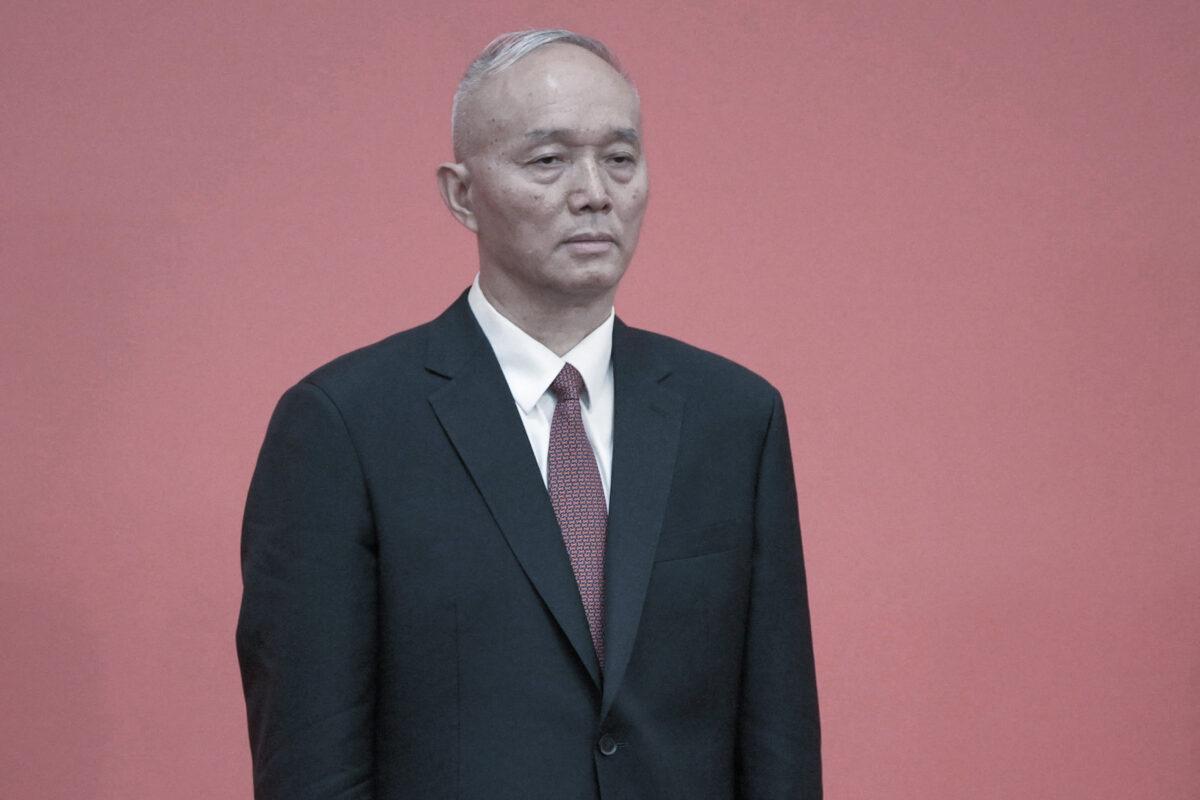
China commentator Wang He called the incident “highly unusual,” though he cautioned that its political significance remains unclear.
Cai Shenkun questioned on X whether the incident reflected a shift in authority, asking whether Cai Qi had assumed responsibilities typically reserved for Xi.
Xi continues to dominate state media coverage, even as China observers speculate about the regime’s internal power arrangements.
“If Xi Jinping does not hold absolute power and his public appearances are merely performative,” Wang He said, “we can only observe what happens next.”
What's Your Reaction?
 Like
0
Like
0
 Dislike
0
Dislike
0
 Love
0
Love
0
 Funny
0
Funny
0
 Wow
0
Wow
0
 Sad
0
Sad
0
 Angry
0
Angry
0












Comments (0)