

Trump’s Global Offensive Targets China’s Energy Lifelines, Strategic Partners: Analysts


.
Since the start of the year, the Trump administration has made major foreign policy moves across various regions—including Latin America and the Middle East—indicating a shift in U.S. international relations.
Removing Beijing’s Strategic Outposts
On Feb. 28, the United States and Israel carried out what Adm. Brad Cooper, commander of U.S. Central Command, described as “bold action” against Iran’s leadership structure. Weeks earlier, Maduro—long accused by Washington of narcoterrorism—had been taken into custody.Both Iran and Venezuela have been viewed as key nodes in Beijing’s global network—discounted energy suppliers and political partners willing to challenge American influence in their respective regions. According to analytics firm Kpler, nearly 75 percent of Venezuelan oil exports and 80 percent of Iranian oil exports were bound for China.
While each move by the Trump administration was publicly justified on regional security grounds, some analysts argue that it also serves a broader strategic objective.
American author and historian Victor Davis Hanson stated on his YouTube podcast aired on Feb. 28 that Trump’s actions may seem spontaneous, but they indicate a calculated shift—moving away from so-called endless wars and toward strategic deterrence during a time of great-power rivalry.
Rather than confronting China militarily—an option that could entail nuclear risk and economic upheaval—Washington could be pursuing what some analysts call an indirect pressure strategy.
Hsieh Pei-shiue, a cybersecurity researcher at Taiwan’s Institute for National Defense and Security Research (INDSR), recently told The Epoch Times that direct conflict with China would be extremely costly, but dismantling Beijing’s peripheral partnerships is comparatively lower-risk and harder for China to counter in real time.
“If you remove Iran from the equation, China loses geopolitical leverage, proves that it cannot compete with the West, loses access to cheaper oil, and will affect [Beijing’s] leverage in the upcoming meeting between Trump and Xi [Jinping],” INDSR researcher Su Tzu-yun told The Epoch Times.
The timing is significant: Trump revealed in November via Truth Social that he accepted Xi’s invitation to visit Beijing in April, marking the U.S. president’s first trip to China since the start of his second term.
.
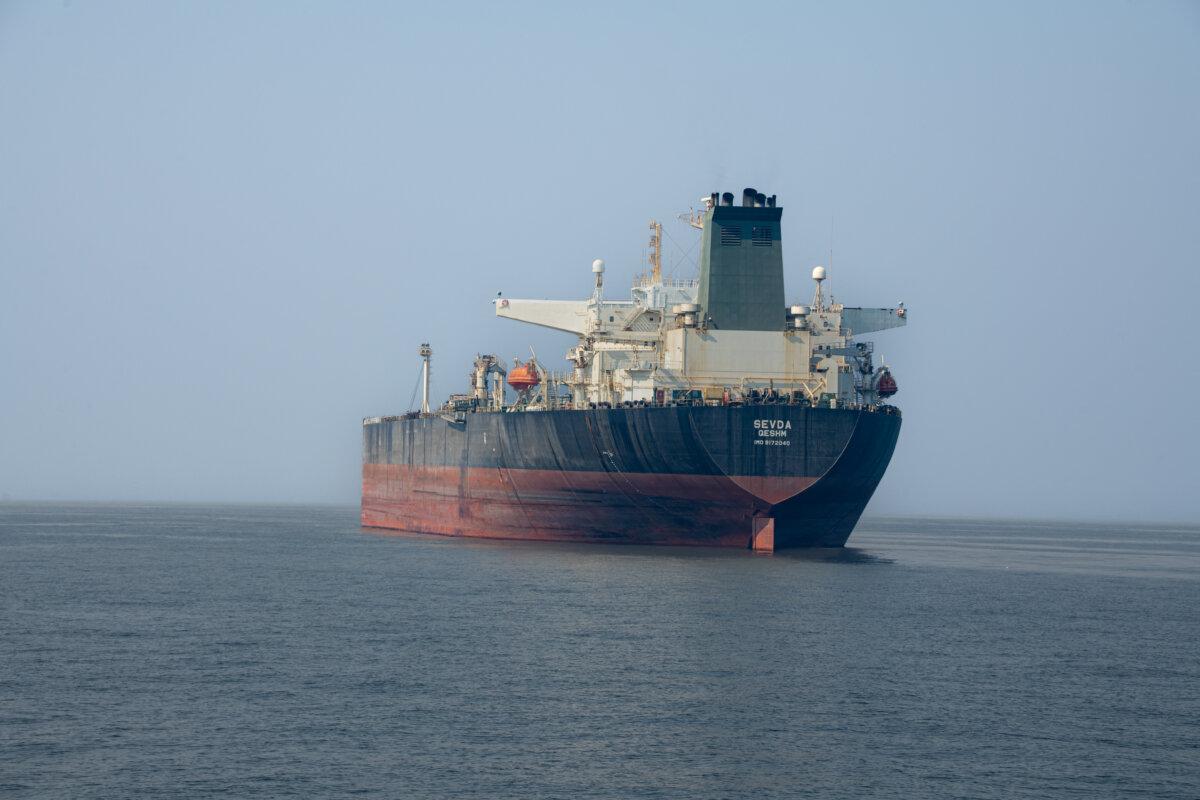
Iranian crude oil tanker, Sevda, sails near Bandar Asaluyeh, Iran, on Jan. 27, 2026. AFP via Getty Images
.
A Strategy That Xi Understands
China expert Gordon Chang, author of “Plan Red: China’s Project to Destroy America,” said in an interview with EpochTV’s “American Thought Leaders” program, which aired on March 2, that Xi views Trump’s strategy as similar to that of Mao Zedong, who secured victory for the communists during the Chinese Civil War by encircling “the cities from the countryside.”Chang noted that Xi has tried to challenge American geopolitical dominance by expanding influence in Africa, the Middle East, Latin America, and even Eastern Europe.
He said that Washington is now reversing its previous logic. In this perspective, Venezuela and Iran are considered the “countryside,” while China represents the “city.” By weakening Beijing’s external partners, the United States exerts more pressure on the “city.”
Energy plays a key role in this dynamic. If discounted Venezuelan and Iranian crude oil becomes inaccessible or more costly to China, Chinese manufacturers—already grappling with slowing growth—would face higher input costs. “If they get their oil, they’re going to have to pay market prices,” Chang said.
Driving a Wedge Between Beijing and Moscow
Some analysts consider the most significant theater not to be Tehran or Caracas, but Moscow.Hsieh pointed out that dividing China and Russia is crucial, citing former U.S. President Richard Nixon’s 1972 visit to Beijing, which exploited the Sino–Soviet split to weaken the Soviet bloc.
The analyst said that currently, Washington might be trying a “reverse wedge”—offering incentives to Russia to detach it from Beijing, which would cut China off from strategic depth to its north and limit its access to energy and military technology cooperation.
Hsieh described the approach as an upgraded version of Cold War-era containment—more assertive than the diplomacy associated with former U.S. Secretary of State Henry Kissinger, but rooted in similar balance-of-power logic.
The Trump administration’s National Security Strategy, released in November 2025, identifies China as the main long-term competitor. However, INDSR researcher Shen Ming-shih told The Epoch Times that the document focuses on shaping the broader strategic environment rather than directly confronting Beijing.
.
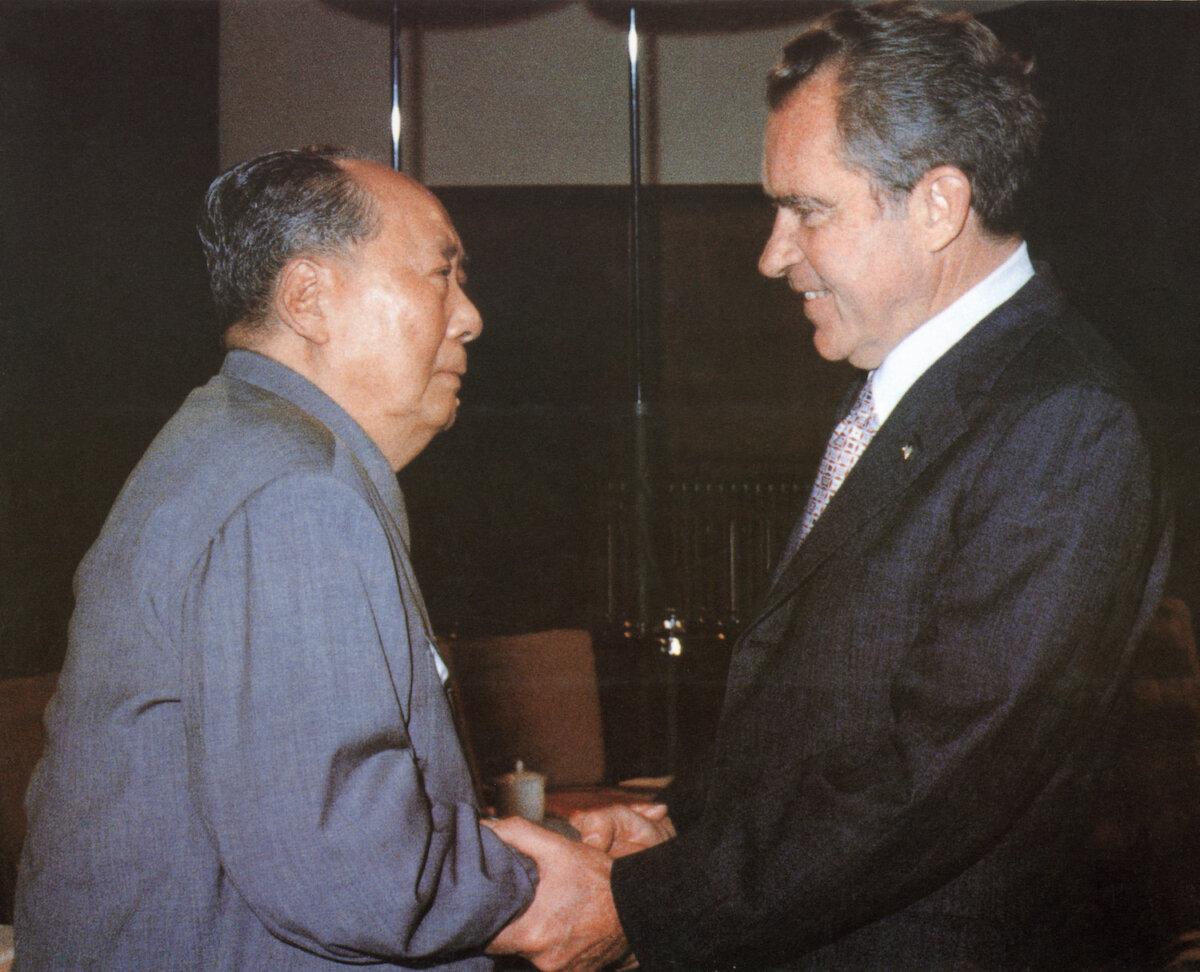
Chinese communist leader Chairman Mao Zedong (L) greets U.S. President Richard Nixon at his house in Beijing on Feb. 21, 1972. AFP via Getty Images
.
Echoes of the Soviet Collapse
Chang described U.S.–China competition as a survival struggle between the free world and the communist regime. He pointed to past Chinese Communist Party editorials that invoke “people’s war” and doctrines sometimes translated as “unrestricted warfare” as evidence that Beijing views the rivalry as systemic and all-encompassing.Shen noted that in the 1980s, then-President Ronald Reagan’s military buildup and Strategic Defense Initiative increased economic pressure on the Soviet Union. If Beijing were drawn into a costly arms race —expanding aircraft carrier fleets, missile forces, and advanced weapons systems—the financial burden could become destabilizing over time.
Whether these developments will ultimately reshape China’s strategic position remains uncertain.
What's Your Reaction?
 Like
0
Like
0
 Dislike
0
Dislike
0
 Love
0
Love
0
 Funny
0
Funny
0
 Wow
0
Wow
0
 Sad
0
Sad
0
 Angry
0
Angry
0













Comments (0)