

Trump and Xi Set for High-Stakes Beijing Summit in May — As Trade War Enters New Phase
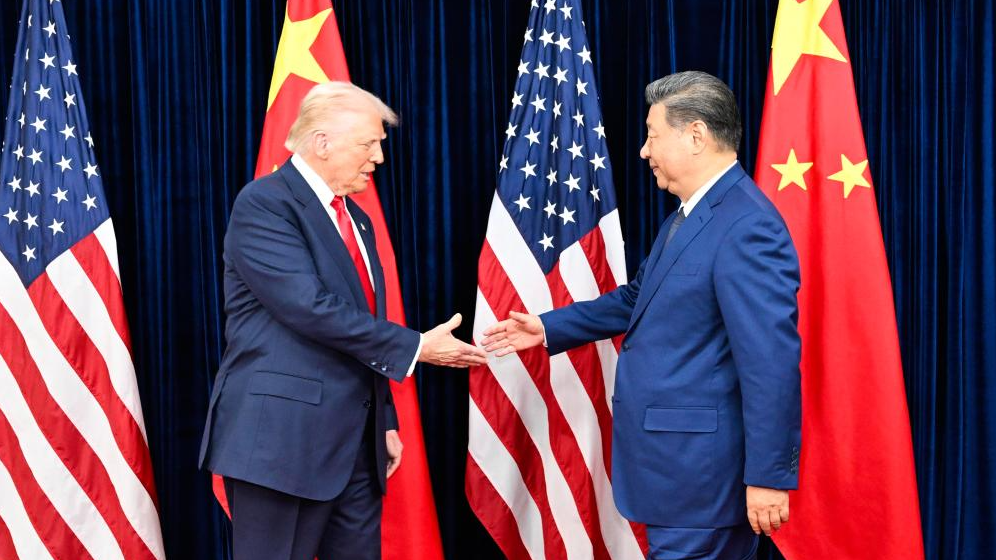
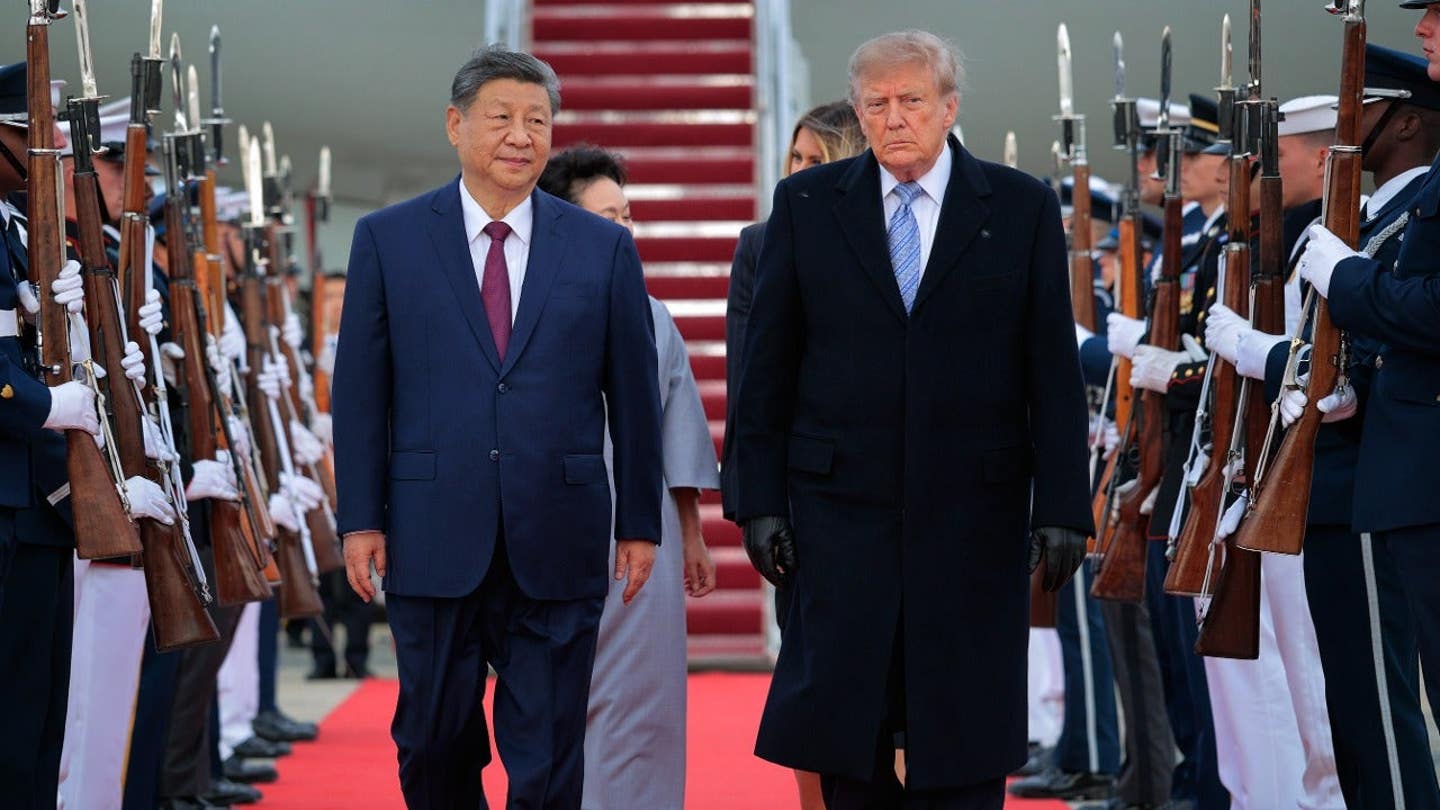
U.S. President Donald Trump is scheduled to meet Chinese President Xi Jinping in Beijing on May 14 and 15 — the first visit by a U.S. president to China since Trump traveled there in 2017. The summit comes at a pivotal moment: after more than a year of economic confrontation, legal battles over tariffs, and a war in Iran that reshaped the diplomatic calendar, both powers are seeking to stabilize one of the world's most consequential relationships.

.
A Meeting Years in the Making
U.S. President Donald Trump is scheduled to meet Chinese President Xi Jinping in Beijing on May 14 and 15 — the first visit by a U.S. president to China since Trump traveled there in 2017. The summit comes at a pivotal moment: after more than a year of economic confrontation, legal battles over tariffs, and a war in Iran that reshaped the diplomatic calendar, both powers are seeking to stabilize one of the world's most consequential relationships.
The trip was originally planned for late March but was pushed back by several weeks as the U.S. war with Iran continued to demand Trump's attention in Washington.
How the Trade War Unfolded
The road to Beijing has been anything but smooth. In April 2025, Trump introduced sweeping "Liberation Day" tariffs on imports from most countries, triggering a rapid escalation with China. Both sides pushed tariffs well above 100% before pulling back.
The turning point came in October 2025, when Trump and Xi met in Busan, South Korea, and agreed to a one-year tariff truce. As part of the deal, China agreed to resume purchases of American soybeans, and Washington reduced its overall tariff burden on Chinese goods.
Under the agreement, the United States suspended plans to impose additional tariffs on Chinese goods until November 10, 2026, while China welcomed the suspension of retaliatory measures on American agricultural exports including soybeans, corn, and meat.
The agreement was widely seen as a tactical pause rather than a lasting fix. Analysts at Yale noted that the Busan summit revealed the structural limits of Trump's tariff strategy, with many of the thorniest issues — including market distortions, intellectual property theft, and technology transfers — left unresolved.
A Legal Blow to Trump's Tariff Toolkit
Just as the two sides were preparing for a follow-up summit, a major legal development upended Washington's trade strategy. In a 6-3 ruling on February 20, the U.S. Supreme Court found that Trump did not have the authority to impose sweeping tariffs under the International Emergency Economic Powers Act, striking down large portions of his tariff regime.
Trump responded by signing an executive order imposing a new 10% global tariff under a different legal provision — Section 122 of the Trade Act of 1974 — though these tariffs are only temporary and expire within 150 days.
To fill the gap, the Trump administration launched new trade investigations into China and more than a dozen other economies under Section 301 of the Trade Act, a legal mechanism that allows the U.S. to impose tariffs on countries found to have engaged in unfair trade practices — without needing congressional approval.
The Supreme Court ruling curtailed Trump's ability to deploy tariffs at will, giving China a boost in leverage ahead of the May summit.
China Hits Back — And Holds Its Cards
Beijing did not remain passive. China's Foreign Ministry called the U.S. trade investigation a pretext for "political manipulation," rejecting claims of Chinese overcapacity as unfounded.
Chinese policy observers warned that Beijing could resume restrictions on rare-earth exports — minerals critical for electronics, electric vehicles, and military technology — and halt U.S. soybean purchases if Washington proceeds with new tariffs.
Beijing has also pursued its own strategic agenda. In March, China's legislature approved a new Five-Year Plan focused on technological self-reliance and industrial manufacturing, and explicitly calling for China to strengthen its competitive advantages in rare earths and other strategic minerals.
What's at Stake in May
From Beijing's perspective, the summit's success will be measured by whether Washington adopts a more constructive view of China, whether both sides can agree on how to manage their relationship, and whether the meeting brings stability in the final years of Trump's term.
Analysts expect Washington to push for extended commitments on agricultural purchases — including soybeans and Boeing aircraft — as well as guarantees that China will not restrict rare-earth exports. China, for its part, will seek clarity on the future of U.S. technology export restrictions, particularly in semiconductors and artificial intelligence.
The Iran war adds another layer of complexity. Trump has publicly called on China and other nations to help keep the Strait of Hormuz — a critical global oil shipping route — open and safe, a demand that Beijing has so far resisted.
A Fragile Equilibrium
The one-year trade truce struck in Busan is set to expire on November 10, 2026 — just one week after U.S. midterm elections, a timing that gives both sides strong incentives to avoid escalation in the months ahead.
Analysts at the Atlantic Council have noted that China has used the sequence of planned 2026 summits — including a potential visit by Xi to Washington later this year — to constrain U.S. unpredictability, while the U.S. side has yet to demonstrate comparable strategic clarity.
The May meeting will not resolve every dispute. But with tariff truces expiring, rare-earth leverage unresolved, and a war in Iran reshaping global supply chains, what happens in Beijing this spring may define the economic relationship between the world's two largest powers for years to come.
.
Sources
- Al Jazeera — Trump to visit Xi Jinping in China on May 14 and 15 after Iran war delay: https://www.aljazeera.com/news/2026/3/25/trump-to-visit-xi-jinping-in-china-on-may-14-and-15-after-iran-war-delay
- CNBC — Trump raises the stakes on China with Section 301 trade probe, weeks before Beijing summit: https://www.cnbc.com/amp/2026/03/12/section-301-trade-probe-china-trump-xi-beijing-summit.html
- CNBC — Trump administration launches Section 301 trade probes into Mexico, China, EU, others: https://www.cnbc.com/2026/03/11/trump-trade-investigations-ieepa-tariffs.html
- Atlantic Council — Experts react: What does the Trump-Xi meeting mean for trade, technology, security, and beyond?: https://www.atlanticcouncil.org/blogs/new-atlanticist/experts-react/experts-react-what-does-the-trump-xi-meeting-mean-for-trade-technology-security-and-beyond/
- Brookings Institution — Beyond trade: Issues in a Trump-Xi summit: https://www.brookings.edu/articles/beyond-trade-issues-in-a-trump-xi-summit/
- NPR — China slams Trump's trade investigation, as it approves a 5-year economic plan: https://www.npr.org/2026/03/12/nx-s1-5746061/us-china-trade-five-year-plan
- Asia Times — US warned of China rare earth curbs if Section 301 tariffs expand: https://asiatimes.com/2026/03/us-warned-of-china-rare-earth-curbs-if-section-301-tariffs-expand/
- Yale Insights — The China Summit Revealed the Limits of Trump's Tariff War: https://insights.som.yale.edu/insights/the-china-summit-revealed-the-limits-of-trumps-tariff-war
.
What's Your Reaction?
 Like
0
Like
0
 Dislike
0
Dislike
0
 Love
0
Love
0
 Funny
0
Funny
0
 Wow
0
Wow
0
 Sad
0
Sad
0
 Angry
0
Angry
0











Comments (0)