

The US and Taiwan Draw Closer


.
President Donald Trump recently told reporters in the Oval Office that whether or not Chinese leader Xi Jinping decides to attack Taiwan is “up to him.” This is, of course, true, but has been spun by the media as Trump backing away from the defense of Taiwan. Nothing could be further from the truth.
Trump noted in the same sentence that he told Xi: “I would be very unhappy if he did that, and I don’t think he’ll do that.” This is a subtle threat that serves as a deterrent against China and aligns with the long-standing U.S. policy of “strategic ambiguity” on Taiwan.
The United States is ambiguous about whether or not it will defend Taiwan for two main reasons. First, it wants Beijing to believe the United States will defend Taiwan in order to deter Beijing. Second, Washington wants Taipei to believe that the United States may not defend Taiwan in order to encourage Taiwan to defend itself. This incidentally incentivizes Taiwan’s arms imports from the United States.
On Jan. 15, a senior Taiwan defense official announced plans for four major defense purchases from the United States. This was in addition to the $40 billion announced in November and the $11 billion announced in December. The new spending will include HIMARS rocket systems from Lockheed Martin and loitering munition drones from Altius. Both would be highly useful in defending Taiwan against a People’s Liberation Army (PLA) invasion.
Three other recent indicators also suggest that the United States and Taiwan are getting close economically, militarily, and diplomatically.
First, the two democracies agreed to a trade deal on Jan. 15 that will include more Taiwanese semiconductor manufacturing in Arizona. In total, Taiwanese companies, led by Taiwan Semiconductor Manufacturing Corporation (TSMC), have promised $250 billion worth of investment in artificial intelligence (AI)-capable semiconductor factories (fabs) in Arizona.
In exchange, U.S. tariffs on Taiwan will drop from 20 to 15 percent. TSMC will be exempted from tariffs due to its U.S. investments. The company has gotten several billion dollars in U.S. subsidies to support its developments in Arizona, which will eventually host approximately a dozen fabs.
The U.S. goal is semiconductor self-sufficiency, which is critical to winning the global competition against the Chinese Communist Party (CCP), especially in AI. Semiconductor self-sufficiency is also a CCP goal, though China is not doing as well as the United States in this regard. The U.S. partnership with Taiwan is key to its access to AI-capable semiconductors, as TSMC fabs produce most of these globally.
Second, the United States and Taiwan are now planning to co-manufacture 155 mm artillery shells together. This is consistent with the United States encouraging co-production of Taiwanese military materiel for which Taiwan already has production capabilities. That likely decreases the risk of technology transfers that could ultimately make their way to China via Taiwan.
Finally, EVA Air plans to launch a direct route between Taipei and Washington, D.C., starting in July 2026. It is the first and only direct flight to Washington operated by a Taiwan-based passenger airline. The new route addresses the lack of flights from Taiwan to the southeastern part of North America.
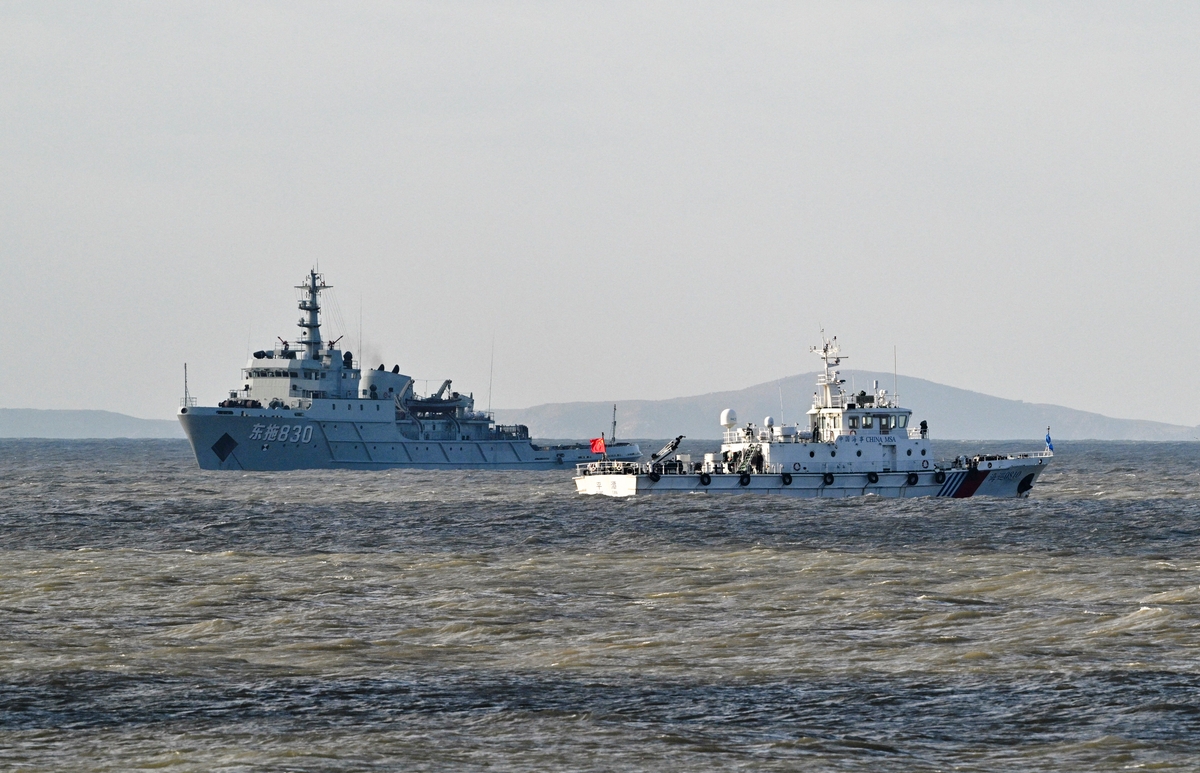
EVA was one of the companies affected by the PLA’s “quasi-blockade” around Taiwan on Dec. 30. The blockade was executed through military exercises that purposefully disrupted almost 1,000 flights and more than 100,000 travelers.
The gradually escalating “exercises” are getting to the point that they could eventually become cover for a real invasion. This is a form of harassment by the CCP of all Taiwanese citizens, who it believes will thus become dissatisfied with their democratically-elected government. The CCP apparently believes that Taiwan would then reject democracy to unify with mainland China. This is unlikely as the more the CCP harasses regular Taiwanese, the more they will reject the CCP and embrace America as their security ally, trading partner, and fellow democracy.
What's Your Reaction?
 Like
0
Like
0
 Dislike
0
Dislike
0
 Love
0
Love
0
 Funny
0
Funny
0
 Wow
0
Wow
0
 Sad
0
Sad
0
 Angry
0
Angry
0














Comments (0)