

The US and Japan Will Not Apologize to the CCP


.
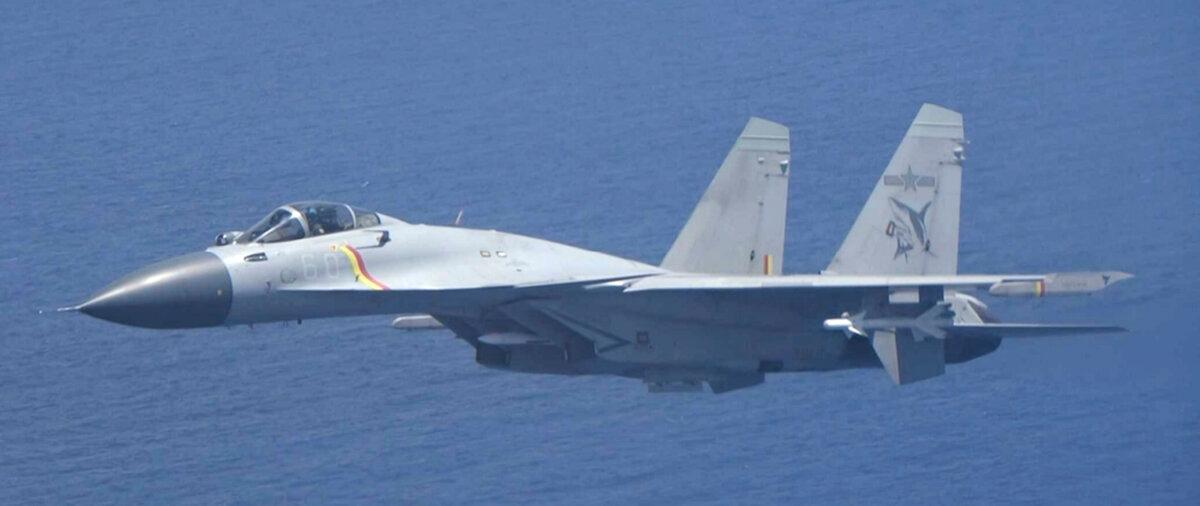
The Chinese Communist Party (CCP) wants more apologies for World War II, but instead, U.S. B-52 bombers flew with Japanese jets over the Sea of Japan on Dec. 10. The flights are strategic signalling to demonstrate to the regime in Beijing that the two allies are strong and united. They will defend the outlying Japanese islands and, most likely, Taiwan.
Japanese Prime Minister Sanae Takaichi noted publicly on Nov. 7 that a Chinese invasion of Taiwan could be a “survival-threatening situation” for Japan. That assessment, based on the CCP’s threat to remove Taiwan as a buffer state, would legally justify Japanese defense of the island. Any such defense would most likely be requested by the United States in support of an international coalition of allies.
Yet, Xi Jinping, the dictator who leads the CCP, has apparently been getting increasingly impatient about invading Taiwan. That would remove Taiwan as the only example of a Chinese democracy, and capture some of Taiwan’s semiconductor manufacturing used for artificial intelligence. A People’s Liberation Army (PLA) invasion of Taiwan would lead to a war, most likely involving the United Kingdom, Australia, France, Italy, and Germany. Russia could use that opportunity to press its forces on NATO countries such as Poland, Lithuania, or Estonia.
All of these countries, and more, have an interest in deterring the CCP’s territorial ambitions. Not only is there a risk of another world war, this time with nuclear weapons. There is a risk that Beijing will impose an illiberal global hegemony. The CCP only subscribes to “multilateralism” and “free trade” for tactical reasons as long as they advantage Beijing. Afterward, China will gladly throw those principles on the “dustheap of history.” Even Russia’s Far East is now vulnerable to China, after Moscow moved most of its troops to fight in Ukraine.
Recent PLA bullying of Japan included about 100 sorties launched from a Chinese aircraft carrier near Japan on Dec. 8, plus joint Chinese and Russian bomber flights around Japan on Dec. 9. Chinese radar has locked onto Japanese planes, which pilots are forced to consider preparation for a shoot-down. In all, the Japan Air Self-Defense Force had to scramble jets about 700 times over the past year to protect its airspace.
The PLA flights and naval transits are meant to test the military readiness of Japan and Taiwan. Not responding with similar flights could send a dangerous message: that deterrence by the United States and Japan was falling apart. If Beijing thinks the United States and Japan will do nothing to stop a PLA invasion, or that it is in other ways risk-free, then the invasion and a broader war are more likely. Nipping that hawkish sentiment in the bud by demonstrating the strength, intentions, and coherence of the U.S.–Japan defense alliance is a necessity.
.
The U.S.–Japan flights take place in the context of diplomatic and economic bullying on the part of Beijing, including a death threat against Takaichi by China’s consul general in Osaka, Japan. He said on Nov. 8: “That filthy head that has come charging forward on its own accord will have to be cut off without a moment’s hesitation. Are you prepared for that?”
His comments accompanied the recent economic bullying of Japan that could cost it as much as 1 percent of GDP. The comments and trade retaliation were widely condemned, including by the U.S. ambassador to Japan.
The CCP repeatedly justifies its aggressive approach to Japan by raising the issue of China’s wartime grievances. Beijing put aside its demand for more apologies in the 1970s to approach something of a friendship between Beijing and Tokyo. We now know this was insincere on the part of the CCP.
China gained extensive technological expertise from Japan over these years of “friendship.” Beijing now uses these technologies, and others it stole from the United States and European countries, to build weapons against the United States. The CCP also seeks to use the tech to outcompete the democracies in global markets. There is a complete lack of gratitude on the CCP’s part, driven by the hyping of grievances against the United States and Britain as well.
But it was Mao Zedong, the original leader of the CCP, who is widely considered responsible for the most deaths in China. His disastrous economic policies led to the “Great Leap Forward” famine of 1959 to 1961, in which as many as 50 million Chinese people died.
Now, Xi is willing to sacrifice more people for the CCP’s misguided goal of capturing Taiwan. It is not then-pacifist Japan that is threatening China. It is the CCP. The demand for more Japanese apologies is just a propaganda ploy by the regime. In the 1940s, right after the war, Japanese Emperor Hirohito had already made an attempt at a sincere apology. A long list of apologies by Japan followed, right up to the present day.
The CCP does not really want another apology. It wants to humiliate Japan by demanding that, almost a century later, an elected Japanese official literally bow down to the ground in abject humiliation to the CCP’s dictatorial demands, each more abject and degrading than the last.
If Tokyo apologized yet again, the CCP would just take it for weakness and make a new demand. That is unacceptable today, given Japan’s status as a democratic ally of the United States, and the long history of suffering that the Chinese people have undergone at the hands of the CCP. Japan has thoroughly reformed itself. It is now the regime in Beijing, not Tokyo, that owes an apology to the Chinese people.
What's Your Reaction?
 Like
0
Like
0
 Dislike
0
Dislike
0
 Love
0
Love
0
 Funny
0
Funny
0
 Wow
0
Wow
0
 Sad
0
Sad
0
 Angry
0
Angry
0















Comments (0)