

The Cost of Coercion: How China’s Diplomatic Playbook Cost Xi the Philippines


.
Beijing’s influence in Manila is collapsing. What was once a carefully cultivated foothold under Rodrigo Duterte has eroded under Ferdinand Marcos Jr., whose recalibration toward Washington reflects both domestic disillusionment with China and Beijing’s own overreach.
Duterte’s Gamble, Beijing’s Missed Opportunity
When Duterte declared in Beijing in 2016 that it was “time to say goodbye” to the United States, he stunned allies and emboldened China. His administration willfully sidelined the 2016 Hague arbitral ruling that struck down Beijing’s unlawful South China Sea claims, effectively rewarding the Chinese regime’s aggression in the hope of unlocking billions in loans and infrastructure projects.The Chinese Communist Party (CCP) seized the propaganda victory but squandered the substance. During Duterte’s first visit to China, Beijing touted $24 billion in investment and credit lines, which expanded over time to roughly $30.5 billion in pledged development finance—more than China promised any other Southeast Asian state.
Yet a Lowy Institute-based study found that only about $700 million was actually disbursed between 2015 and 2023, leaving big-ticket rail and port projects stalled or shifted to Japanese and Western backers. Commentators started calling it a “pledge trap”: the optics of largesse without the delivery.
Marcos Jr.’s Recalibration
Marcos Jr., elected in 2022, inherited a skeptical public and a military establishment increasingly alarmed by Chinese aggression. Unlike Duterte, Marcos leaned into the U.S.–Philippines Mutual Defense Treaty, reviving and expanding the Enhanced Defense Cooperation Agreement (EDCA), which now grants U.S. forces access to nine Philippine bases, including several facing Taiwan and the South China Sea.Joint maritime and air patrols resumed in 2023 and have since become more frequent, backed by large-scale Balikatan exercises explicitly geared toward contingencies in the Taiwan Strait and West Philippine Sea.
Public Sentiment: China’s Reputation Collapses
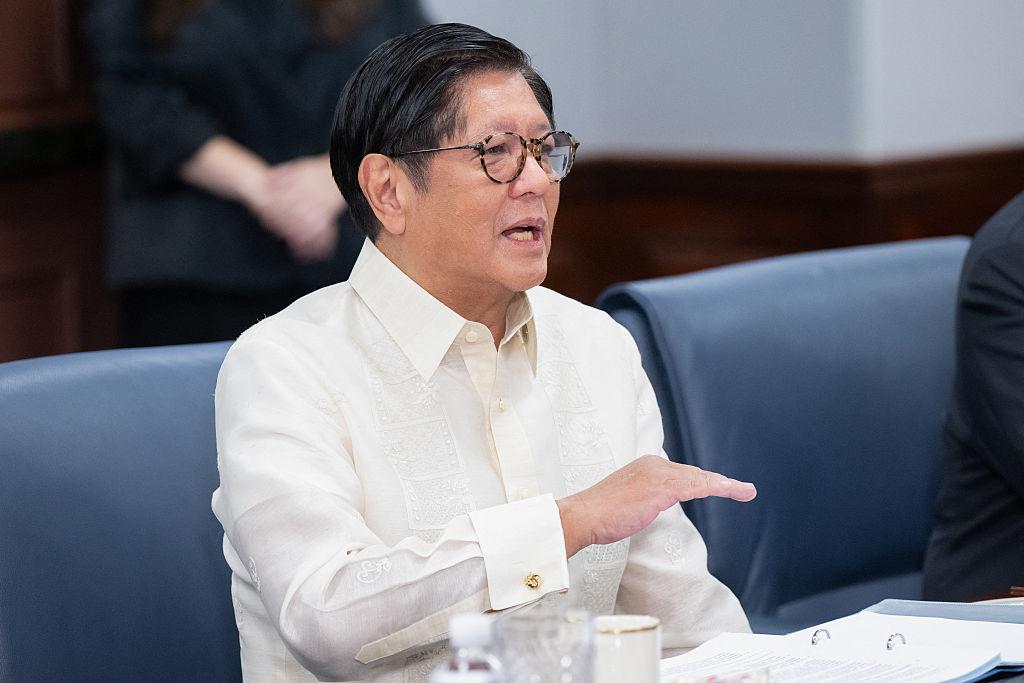
The Philippine public has turned decisively against Beijing. A Pulse Asia survey commissioned by the We Protect Our Seas Foundation found that 77 percent of Filipinos now see the United States as the country best positioned to help manage Chinese coercion in the West Philippine Sea.Earlier polling showed that only 1 percent of respondents viewed China as a trusted development partner, and that more than 70 percent said they would not support pro-China candidates in the 2025 elections.
This is not just elite politics—it is a grassroots rejection of the Chinese regime’s tactics. Fishermen from Zambales and Palawan, civil-society groups, and local governments have amplified video evidence of water-cannon attacks and blocked resupply runs, making any future Philippine leader pay a domestic price for tilting back toward Beijing.
Why the CCP Is Losing Ground
The CCP’s adversarial posture has backfired for several reasons. Its reliance on coercive diplomacy—harassment of Philippine vessels, rammings near Second Thomas Shoal and Thitu, and blockades at contested shoals—has alienated the public and hardened Manila’s resolve.China’s failure to deliver on infrastructure pledges exposed its economic statecraft as hollow. Consequently, Manila has begun unwinding from the CCP’s Belt and Road Initiative (BRI), terminating or retendering key rail projects in favor of Japanese and Western financing—a public acknowledgment that the BRI “golden age” never really arrived.
By treating the Philippines as a subordinate rather than a partner, Beijing pushed Manila back toward Washington. Across the region, Hanoi’s elevation of ties with Washington to a comprehensive strategic partnership, and Jakarta’s deepening defense cooperation with Japan and the United States, show other countries quietly hedging against similar Chinese pressure.
The US–Philippines Reset
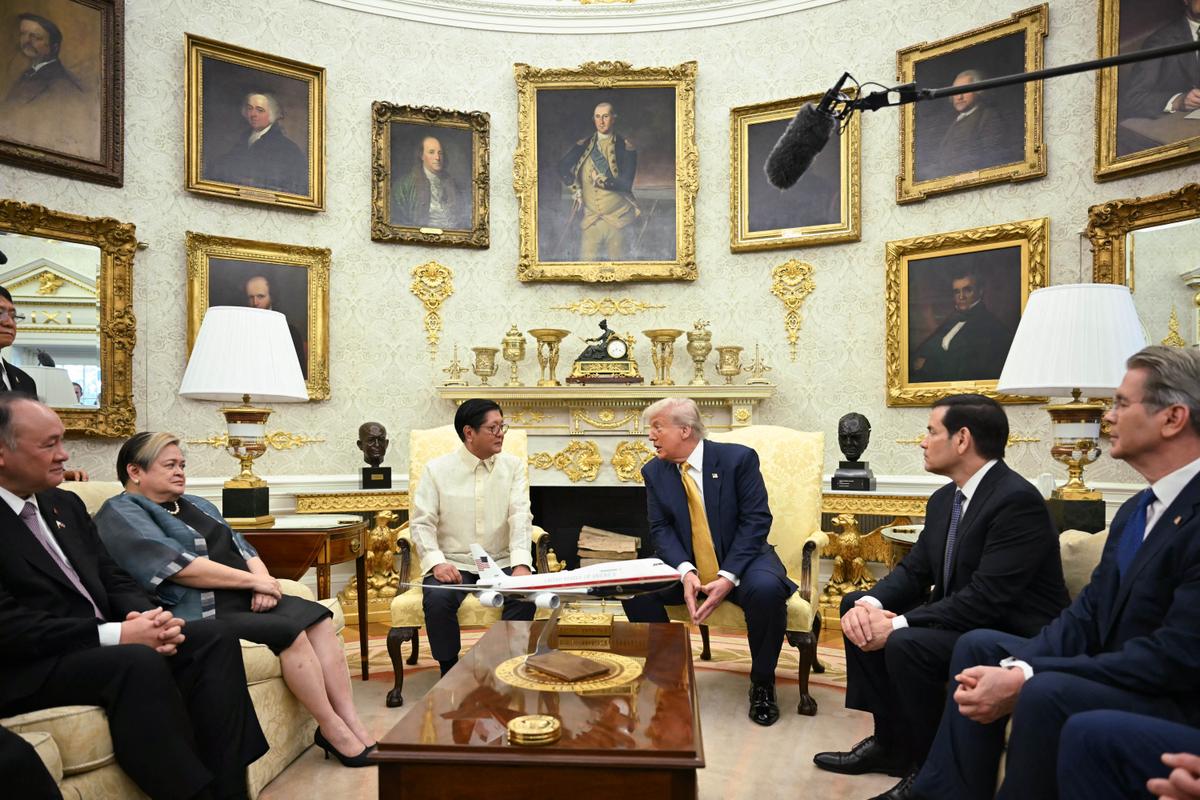
Marcos has not only restored but expanded the alliance with Washington. Under his watch, EDCA implementation moved from legal limbo to reality, with construction at multiple sites and rotational U.S. deployments—including drone units—now explicitly tied to maritime surveillance in the South China Sea.The new Bilateral Defense Guidelines and Task Force Philippines bring planners from both sides into a single frame for crisis scenarios, from blockaded resupply missions to more serious escalation.
Symbolically, joint U.S.–Philippine patrols—often joined by Japan—now follow in the wake of Chinese water-cannon incidents, turning what used to be isolated confrontations into triggers for a visible allied presence. Unlike during Duterte’s tenure, the Philippine public now overwhelmingly supports this closer alignment with Washington, so domestic politics and alliance strategy finally point in the same direction.
.
The Way Forward
For Manila, the path ahead is clear but not simple. The U.S. alliance needs to be institutionalized—embedded in law, defense planning, and budget lines so it cannot be casually reversed by a single election. Partnerships should be diversified: closer ties to Japan, Australia, and India can spread risk and reinforce deterrence without creating a new form of dependency.Economic alternatives must be cultivated, drawing in Japanese, Korean, European, and American investment to replace Beijing’s unfulfilled pledges and ensure that infrastructure, ports, and digital networks are not built on opaque terms.
Conclusion
The CCP’s loss of influence in the Philippines is not accidental—it is the product of broken promises, coercive tactics, and strategic overreach. Marcos’s pivot to Washington is less a gamble than a recognition of reality: Beijing’s behavior has left Manila with little choice but to reanchor itself in a U.S.-led coalition it once tried to leave.For Beijing, the lesson is stark: influence built on intimidation is brittle, especially in democracies where fishermen, activists, and local officials can force foreign policy back into line with lived experience. For Manila, the lesson is equally clear: sovereignty is best defended through alliances and transparency, not accommodation and wishful thinking.
The cost of coercion is now visible on the map: a U.S.–Philippines alliance that is stronger in 2025 than at any point in the Duterte years, and a CCP diplomatic playbook that has, at least in this case, outsmarted itself.
What's Your Reaction?
 Like
0
Like
0
 Dislike
0
Dislike
0
 Love
0
Love
0
 Funny
0
Funny
0
 Wow
0
Wow
0
 Sad
0
Sad
0
 Angry
0
Angry
0















Comments (0)