

Sweden Declares Mining a National Security Priority as Europe Races to Break Free From China
Sweden's government has officially declared the mining of critical metals and rare earth minerals a matter of national security. The move is designed to speed up permitting, attract investment, and reduce Europe's dependence on China — a dependence Beijing has repeatedly used as diplomatic leverage.

.
A Strategic Shift in Stockholm
Sweden's government announced on Thursday that it will treat the mining of critical raw materials as a core national security interest. Enterprise Minister and Deputy Prime Minister Ebba Busch presented the new strategy at a press conference, framing it as a direct response to Europe's vulnerability on rare earth supplies.
Busch said the reclassification would allow authorities to speed up planning processes and permitting decisions, making it easier to attract the investment such projects require. She described Europe's reliance on China for critical minerals as a "systemic risk" — one she said now touches not just industry, but defense.
"We believe that this can contribute significantly to both Sweden's, EU's and NATO's defence capabilities," Busch told reporters.
.
Why China's Grip on Rare Earths Matters
China controls the overwhelming majority of both the mining and refining of rare earth elements — materials essential for electric vehicles, wind turbines, and advanced defense systems (magnets, batteries, and precision electronics all depend on them). That dominance has given Beijing a powerful bargaining chip in trade disputes, including its ongoing standoff with Washington, where export controls on these materials have repeatedly been deployed as a pressure tactic.
For European governments, this concentration of supply in a single country — and a rival power, at that — has increasingly been treated less as an economic inconvenience and more as a strategic exposure. Sweden's move follows years of EU efforts to draw up alternative supply chains, so far with limited success.
.
The Per Geijer Deposit: A European Flagship Project
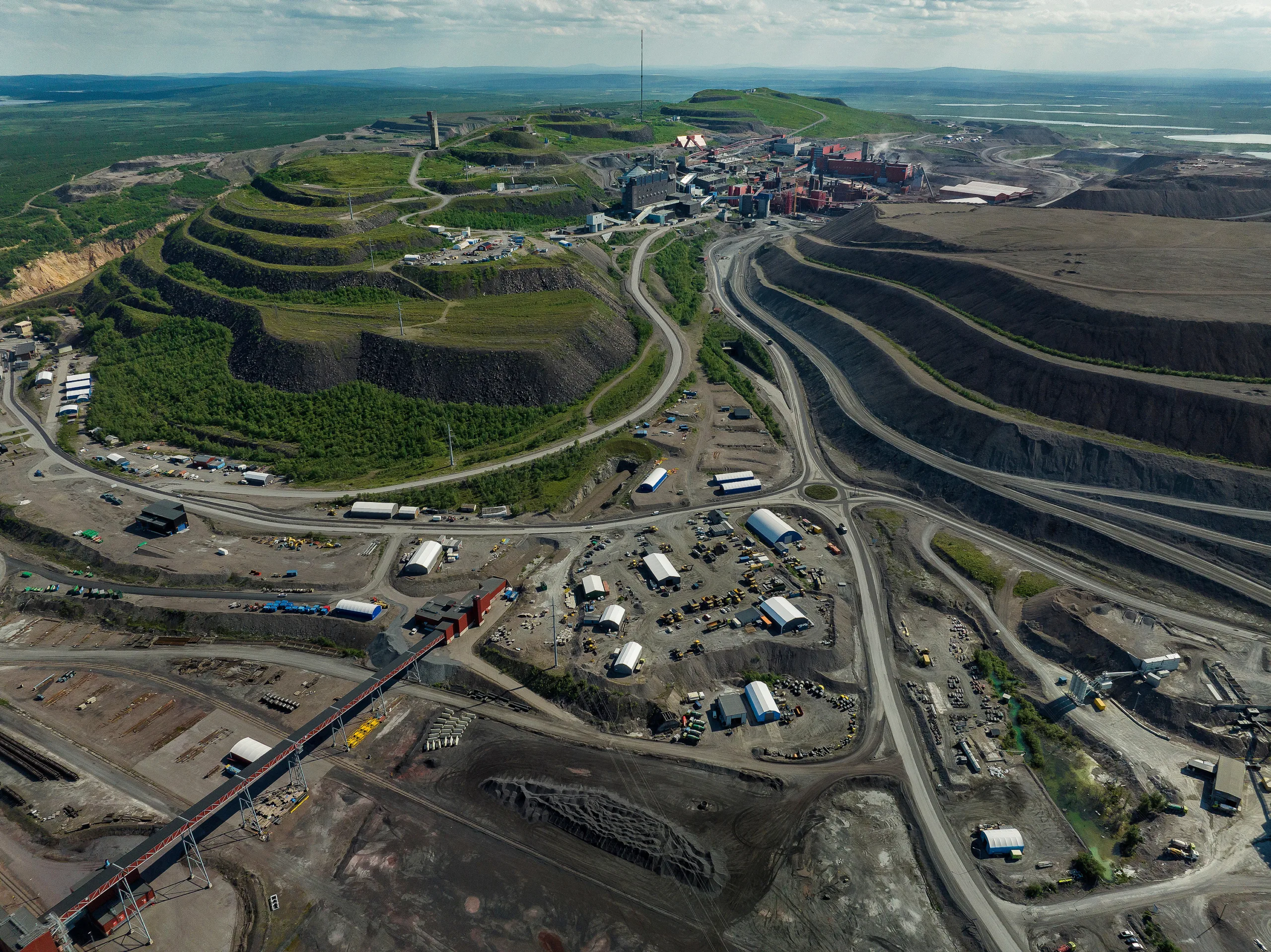
At the center of Sweden's ambitions is the Per Geijer deposit, located near the state-owned mining company LKAB's existing Kiruna operation in the Arctic north. The site is considered one of the EU's flagship projects for reducing reliance on Chinese rare earths.
The numbers are substantial: Per Geijer holds an estimated 1.2 billion tons of total mineral resources, including roughly 2.2 million tons of rare earth oxides. That places it among the largest known rare earth deposits in Europe — though it remains years away from actual production, pending environmental review and mining concessions.
.
A Possible State Investment Vehicle
Busch said her government is also examining whether to create a state-owned investment company dedicated to Sweden's mining sector. The idea reflects a broader concern voiced by the minister: that Sweden currently lacks the direct financial tools to accelerate projects it considers strategically vital.
"Today, to put it plainly, the government lacks concrete tools to wisely contribute to accelerating and attracting investments in key projects in crucial strategic projects," she said.
.
Tensions With the Sami Community
The push to accelerate mining is not without domestic friction. Sweden's plans to make land assignment easier for mining projects touch directly on a long-running dispute with the Sami, the indigenous reindeer-herding people of northern Scandinavia.
Sami representatives and researchers have previously warned that expansion around Kiruna — including the Per Geijer project — threatens traditional grazing routes and could breach Sweden's obligations under international indigenous-rights frameworks. Herders argue that further mining expansion would undermine a way of life that has persisted in the Arctic for centuries. The government's new strategy is likely to intensify, rather than resolve, this underlying conflict.
.
Outlook: A Long Road Ahead
Even with faster permitting, turning Arctic rock into usable rare earth supply is a matter of years, not months — LKAB's projects still require environmental permits and further feasibility work before any large-scale extraction begins. Still, Sweden's declaration marks a symbolic and practical escalation in Europe's effort to reduce its exposure to Chinese supply-chain leverage, at a moment when critical minerals have become as geopolitically sensitive as oil once was.
.
Sources
- Reuters — "Sweden declares mining national security interest to counter dependence on China," July 23, 2026: https://www.reuters.com/world/china/sweden-declares-mining-national-security-interest-counter-dependence-china-2026-07-23/
- Reuters — "LKAB plan for Swedish rare earths mine could breach Sami rights, report says," April 15, 2026: https://www.reuters.com/sustainability/society-equity/lkab-plan-swedish-rare-earths-mine-could-breach-sami-rights-report-says-2026-04-15/
- MINING.com — "LKAB plan for Swedish rare earths mine could breach Sami rights, report says": https://www.mining.com/web/lkab-plan-for-swedish-rare-earths-mine-could-breach-sami-rights-report-says
.
What's Your Reaction?
 Like
0
Like
0
 Dislike
0
Dislike
0
 Love
0
Love
0
 Funny
0
Funny
0
 Wow
0
Wow
0
 Sad
0
Sad
0
 Angry
0
Angry
0













Comments (0)