

Behind Closed Doors in Beijing: Xi Jinping’s Fifth Plenum Is About Loyalty, Fear and the 2027 Succession
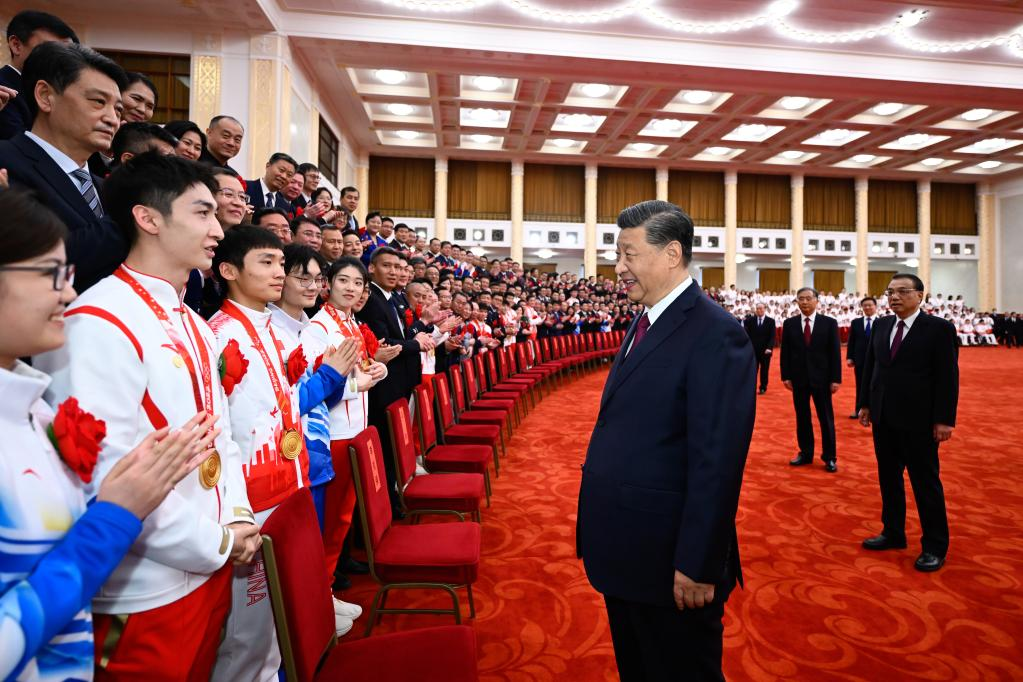
From Monday, October 26, China’s top Communist Party leaders gather in Beijing for a four-day, closed-door meeting. Officially, the topic is “party self-governance”. In practice, it is about discipline, loyalty and control. The meeting comes after years of purges that have reached deep into the army, and it sets the stage for the party congress in autumn 2027, where Xi Jinping is widely expected to secure a fourth term.

.
What is happening this week
The Chinese Communist Party (CCP) opens the fifth plenary session of its 20th Central Committee on October 26. According to Reuters, citing state media, the meeting runs through October 29 in Beijing.
A "plenum" is a full meeting of the Central Committee, the party's largest decision-making body. The South China Morning Post reports that more than 370 full and alternate members are expected to attend. The sessions are closed to the public, and outsiders usually learn the results only from carefully worded official statements.
The party's own summary says the Politburo (the party's top policy circle) will submit a document on "full and rigorous self-governance" for deliberation. A draft was reportedly circulated beforehand among party members and selected non-party figures, according to Chinese state broadcaster CGTN.
.
What "self-governance" really means
The phrase sounds technical, but it has a clear meaning in Beijing's political language. The South China Morning Post notes that it usually stands for three things: fighting corruption, tightening party discipline and securing political loyalty.
The Politburo also called for "higher standards" and "more concrete measures" to deal with problems inside the party, according to Xinhua. Officially, this is about keeping the party "pure" and close to the people. Critics see something different: a ruling party that cannot fully trust its own officials, and a leader who wants to tighten his grip further.
.
Why Xi is worried about his own officials
Xi has led an anti-corruption campaign since 2012. The Associated Press reports that it has punished more than 200,000 officials. Yet according to analysts quoted by AFP, he is still frustrated that orders from the top are not carried out reliably.
State media recently published parts of a Xi speech in which he attacked officials who appear loyal while quietly resisting. He also criticized officials who avoid conflict, even when they spot problems, in the name of "unity".
Analysts describe this as a long-standing problem in China's political system: a central leadership issues ever more demands, while local officials control the information and are rewarded for looking compliant. One Zurich-based China scholar told AFP that more supervision and more rules may be exactly what created the problem in the first place.
Sinologists add a basic point about one-party rule. Without free media, independent courts or open elections, the party has no outside check on its officials. It can only watch them from the inside.
.
The army at the center of the storm
The military is where the purges have been most visible. In October 2025, the party expelled Central Military Commission (CMC) vice chairman He Weidong. In January 2026, China's defense ministry announced that General Zhang Youxia, the senior vice chairman of the CMC, and Joint Staff chief Liu Zhenli were under investigation for suspected "serious violations of discipline and law", according to Reuters and AP.
Reuters called it the highest-profile purge of senior military leaders to date. The ministry gave no details of the alleged wrongdoing. Zhang had long been seen as one of Xi's closest military allies.
AFP reports, citing the Asia Society Policy Institute, that of 44 military figures appointed to the Central Committee in 2022, only two have avoided being purged or disappearing from public view. Brookings Institution analyst Jonathan Czin described the sweep as almost an entire generation of senior officers being removed.
Whether the plenum will name new CMC members, or leave the posts open until the 2027 congress, is one of the open questions to watch.
.
What to watch for: the succession and the title question
Almost no analyst expects Xi, 73, to step aside in 2027. The real questions concern everyone else.
- Empty seats. According to AFP, the Politburo has vacancies after three members were purged, the most in a single term since 1980. Eight full-member seats on the Central Committee are empty, and another 15 members are under investigation. Such seats are rarely filled at a plenum.
- Turnout. Because of the purges, AFP's reporting suggests this plenum could have the lowest attendance since the death of Mao Zedong in 1976.
- The "chairman" title. Some analysts speculate that Xi could take the title "party chairman", last held by Mao. This is speculation. Nothing official has been announced.
- The military. The party could appoint new CMC members now, wait for the 2027 congress, or even change how it controls the armed forces.
.
Why it matters beyond China
The CCP rules a country of 1.4 billion people and commands the world's largest army. When its leadership consolidates power through purges rather than open debate, the effects reach far beyond Beijing. Foreign governments and security analysts are watching closely, because command stability in the Chinese military directly affects regional security.
Rule by fear, as critics describe it, may produce outward obedience. It does not produce trust, and it makes honest information harder to obtain, even for the leadership itself.
Official results are expected at the close of the session on Thursday, October 29. As always with the CCP, what is left unsaid, and who is missing from the room, may matter as much as the official communiqué.
.
Sources
- Reuters, "China's Xi chairs Politburo; Central Committee plenum set for October 26-29" (September 21, 2026): https://theprint.in/world/chinas-xi-chairs-politburo-central-committee-plenum-set-for-october-26-29/3048625/
- South China Morning Post, "China's October plenum plan reveals focus on party discipline ahead of 2027 congress": https://scmp.com/news/china/politics/article/3362363/china-says-key-plenum-will-be-held-october
- Associated Press via NPR, "China's top general under investigation in latest military purge" (January 24, 2026): https://www.npr.org/2026/01/24/g-s1-107210/chinas-top-general-under-investigation-in-latest-military-purge
- Reuters, "China investigating senior military officials Zhang Youxia, Liu Zhenli" (January 24, 2026): https://www.marketscreener.com/news/china-investigating-senior-military-officials-zhang-youxia-liu-zhengli-says-defence-ministry-ce7e5bdade80f120
- AFP via The Standard (Hong Kong), "What to know about the Chinese Communist Party's Fifth Plenum": https://www.thestandard.com.hk/china/article/346396/
- CGTN / Xinhua, "CPC leadership meeting studies major issues on Party self-governance, sets dates for Party plenum" (official Chinese state media, cited for the party's own wording): https://news.cgtn.com/news/2026-09-21/CPC-leadership-stresses-Party-self-governance-sets-Party-plenum-dates-1QCkqPyd3qg/share_amp.html
.
What's Your Reaction?
 Like
0
 Dislike
0
 Love
0
 Funny
0
 Wow
0
 Sad
0
 Angry
0












Comments (0)