

China Tests Taiwan’s “Back Door”: Beijing’s Coast Guard Pushes Deeper Into the Pacific
China’s Coast Guard has launched yet another patrol off Taiwan’s east coast, and Taipei says Beijing is now using radio messages to pressure ships at sea. A separate standoff near the Pratas Islands, in the South China Sea, has also heightened tensions. Taiwan and several analysts see the pattern as a rehearsal for a future blockade. Beijing insists it is merely enforcing its own laws.

.
A New Patrol, a New Claim
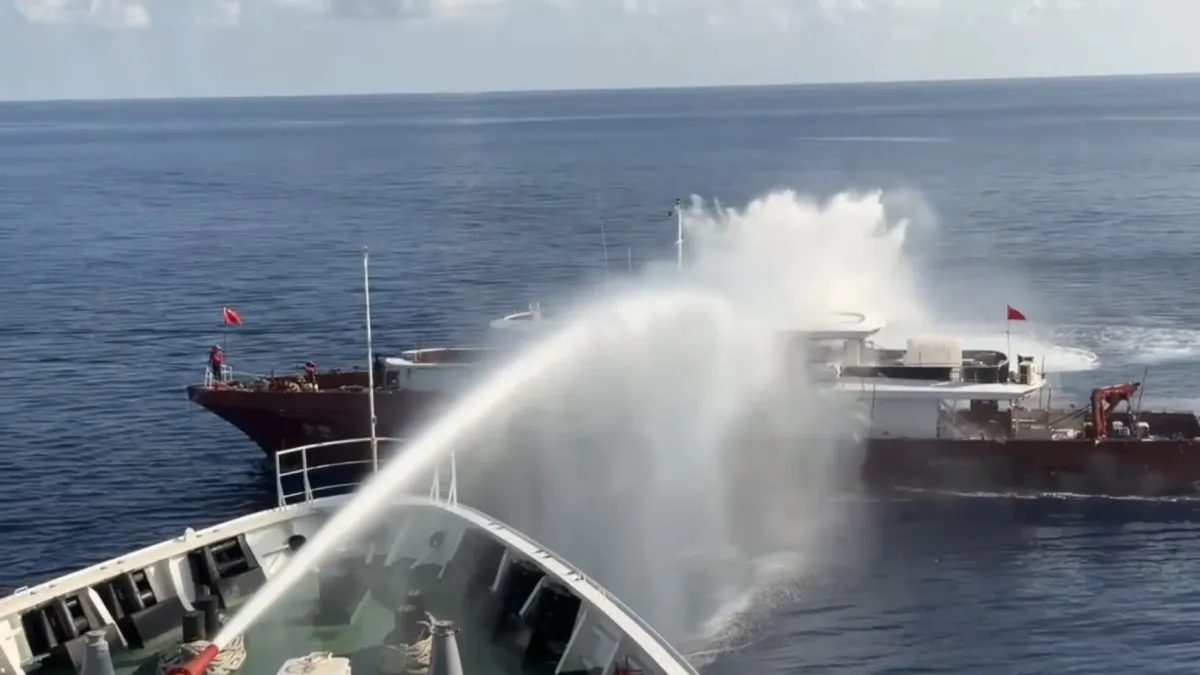
On Saturday, November 1, 2026, China announced its latest "routine law enforcement patrol" in waters east of Taiwan. Two Chinese ships took part, according to Taiwan's Coast Guard, which sent its own vessels to shadow them.
Chinese state media aired footage of one ship broadcasting a radio message. The message said the vessel was carrying out law enforcement and could provide help if needed. It was never made clear who the message was meant for. The footage showed only an unidentified fishing boat.
Taiwan reacted sharply. Its Coast Guard said the radio calls amount to an illegal attempt to claim authority at sea. It stressed that Taiwan holds sovereign rights over the economic zone east of the island and that China has no jurisdiction over any Taiwanese waters.
Trouble in the South China Sea, Too
The east coast was not the only flashpoint over the weekend. Early Saturday, a Chinese Coast Guard ship entered restricted waters near the Pratas Islands, a Taiwan-administered coral island group in the northern South China Sea.
A Taiwanese Coast Guard vessel confronted the intruder and asked it to leave. At the height of the standoff, the two ships were only about 1.9 kilometers (1 nautical mile) apart. Taiwan counts this as the 13th such intrusion at Pratas this year, involving 16 Chinese vessels.
The Pratas Islands have no permanent civilian population. They lie more than 400 kilometers (250 miles) from Taiwan's main island, which makes them hard to defend. Security experts regard them as an easy target in any Chinese attack.
Why the East Coast Matters
For decades, Beijing's pressure on Taiwan focused on the Taiwan Strait, the busy waterway between the island and mainland China. Since June 2026, the focus has shifted. The Pacific side is Taiwan's "back door," as one American academic put it to Bloomberg. It is also a lifeline.
Taiwan sees the eastern waters as critical in wartime. Supplies from the United States and other partners would most likely arrive by this route. Its deep waters are also well suited for submarines and underwater surveillance.
The shipping numbers show the stakes. According to MarineTraffic data cited by Bloomberg, commercial vessels made 527 transits along Taiwan's east coast in June. That was more than the 420 recorded in the Taiwan Strait. Oil, gas, iron ore and farm products all pass through.
How the Pressure Has Grown Since June
The current campaign began on June 1, when two large Chinese Coast Guard cutters, the Daishan and the Baita, arrived east of Taiwan. Days earlier, Japan and the Philippines had announced talks to define their maritime border in the region. Beijing objected, and a US Naval War College researcher said China was using the talks as a pretext to expand its presence.
Later that month, larger Chinese government ships circled Taiwan. According to Chinese state media, they "inspected" 198 passing vessels, though it was never explained what that meant. Bloomberg reported that this was the first time Chinese ships had questioned foreign commercial vessels along Taiwan's Pacific coast.
The patrols have not stopped. Chinese ships rotated in and out in July, then again in the following months, and the latest rotation came this weekend. A US congressional advisory commission said that using the coast guard instead of the navy lets Beijing present its actions as law enforcement. It also lets China build the constant presence a blockade would require, without triggering a military confrontation.
The AFP news agency reported in July that analysts saw this as Beijing signaling a "new normal." Taiwan's Coast Guard uses nearly the same wording.
Beijing's Legal Cover
China's Coast Guard has acted as more than a police force since 2021. That year Beijing passed a law allowing it to use "all necessary measures," including weapons, to defend what the Chinese Communist Party defines as China's sovereignty.
Taiwan has never been ruled by the Chinese Communist Party, which came to power in 1949. Taiwan is a self-governed democracy. Yet Beijing calls the island its territory and has not ruled out force to take it.
China's Coast Guard says it will continue to intensify its patrols and defend what it calls its maritime rights. Taipei and many Western governments reject that framing.
International Concern
The patrols have drawn attention abroad. In June, Britain, France and Germany issued a rare joint statement warning that Chinese activity east of Taiwan endangers regional stability. The United States has called Beijing's actions deeply destabilizing.
Regional partners are also moving closer together. In October, a Philippine diplomat said Manila is exploring deeper cooperation with Taiwan on protecting undersea cables and countering "gray-zone" tactics (pressure short of open war).
What to Watch Next
Analysts warn that each step may seem small. First comes a radio call, then a request for ship information, and later perhaps navigation instructions to commercial vessels. Over time, such moves could change what the world accepts as normal in the Western Pacific.
For now, Taiwan says it will keep monitoring and expelling intruders. Whether the international response goes beyond statements will likely shape how far Beijing is willing to go.
.
Sources
- Reuters (Ben Blanchard), "Taiwan says China harassing shipping with east coast patrol," November 1, 2026: https://www.reuters.com/world/china/taiwan-says-china-harassing-shipping-with-east-coast-patrol-2026-11-01/
- Associated Press, "Taiwan accuses China of harassment after standoff between coast guard ships," November 1, 2026: https://www.wisn.com/article/taiwan-accuses-china-harassment-standoff-coast-guard-ships/74304938
- Bloomberg (Andreo Calonzo), via gCaptain, "China Expands Patrols of Taiwan's Pacific Coast, Raising Maritime Tensions," September 7, 2026: https://gcaptain.com/china-expands-patrols-of-taiwans-pacific-coast-raising-maritime-tensions/
- AFP, "China signals 'new normal' with coast guard patrols off Taiwan's east," July 8, 2026: https://arynews.tv/china-signals-new-normal-coast-guard-patrols-taiwans-east
.
What's Your Reaction?
 Like
0
 Dislike
0
 Love
0
 Funny
0
 Wow
0
 Sad
0
 Angry
0













Comments (0)