

Horseradish and Nasturtium: What Science Says About a Traditional Remedy for Recurring Bladder Infections
For decades, German pharmacies have sold a herbal product made from horseradish root and nasturtium leaves for urinary tract infections (UTIs). Recent studies suggest it may help some women with mild or recurring infections. The evidence is still limited, though, and a homemade horseradish tincture is not the same thing.

.
Why bladder infections keep coming back
UTIs are among the most common infections in women. Over half of women are estimated to have at least one symptomatic UTI in their lifetime. Roughly one in four sees a repeat infection within six months of the first.
Doctors usually treat bacterial UTIs with antibiotics. That works well in many cases, but repeated courses raise concerns about antibiotic resistance. Long-term studies of women with frequent infections have found that resistance to some common antibiotics stayed stubbornly high or even rose over time. This is why many patients and researchers are looking for complementary options.
.
The herbal combination behind the headlines
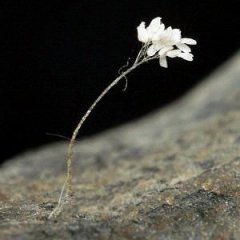
The product at the center of the research is a German herbal medicine that combines dried horseradish root with nasturtium herb, a garden plant with trumpet-shaped flowers. It has been licensed in Germany for more than 50 years for acute uncomplicated UTIs.
Its effect is mainly attributed to isothiocyanates. These are sharp, mustard-like compounds that give horseradish its bite and are released when the root is crushed or chewed. In laboratory tests, they have shown activity against a broad range of bacteria.
.
What the studies actually show
The research is encouraging but uneven.
- Randomized trial design: A phase III trial was set up to test whether the herbal combination is "non-inferior" to a standard antibiotic (co-trimoxazole) in acute uncomplicated cystitis. It was randomized and double-blind, the strongest study design available.
- Large real-world study (2024): Researchers compared about 2,300 German patients who received the herbal product with about 11,400 who received antibiotics. They concluded it can be an effective alternative for acute and recurrent UTIs. However, this was a retrospective analysis of existing records, not a controlled experiment, so it cannot prove cause and effect.
- Earlier practice data: A 2006 study in 251 German practices found comparable symptom relief between the herbal product and standard treatment. It covered milder cases, and patients who clearly needed antibiotics were excluded.
- Guideline mention: The updated German medical guideline on uncomplicated UTIs lists the combination as a possible option for preventing recurrent infections.
Most of this research was run in Germany, and parts of it were connected to the manufacturer. Independent confirmation in other countries would strengthen the case.
.
Why a homemade tincture is a different matter
The studies tested a standardized, measured product, not kitchen preparations. Strength in a homemade tincture varies with the root, the alcohol and the soaking time. Nobody has shown that it prevents or treats an infection.
Horseradish is also very pungent. Too much can irritate the stomach and mouth. And an untreated UTI can spread to the kidneys, so it should not be left to a home remedy.
.
When to see a doctor
Contact a healthcare professional if you have burning during urination, constant urgency, lower abdominal pain or blood in the urine. Seek urgent care for fever, chills, back or side pain, nausea or vomiting. The same applies during pregnancy, with diabetes, kidney disease or a weakened immune system, and for symptoms in men or children.
.
Outlook
The research reflects a wider shift. Doctors are rethinking how to use antibiotics, and patients are asking for gentler options. Horseradish and nasturtium may become a useful supporting tool for some women, but larger independent trials are needed. Until then, they are best seen as a complement to medical care, not a replacement for it.
.
Sources
- Kassner N. et al., "Effectiveness of a Combination of Nasturtium Herb and Horseradish Root (Angocin® Anti-Infekt N) Compared to Antibiotics in Managing Acute and Recurrent Urinary Tract Infections," Antibiotics, 2024: https://www.mdpi.com/2079-6382/13/11/1036
- "Randomized, prospective, double-dummy, double-blind trial of an herbal combination vs. co-trimoxazole in acute uncomplicated cystitis," Research and Reports in Urology, Vol. 9: https://www.dovepress.com/results-of-a-randomized-prospective-double-dummy-double-blind-trial-to-peer-reviewed-fulltext-article-RRU
- Goos K.H. et al., prospective cohort study on nasturtium and horseradish in sinusitis, bronchitis and UTI, Arzneimittelforschung, 2006: https://pubmed.ncbi.nlm.nih.gov/16618018/
- "Recurrent Urinary Tract Infections," StatPearls, National Library of Medicine: https://ncbi.nlm.nih.gov/books/NBK557479
- Stamm W.E. et al., "Natural history of recurrent urinary tract infections in women," University of Oxford: https://ndm.medsci.ox.ac.uk/publications/996264
.
What's Your Reaction?
 Like
0
 Dislike
0
 Love
0
 Funny
0
 Wow
0
 Sad
0
 Angry
0













Comments (0)