

Sask. Premier Moe Softens Push to Remove EV Tariffs on China

.
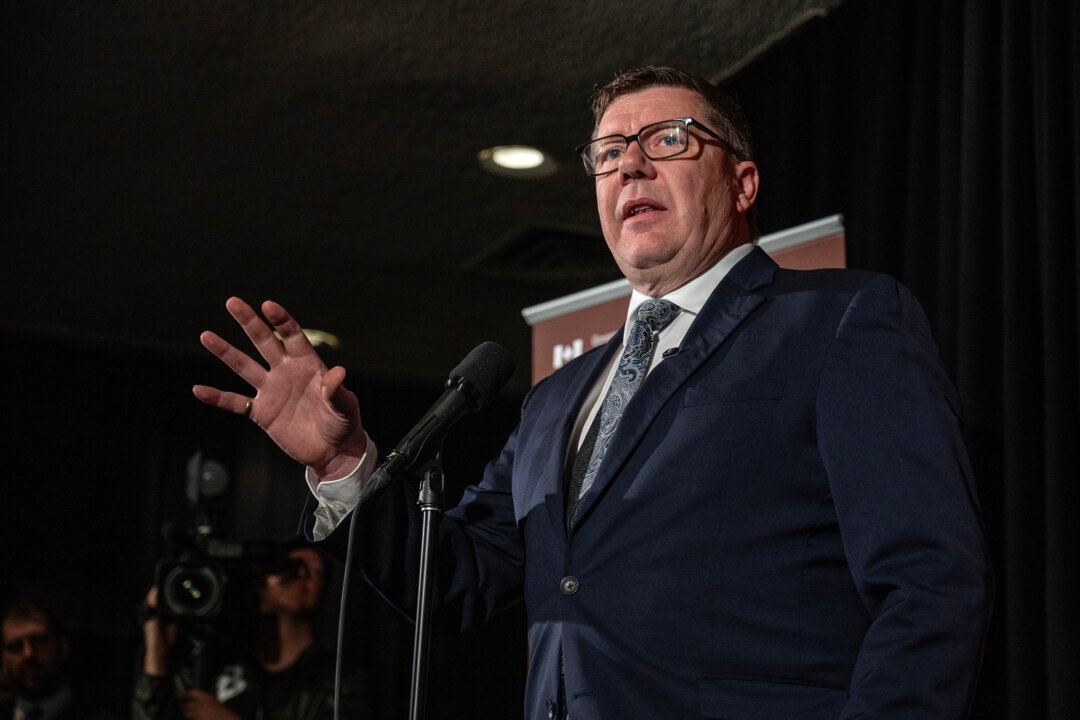
Saskatchewan Premier Scott Moe has tempered his call for Ottawa to remove electric vehicle (EV) tariffs on China, saying the issue is “not as simple as that” given the challenge of balancing trade relations with both Beijing and Washington.
He was asked by reporters whether Carney expressed willingness to remove Ottawa’s tariffs on Chinese EVs in exchange for tariff relief on canola, but Moe said the issue is more complex, pointing to the need to balance trade relationships with both China and the United States.
Canada introduced its 100 percent tariffs on Chinese-made EVs last year, citing “unfair” competition from Chinese producers and aligning with similar duties imposed earlier by the United States. Shortly afterward, Beijing launched an “anti-dumping” investigation into Canadian canola, which it says led to the latest round of tariffs.
Moe remarked that further discussions are needed when asked if he had received any commitments from Chinese officials that eliminating EV tariffs would help ease canola duties.
“I think there is not a lot of confidence in trade certainty moving forward for any country right now,” Moe said.
“That being said, we are going to work alongside our federal government—we are a sub-national government—in ensuring that... all of Canada’s interests are well represented at that table.”
Moe was also questioned about what Beijing wants from Canada to ease trade tensions. The premier said Chinese officials spoke about the need to “not look back, but to look ahead.”
Moe said discussions with Chinese officials also touched on the need to “recalibrate the dialogue and the relationship” between Canada and China, and to move forward in a “pragmatic and constructive manner.”
“Do we want on our streets, in 10 years from now, a million rolling surveillance vehicles that have cameras and chips and other devices that are easy to track and potentially remote-controlled?” he said late last month, noting that “the Chinese government wants to have the ability to track and surveil our people.”
“We have differences with China, different approaches to a variety of things, but they are our second-largest trading partner, and there are areas where we can cooperate,” Carney said during a Sept. 3 press conference.
Moe said on Sept. 16 that China’s decision earlier this month to extend its anti-dumping investigation by six months is a positive sign that market access can be restored through engagement. He added that Ottawa has said there may be additional conversations with China in the months ahead.
What's Your Reaction?
 Like
0
Like
0
 Dislike
0
Dislike
0
 Love
0
Love
0
 Funny
0
Funny
0
 Wow
0
Wow
0
 Sad
0
Sad
0
 Angry
0
Angry
0











Comments (0)