

The Indo-Pacific Arms Up: How Asia Is Building Its Own Defense Network — With or Without Washington
At Asia's most important defense summit in Singapore, a clear message emerged: Indo-Pacific nations are no longer waiting for Washington to carry the full security burden. Facing a rapidly expanding Chinese military, countries across the region are forging new alliances, buying more weapons, and building a web of partnerships that goes far beyond traditional U.S. leadership.

.
Singapore Becomes the Stage for a Strategic Turning Point
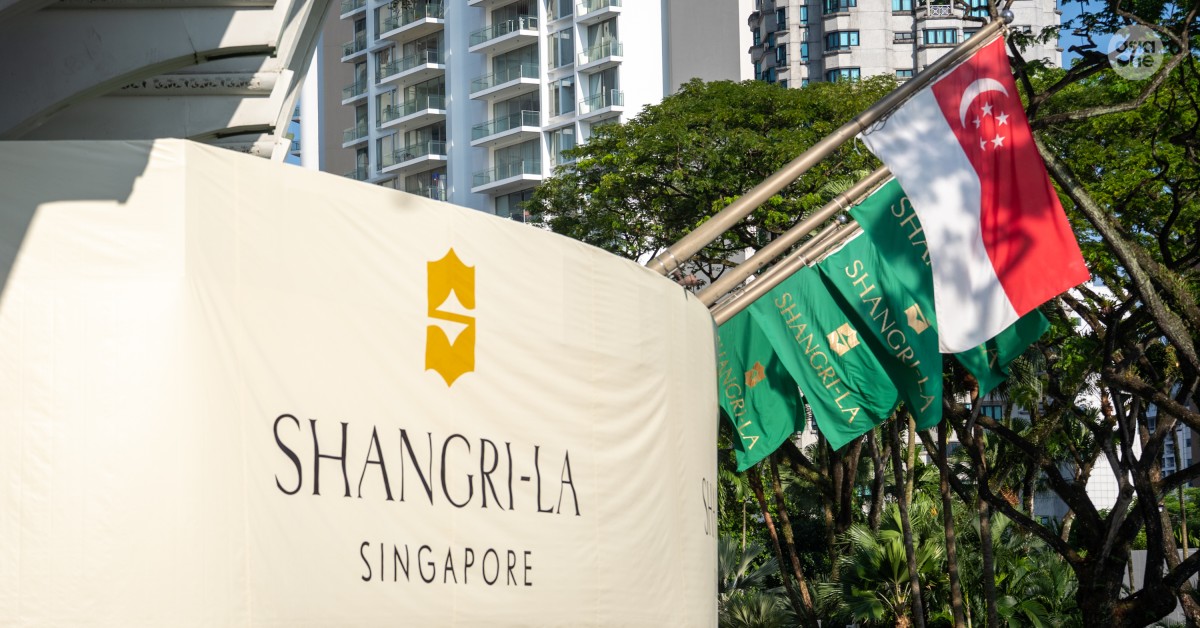
Singapore, May 31, 2026 — The Shangri-La Dialogue, Asia's premier annual defense forum, has never been more consequential. This year, defense ministers, military commanders, and intelligence chiefs from across the globe gathered at the island city-state with a shared sense of urgency: China's military is growing fast, and questions about America's staying power in the region are louder than ever.
U.S. Defense Secretary Pete Hegseth arrived with a direct message for allies: the United States expects its partners to carry more of the security load. His appearance came amid U.S. military involvement in the Iran conflict — a factor that, fairly or not, has fueled speculation about whether Washington can truly prioritize two major theaters at once.
"We can do two things at one time," Hegseth told the assembled defense chiefs.
It was a reassurance — but the fact that it needed to be said spoke volumes.
A New Web of Alliances Is Taking Shape
What is unfolding in the Indo-Pacific is less a collapse of the American security umbrella and more a determined effort to reinforce the poles holding it up.
Philippine Defense Secretary Gilberto Teodoro put it plainly: "All the defense secretaries here present are unanimous in the need for agile and speedy upscaling of their own individual defense capabilities." He described Manila's deepening ties with Japan, Australia, Canada, and New Zealand not as a replacement for U.S. leadership, but as a reinforcement of it.
"The commitment of the United States becomes more solid when more actors come in," Teodoro said, "because there is a common threat."
Singapore's Defense Minister Chan Chun Sing echoed the sentiment, calling for "flexible partnerships" between "coalitions of the able and willing" — language that reflects a more distributed, resilient approach to regional security.
Japan Steps Up as the New Regional Security Hub
Perhaps the most significant shift is Japan's emergence as a central node in this new defense architecture. Japanese Defense Minister Shinjiro Koizumi announced that Tokyo aims to act as a "connecting point" for regional security cooperation.
This is more than diplomatic language. In April 2026, Japan enacted its most sweeping defense export reform in decades — effectively dismantling postwar restrictions that had kept Japanese warships, missiles, and advanced military equipment off the global market. The reform replaced rigid export categories with a case-by-case approval system, opening the door to deals with countries ranging from the Philippines to Poland.
"Japan will be even more proactive in defense equipment cooperation," Koizumi said at the forum. "Our aim is to ensure that each country has the capabilities it needs."
This is a remarkable transformation for a country whose post-World War II constitution was built around pacifist principles. But with China pressing on multiple fronts and North Korea continuing its weapons programs, Tokyo has concluded that restraint is no longer a viable security policy.
From Wellington to Ottawa: The Broadening Alliance
The push for deeper defense ties extends well beyond Tokyo and Manila.
New Zealand's newly appointed Defense Minister Chris Penk confirmed that Wellington is actively evaluating Japanese Mogami-class frigates and British vessels to replace its aging ANZAC-class frigates — a decision that would lock New Zealand into a tighter defense relationship with both Japan and the UK for decades to come.
Penk also dined with counterparts from Singapore, Malaysia, Australia, and Britain to map out deeper cooperation under the Five Power Defence Arrangement, a 54-year-old security pact. He said there was clear scope for the alliance to operate "at a more intense level."
Canada, meanwhile, is expanding its Indo-Pacific footprint in practical ways. Canada's Chief of Defence Staff, General Jennie Carignan, told reporters that Canadian forces are conducting cybersecurity cooperation and maritime exercises with Japan and the Philippines, while also helping Indonesian military personnel with English-language training.
"There is a lot of work to do in the Indo-Pacific region," Carignan said. "And I think this is why we are seeing an increase in partnership across the board."
China's Absence Speaks Loudly
Beijing's own posture at the Shangri-La Dialogue has become a revealing barometer. For the second consecutive year, China's Defense Minister Dong Jun did not attend. Instead, Beijing sent a delegation composed largely of academics and mid-level military officials — a downgrade that drew pointed criticism from Australia's Defense Minister Richard Marles, who called it a "missed opportunity" for strategic engagement.
China's defense ministry, for its part, accused the United States of using the forum to "create disputes, sow discord, provoke confrontation and seek selfish interests" — a statement that drew little sympathy from the assembled delegates.
The irony is stark: China remains the central topic at the Shangri-La Dialogue, yet Beijing continues to absent itself from the room where the conversation happens.
U.S. Commitment: Firm, But Being Tested
Despite the flurry of multilateral activity, regional officials were careful not to signal a drift away from Washington. For Australia, Defense Minister Marles described the U.S. alliance as "absolutely fundamental to our national security," adding that both the Trump administration and Canberra see themselves as stewards of a relationship "which goes well beyond us."
Japan's Koizumi, for his part, said he believed U.S. commitment to the Indo-Pacific was "unwavering" — while acknowledging that some countries may still doubt it.
The broader picture that emerged from Singapore is one of a region hedging rationally. Nations are not abandoning America. They are building the capability to survive a world where American attention is finite, contested, and sometimes redirected.
In that context, the flurry of new partnerships, arms deals, and joint exercises is not a sign of panic. It is a sign of strategic maturity — and long overdue preparation.
.
Sources:
- Reuters – "The great Indo-Pacific hedge – deeper defence ties as US doubts grow and China ascends" (May 31, 2026): https://www.reuters.com/world/china/great-indo-pacific-hedge-deeper-defence-ties-us-doubts-grow-china-ascends-2026-05-31/
- CNN / Reuters – "Japan opens door to global arms market with biggest export rule change in decades" (April 21, 2026): https://www.cnn.com/2026/04/20/asia/japan-defense-export-arms-sales-intl-hnk
- Modern Diplomacy – "China's Limited Role at Shangri-La Dialogue Seen as Missed Opportunity" (May 2026): https://moderndiplomacy.eu/2026/05/29/chinas-limited-role-at-shangri-la-dialogue-seen-as-missed-opportunity/
- Asia Times – "Shangri-La Dialogue opens as Asia seeks alternatives to US shield" (May 2026): https://asiatimes.com/2026/05/shangri-la-dialogue-opens-as-asia-seeks-alternatives-to-us-shield/
- Army Recognition – "Japan lifts arms export ban to enable overseas sales of advanced military systems" (April 20, 2026): https://www.armyrecognition.com/news/army-news/2026/japan-lifts-arms-export-ban-to-enable-overseas-sales-of-advanced-military-systems
.
What's Your Reaction?
 Like
0
Like
0
 Dislike
0
Dislike
0
 Love
0
Love
0
 Funny
0
Funny
0
 Wow
0
Wow
0
 Sad
0
Sad
0
 Angry
0
Angry
0














Comments (0)