

Nvidia Eyes $200 Billion CPU Market — And China Is Part of the Plan
Nvidia CEO Jensen Huang confirmed on Saturday that his ambitious forecast for a $200 billion central processor market explicitly includes China — even as geopolitical friction continues to block actual chip deliveries. The statement underscores how critical the Chinese market remains for the world's most valuable semiconductor company.


.
Huang Makes His Position Clear in Taipei
Arriving at Taipei's Songshan Airport ahead of next month's Computex technology trade show, Nvidia CEO Jensen Huang addressed reporters on a question that has been hanging over the company for months: Does his bold $200 billion CPU market forecast account for China?
His answer was simple and direct: "I would think so."
The comment carries significant weight. During Nvidia's most recent earnings call on Wednesday, Huang had presented the company's new "Vera" central processing units as the key to unlocking an entirely new market segment — one separate from the GPU-dominated AI chip business Nvidia already leads. Confirming China's inclusion signals that Nvidia has no intention of writing off one of the world's largest technology markets, regardless of ongoing U.S.-China tensions.
The H200 Problem: Licensed but Blocked
The situation around Nvidia's H200 chip — its second-most powerful AI accelerator — illustrates the contradictions defining the current tech trade landscape.
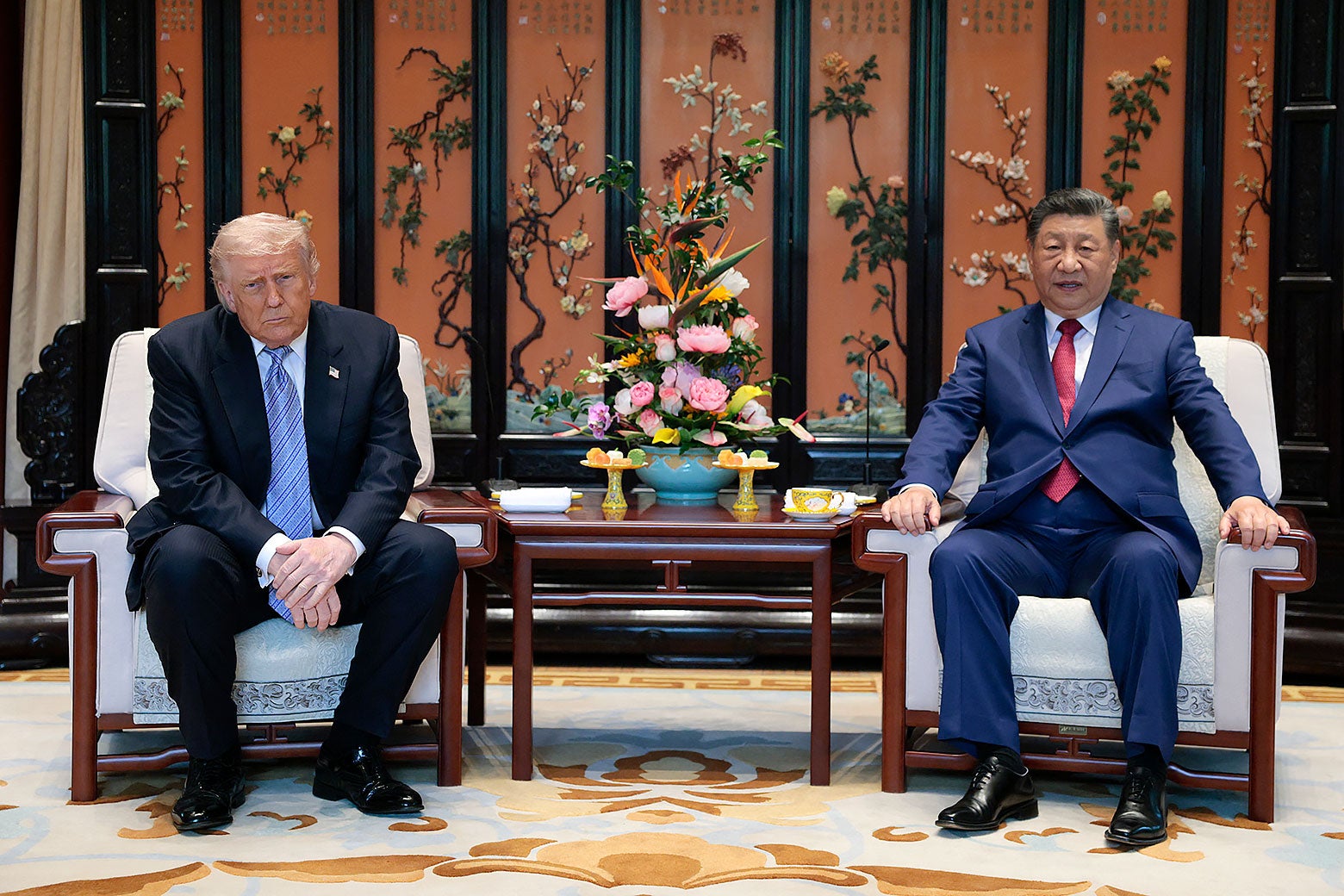
Nvidia has obtained export licenses from the U.S. government permitting H200 sales to China. Yet not a single chip has been delivered. Chinese regulators, actively promoting domestic chip suppliers, have not given their approval. Talks between U.S. President Donald Trump and Chinese President Xi Jinping in Beijing earlier this month produced no immediate breakthrough on the issue, despite Huang himself traveling as part of the U.S. delegation.
According to reporting from multiple outlets, Washington has cleared roughly ten Chinese companies to purchase the H200, yet the commercial pipeline remains frozen.
"H200 has been licensed to ship to China. It would be terrific to be able to serve that market. The Chinese market is very important — it's very large, of course," Huang said at the airport.
The frustration is evident: Nvidia holds a valid export license but remains caught between two governments with competing interests.
Why CPUs Are the New Battleground
For years, the AI chip conversation revolved almost exclusively around GPUs — graphics processors repurposed to train massive AI models. That is changing.
As businesses shift toward so-called agentic AI — systems capable of performing autonomous tasks, making decisions, and taking actions without constant human input — the demand for high-performance central processing units is accelerating. CPUs handle the coordination and logic layers that agentic systems rely on heavily.
Nvidia's "Vera Rubin" platform, which combines the Vera CPU architecture with the Rubin GPU architecture, is positioned to capture this expanding demand. Huang confirmed that production of the platform is ramping up, promising "a very busy second half" for Taiwan's semiconductor supply chain.
Taiwan: More Than Just a Production Hub
Huang's visit to Taiwan comes at a moment when the island's role in global AI infrastructure is being reinforced from multiple directions.
AMD announced Thursday it would invest over $10 billion in Taiwan's AI sector to deepen partnerships and expand advanced chip assembly capacity. Asked whether Nvidia had made comparable investments, Huang declined to cite specific figures but said: "We haven't announced anything in the past, but we've invested in and supported our partners here far more than that."
He also confirmed plans to meet with TSMC leadership during the trip. TSMC, the world's largest contract chipmaker, manufactures the advanced semiconductors at the heart of the AI boom — and remains indispensable to Nvidia's production roadmap.
Chip Smuggling Casts a Shadow
The visit to Taiwan is not without its complications. On Thursday, Taiwanese prosecutors announced an investigation into three individuals suspected of illegally exporting high-performance AI servers — built by Super Micro and containing Nvidia chips subject to U.S. export controls.
The case echoes a larger scandal. In March, the U.S. Department of Justice charged three people connected to Super Micro, including one of its co-founders, with allegedly helping move at least $2.5 billion worth of U.S. AI technology to China in violation of federal export law.
Huang addressed the issue carefully, stating that Nvidia is "very rigorous" in educating its partners about applicable laws and requiring their compliance. But he was equally clear about the limits of Nvidia's direct responsibility.
"Ultimately, Super Micro has to run their own company," he said. "I hope that they will enhance and improve their regulation compliance and avoid that from happening in the future."
The statement reflects a broader challenge for U.S. chip companies: maintaining clean compliance records in a global supply chain where enforcement gaps remain significant.
What Comes Next
The Computex trade show, opening in Taipei in June, will serve as the next major stage for Nvidia — and for the broader AI industry. With Vera Rubin production accelerating, a $200 billion market ambition on the table, and the H200 situation unresolved, the coming months will test whether Nvidia can translate its market dominance into actual revenue flows across every geography it is counting on.
The China question, in particular, is unlikely to go away. For a company projecting over $1 trillion in cumulative AI chip sales, leaving the world's second-largest economy on the sidelines is not a sustainable strategy. How — and whether — that market unlocks will be one of the defining stories in tech for the rest of 2026.
.
Sources:
- Reuters – Nvidia says its forecast for $200 billion CPU market includes China (May 23, 2026): https://www.reuters.com/technology/nvidia-says-its-forecast-200-billion-cpu-market-includes-china-2026-05-23/
- Reuters – U.S. clears ~10 Chinese firms to buy Nvidia H200 chips: https://www.reuters.com/technology/
- U.S. Department of Justice – Super Micro indictment press release (March 2026): https://www.justice.gov/
- Radio Free Asia – U.S.-China tech trade tensions and chip restrictions: https://www.rfa.org/english/
- BBC News – AI chip export controls and geopolitical fallout: https://www.bbc.com/news/technology
.
What's Your Reaction?
 Like
0
Like
0
 Dislike
0
Dislike
0
 Love
0
Love
0
 Funny
0
Funny
0
 Wow
0
Wow
0
 Sad
0
Sad
0
 Angry
0
Angry
0












Comments (0)