

Death Toll Surges to 90: China's Coal Mine Disaster Becomes Deadliest in Over 16 Years
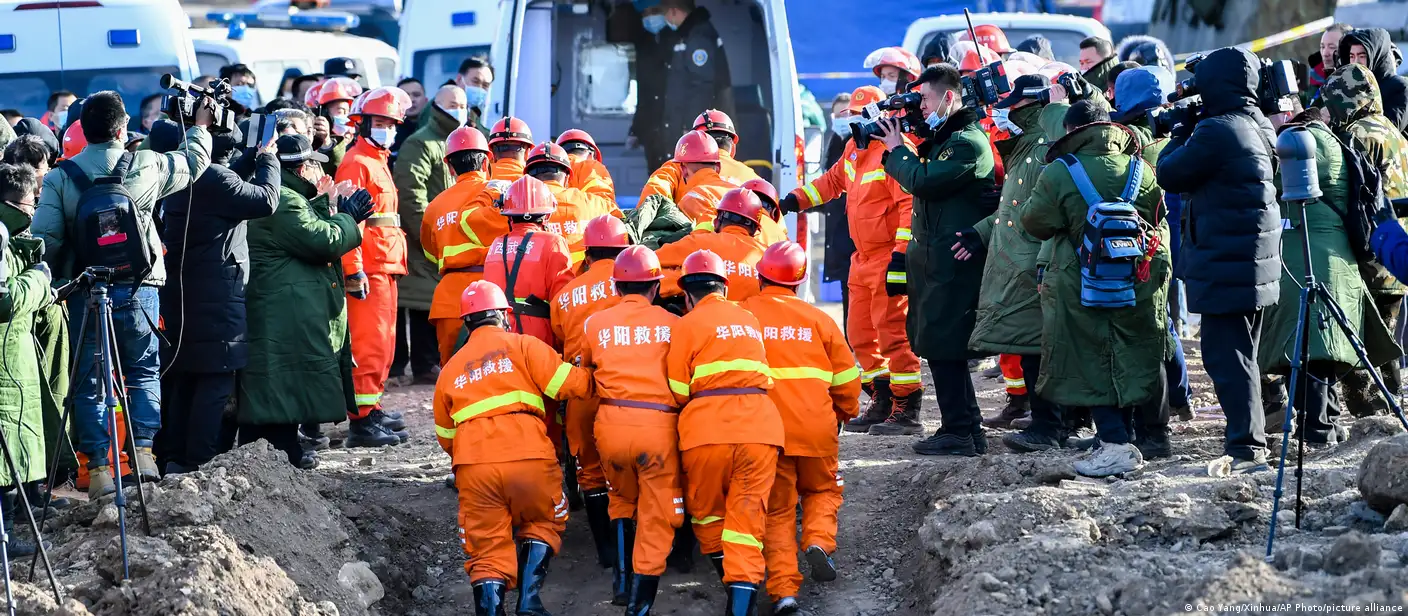
What initially appeared to be a tragic but contained mining accident in northern China has become a national catastrophe. The gas explosion at the Liushenyu coal mine in Shanxi province has now claimed at least 90 lives — making it the deadliest coal mine disaster in China since 2009. Company executives have been detained, and President Xi Jinping has ordered an investigation.

.
Update: Catastrophic Scale Now Confirmed
When the gas explosion tore through the Liushenyu coal mine on the evening of Friday, May 22, 2026, early reports suggested eight confirmed dead and 38 trapped. The full picture that has since emerged is far grimmer.
At least 90 miners have now been confirmed dead. With 247 workers underground at the time of the blast, the scale of the disaster has shocked China and drawn international attention. It is the country's deadliest coal mining accident in more than 16 years.
→ Read our initial report: Eight Dead, 38 Still Trapped After Gas Explosion Rocks Chinese Coal Mine
Who Operated the Mine?
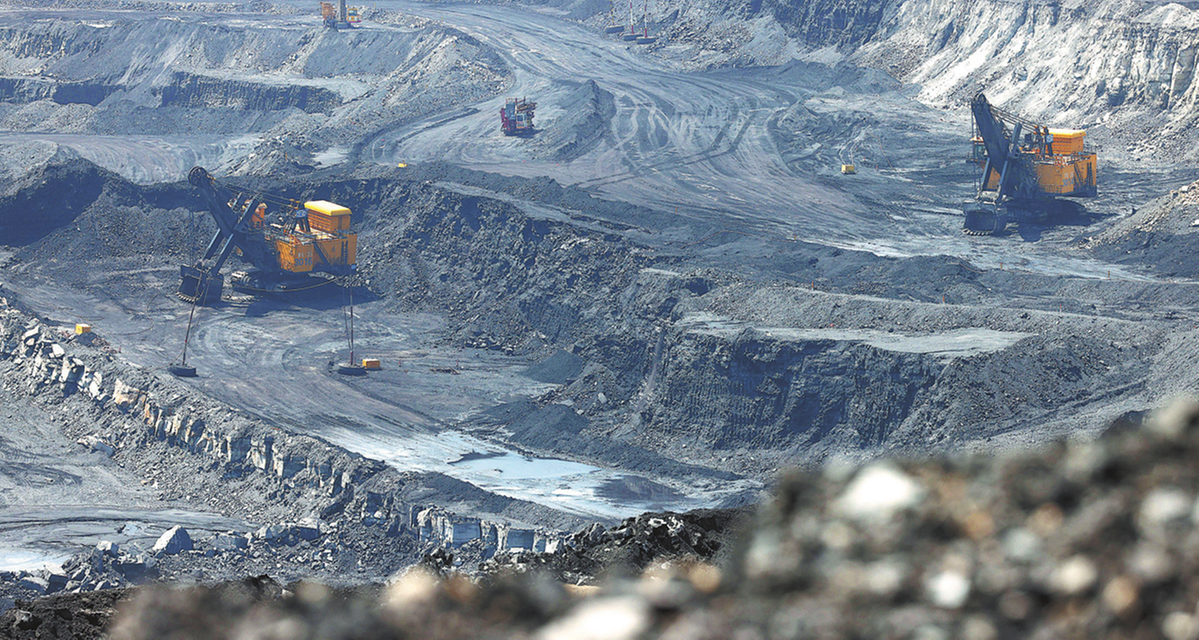
The Liushenyu coal mine is operated by Shanxi Tongzhou Group Liushenyu Coal Industry, a company established in 2010 and controlled by the larger Shanxi Tongzhou Coal Coking Group. The mine is located in Qinyuan County, a district in the heart of Shanxi province — China's most coal-intensive region.
Following the disaster, executives of the company responsible for the mine were detained by authorities, according to state media reports. Rescue operations remain ongoing, and the cause of the explosion is still under official investigation.
Beijing Responds — With Familiar Language
Chinese President Xi Jinping publicly called on authorities to leave no effort spared in treating the injured and recovering those still unaccounted for. He also ordered a comprehensive investigation into the causes of the accident and demanded accountability under the law.
Premier Li Qiang echoed those instructions, calling specifically for transparent and timely information disclosure — an implicit acknowledgment that such transparency has not always been forthcoming in past disasters.
Shanxi provincial authorities have deployed seven rescue and medical teams, comprising a total of 755 personnel, to the site of the explosion.
These declarations follow a well-worn script. After each major disaster, senior officials announce investigations and pledge consequences. Whether meaningful accountability follows — or whether the response remains performative — is a question Chinese civil society has been asking for decades.
A Dark Chapter in a Long History
China's coal mines have a harrowing record. The Liushenyu disaster now occupies a grim place in a long timeline of mass-casualty events:
The last comparable tragedy occurred in 2009, when a gas explosion at the Xinxing Mine in Heilongjiang Province killed 108 people and injured 133. Before that, the mid-2000s saw a cascade of catastrophic explosions:
- 2005, Liaoning Province — 214 miners killed at the Sunjiawan colliery, one of the worst single mining disasters in modern Chinese history
- 2005, Heilongjiang — approximately 170 killed at the Dongfeng Coal Mine
- 2007, Shandong — 181 people drowned when heavy rains flooded two mines simultaneously
- 2004, Shaanxi — 166 killed at the Chenjiashan Coal Mine in Tongchuan
Going further back, the Laobaidong Coal Mine explosion in Shanxi in 1960 — a disaster that occurred under Mao Zedong's regime — killed an estimated 684 people, a figure that went largely unreported for decades.
The Structural Problem That Won't Go Away
China has made genuine statistical progress in reducing coal mine fatalities since the catastrophic peak years of the early 2000s. Tighter regulations, mandatory equipment upgrades, and increased inspection frequency have contributed to a measurable decline in annual death tolls.
Yet the Liushenyu disaster reveals that the underlying problems remain unresolved. Gas explosions — the single most lethal hazard in underground coal mining — continue to occur with regularity. Safety compliance in practice often diverges sharply from what is reported on paper.
Research has consistently linked elevated accident rates to production pressure: when output quotas are enforced by economic incentives or political expectations, corners get cut. The Communist Party-controlled regulatory structure, where local governments often maintain financial ties to mine operators, creates a conflict of interest that independent oversight cannot adequately address.
Accountability after the fact — arresting executives once cameras are rolling — does not substitute for the kind of pre-emptive, independent enforcement that could prevent disasters from happening in the first place.
Families Wait. Questions Remain.
For the families of those who did not come back to the surface, no statement from Xi Jinping or Li Qiang changes the outcome. Ninety miners went underground for a night shift on Friday. They did not come home.
The investigation will proceed. Executives will face legal processes. Safety pledges will be repeated. Whether this tragedy becomes a genuine turning point for mine safety in China — or another entry in a long and unbroken list — remains to be seen.
This article is a follow-up to our earlier report. We will continue to update as new information becomes available.
.
Sources
- Reuters – "At least 90 dead in China's worst coal mine disaster in over 16 years" (May 22/23, 2026): https://www.reuters.com/world/china/four-dead-90-trapped-north-china-coal-mine-accident-xinhua-reports-2026-05-22/
- Reuters – "Some of China's deadliest coal mine accidents" (May 23, 2026): https://www.reuters.com/world/china/some-of-chinas-deadliest-coal-mine-accidents-2026-05-23/
- Udumbara.net – Original report (May 23, 2026): https://udumbara.net/eight-dead-38-still-trapped-after-gas-explosion-rocks-chinese-coal-mine
.
What's Your Reaction?
 Like
0
Like
0
 Dislike
0
Dislike
0
 Love
0
Love
0
 Funny
0
Funny
0
 Wow
0
Wow
0
 Sad
0
Sad
0
 Angry
0
Angry
0












Comments (0)