

China Claims It Expelled Dutch Warship Near Disputed Paracel Islands
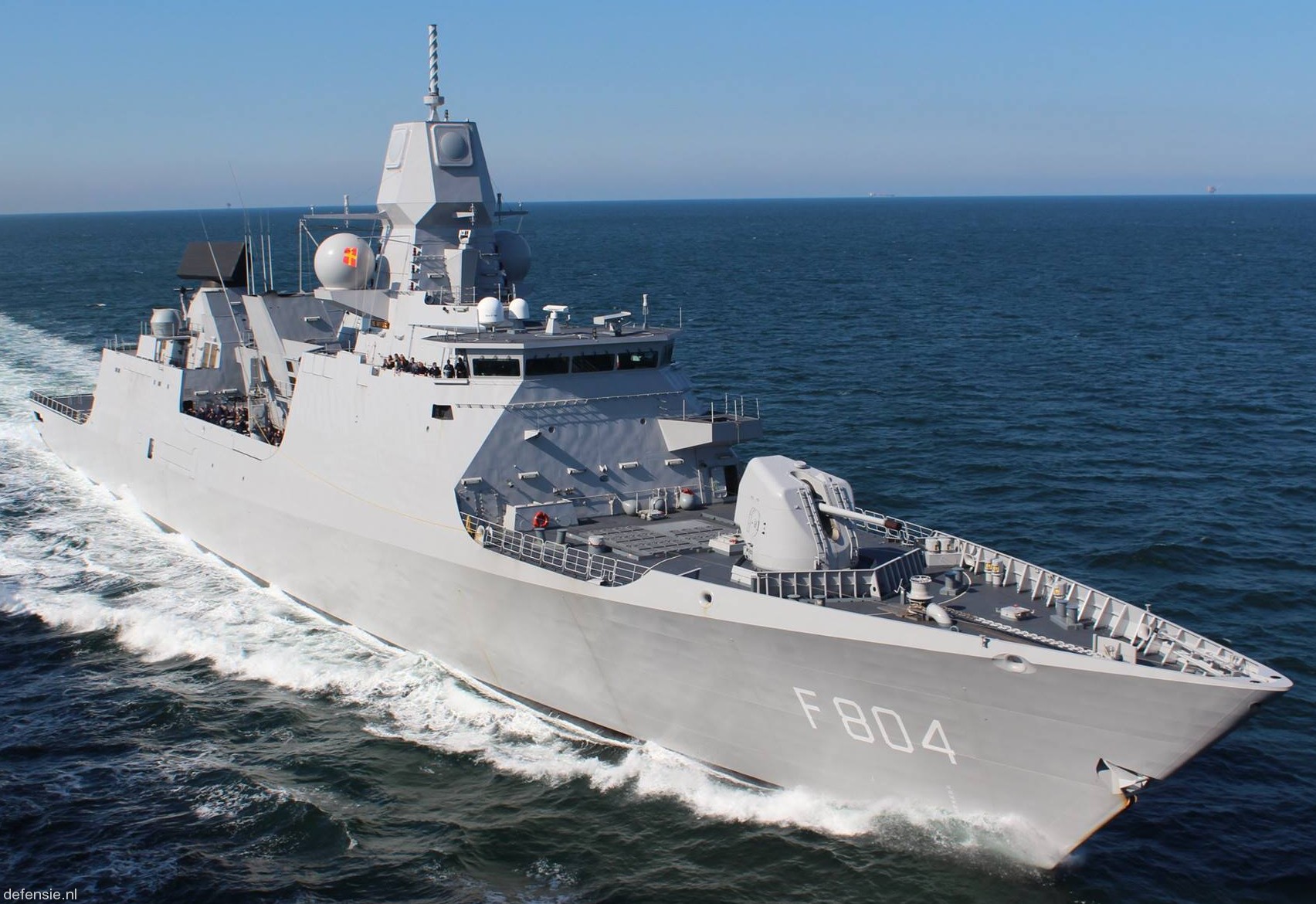
China's military says it deployed naval and air forces to drive away the Dutch frigate HNLMS De Ruyter from the Paracel Islands in the South China Sea on Wednesday. The incident marks one of the most direct public confrontations between Beijing and the Netherlands in the contested waterway, and comes as the Dutch navy has been expanding its presence in the Indo-Pacific.

.
Dutch Frigate Faces Chinese Intercept in South China Sea
China's People's Liberation Army (PLA) announced on Wednesday that it had ordered the Dutch warship HNLMS De Ruyter to leave the area around the Paracel Islands — a disputed island chain in the South China Sea that Beijing claims as its own territory.
Zhai Shichen, spokesperson for the PLA Southern Theater Command, said in an official statement that Chinese naval and air forces were deployed to "drive away" the vessel. He accused carrier-based helicopters from the Dutch frigate of repeatedly entering what China considers its airspace.
"We firmly oppose this and solemnly urge the Dutch side to immediately cease its infringing and provocative acts," Zhai stated, adding that the Chinese military would "resolutely safeguard national sovereignty."
The Dutch Defence Ministry had not responded to requests for comment at the time of publication.
A Rare Confrontation — But Not the First
For China, direct and public confrontations with European navies in the South China Sea are relatively uncommon. Most such incidents have historically involved the United States, the Philippines, or other regional powers.
Yet the Netherlands has been increasingly present in the Indo-Pacific. HNLMS De Ruyter, a De Zeven Provinciën-class air defence and command frigate with a crew of around 200, departed for the region in April 2026 — part of what the Dutch government describes as a strategy to strengthen diplomatic, security and economic ties in the area.
The Dutch defence ministry has stated it aims for a recurring maritime presence in the Indo-Pacific, noting that the world's most important trade routes pass through the region, which it considers vital to the country's security and economy.
Just days before Wednesday's incident, the ship made a port call in Manila, Philippines, from May 22 to 24, where it participated in interoperability exercises with the Philippine Navy. The frigate's commanding officer described an earlier encounter with a Chinese helicopter during that transit as "brief but highly professional."
What Are the Paracel Islands?
The Paracel Islands are a group of small islands and reefs in the northern part of the South China Sea, currently controlled by China but also claimed by Vietnam and Taiwan. China has been steadily expanding its military infrastructure across the region.
In 2026, China began construction at Antelope Reef in the Paracel Islands, expanding infrastructure that observers say could serve both military and civilian purposes — part of a broader resumption of island-building activities after roughly a decade of slower development.
The broader geopolitical picture in the South China Sea has been marked by increasing confrontation. In 2025, China Coast Guard vessels used high-pressure water cannons and rammed Filipino fishing craft, while also accosting Vietnamese fishing boats near the Paracel Islands.
International Law vs. Beijing's Claims
China asserts sovereignty over nearly the entire South China Sea, including vast areas also claimed by Brunei, Indonesia, Malaysia, the Philippines, and Vietnam. The basis for this claim is the so-called "nine-dash line" — a sweeping boundary drawn on Chinese maps that has no standing under international maritime law.
In 2016, the Permanent Court of Arbitration in The Hague ruled that China's expansive territorial claims were incompatible with the United Nations Convention on the Law of the Sea (UNCLOS). Beijing has consistently rejected the ruling.
The South China Sea is one of the world's most critical maritime corridors, with an estimated $5.3 trillion in annual trade passing through it. Most nations therefore have a direct interest in ensuring freedom of navigation is respected.
The Netherlands, like many Western nations, does not recognise China's claim to straight baselines around the Paracel Islands — a position backed by international law and shared by the United States, the European Union, and numerous other countries.
What Happens Next
Wednesday's incident is unlikely to go unaddressed diplomatically. The Netherlands is a founding NATO member and a key player in EU foreign and security policy. Any formal Dutch response to the Chinese expulsion claim could draw broader European attention at a time when the EU is reassessing its strategic posture toward Beijing.
For now, the confrontation adds to a growing list of encounters between Western navies and the PLA in the South China Sea — a reminder that the dispute over who controls these waters is far from settled.
.
Sources:
- Reuters – China's military says it drove away Dutch frigate in South China Sea: https://www.reuters.com/world/china/chinas-military-says-it-drove-away-dutch-frigate-south-china-sea-2026-05-27/
- Manila Bulletin – Dutch frigate reports brief encounter with Chinese helicopter during Manila port visit: https://mb.com.ph/2026/05/22/dutch-frigate-reports-brief-encounter-with-chinese-helicopter-in-wps-during-manila-port-visit
- SWZ Maritime – HNLMS De Ruyter deploys to the Indo-Pacific: https://swzmaritime.nl/news/2026/04/13/dutch-frigate-de-ruyter-deploys-to-the-indo-pacific/
- East Asia Forum – Drifting through dispute in the South China Sea: https://eastasiaforum.org/2026/02/27/drifting-through-dispute-in-the-south-china-sea/
- Belfer Center – Freedom of Navigation in the South China Sea: https://www.belfercenter.org/publication/freedom-navigation-south-china-sea-practical-guide
.
What's Your Reaction?
 Like
0
Like
0
 Dislike
0
Dislike
0
 Love
0
Love
0
 Funny
0
Funny
0
 Wow
0
Wow
0
 Sad
0
Sad
0
 Angry
0
Angry
0










Comments (0)