

China and Pakistan Agree to Overhaul Economic Corridor and Turn Gwadar into a Regional Hub
Beijing and Islamabad have issued a sweeping joint statement following Prime Minister Shehbaz Sharif's four-day state visit to China. The two countries announced a major upgrade to their flagship infrastructure project, opened it to outside investors for the first time, and pledged tighter security for Chinese workers on the ground.


This is an update to: https://udumbara.net/xi-and-sharif-forge-closer-ties-as-pakistan-steps-up-as-global-peacemaker
.
A Joint Statement With Weight
When heads of government shake hands and pose for cameras, it often signals little more than goodwill. The document that followed Shehbaz Sharif's visit to Beijing this week was different. The joint statement, released on Tuesday after Sharif met both President Xi Jinping and Premier Li Qiang, announced what Beijing and Islamabad described as a "new broad consensus" — a diplomatic term that signals genuine alignment, not just rhetoric.
The agreement touches on economics, security, infrastructure, and foreign policy. It marks a notable step forward in one of Asia's most consequential bilateral relationships.
CPEC Gets a Reboot — and New Investors Are Welcome
The centerpiece of the deal is the next phase of the China-Pakistan Economic Corridor, or CPEC — a vast network of highways, railways, energy plants, and ports connecting Pakistan's southern coastline to China's western Xinjiang region. Launched a decade ago with an initial Chinese investment estimated at around $46 billion, CPEC has long been the backbone of the two countries' economic relationship.
The new agreement commits both sides to what they are calling "high-quality development" of CPEC 2.0. The upgraded version is meant to go beyond raw infrastructure and focus more on agriculture, technology, special economic zones, and industrial cooperation.
But the most striking element is this: for the first time, both governments have explicitly invited third-party countries and companies to participate in CPEC projects — under agreed terms. That opening could attract new capital at a time when Pakistan is in urgent need of foreign investment.
Gwadar: From Port to Regional Hub
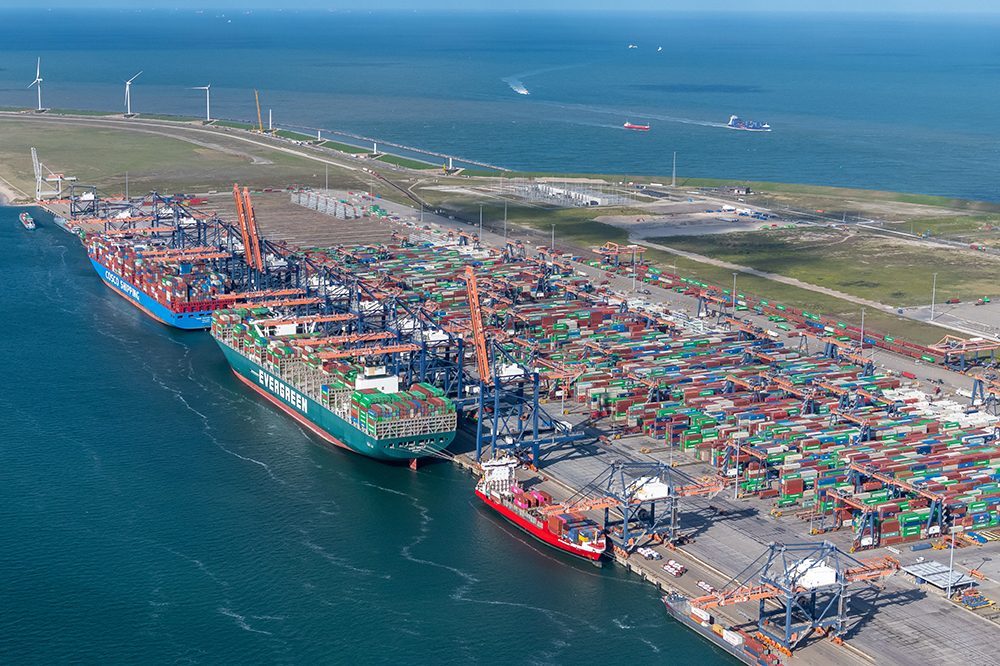
The port of Gwadar, located on Pakistan's Balochistan coast near the border with Iran, has long been China's strategic gateway to the Arabian Sea and, beyond it, the Indian Ocean and Middle East energy markets. Beijing has spent years developing the deep-water port as part of CPEC's broader ambitions.
The new joint statement raises the stakes considerably. Both governments agreed to actively develop Gwadar into a regional connectivity hub — a central node linking South Asia, Central Asia, and the Middle East through trade and transport.
Concrete plans include accelerating infrastructure around the port, attracting more cargo traffic, solving persistent shortfalls in water and power supply at the site, and expanding the port's industrial zone. The road connection over the Khunjerab Pass — the high-altitude mountain crossing between Pakistan and China — will also be strengthened, along with an upgrade of the Karakoram Highway, the main overland link between the two countries.
China Demands Better Security — Islamabad Promises to Deliver
One of the most sensitive topics in the China-Pakistan relationship has been the recurring attacks on Chinese nationals working on CPEC projects. Since 2021, at least 20 Chinese workers have been killed in Pakistan. Militant groups, particularly in Balochistan, have repeatedly targeted infrastructure sites and personnel.
This time, Pakistan made a formal, written commitment: it pledged targeted measures to improve the safety of Chinese workers and the protection of Chinese investment. The language in the statement is more concrete than in previous years — a sign that Beijing pressed hard for guarantees, and Islamabad recognized it could no longer afford to offer vague assurances.
Diplomacy: Iran, Taiwan, and Afghanistan
Beyond economics, the joint statement covered several politically sensitive foreign policy positions.
On the Iran conflict, Beijing acknowledged Islamabad's role in brokering the current ceasefire between the United States and Iran. Both sides expressed support for a five-point initiative aimed at restoring peace in the Middle East and offered to contribute positively to a lasting resolution.
Pakistan also reaffirmed its longstanding position that Taiwan is an "inalienable" part of China — a formulation Beijing values highly. Taiwan's government rejects this claim, maintaining that only the island's own people can determine its political future.
On Afghanistan, Pakistan welcomed China's efforts to maintain dialogue with Kabul. Both governments took a firm line against militant groups that use Afghan territory to launch attacks across the region — specifically naming the Tehreek-e-Taliban Pakistan (TTP) and the Eastern Turkistan Islamic Movement (ETIM), both of which are considered serious security threats by Beijing and Islamabad alike.
What This Means
The joint statement amounts to a comprehensive reset and expansion of the China-Pakistan relationship. CPEC, once criticized for falling behind schedule and burdening Pakistan with debt, is being relaunched with new priorities and, for the first time, a door open to outside participants. Gwadar is being repositioned from a bilateral project to a regional infrastructure anchor.
Whether these ambitions translate into concrete progress depends on two things above all: whether Pakistan can finally provide the security guarantees Chinese investors need to feel confident — and whether the political and financial environment is stable enough to attract the new capital both sides are counting on.
.
Sources:
- Reuters – "China, Pakistan aim to revamp economic corridor, Gwadar port" (May 26, 2026): https://www.reuters.com/world/asia-pacific/china-pakistan-reach-new-broad-consensus-boosting-ties-2026-05-26/
- Geo.tv – "Pakistan, China reach 'new broad consensus' on deepening strategic partnership" (May 26, 2026): https://www.geo.tv/latest/666125-pakistan-china-reach-new-broad-consensus-on-deepening-strategic-partnership
- China Mission to the UN – Joint Statement text (reference/background): https://un.china-mission.gov.cn/eng/zgyw/202412/t20241217_11494994.htm
- VOA / GlobalSecurity – Background on Gwadar Port development: https://www.globalsecurity.org/wmd/library/news/pakistan/2017/pakistan-171024-voa01.htm
.
What's Your Reaction?
 Like
0
Like
0
 Dislike
0
Dislike
0
 Love
0
Love
0
 Funny
0
Funny
0
 Wow
0
Wow
0
 Sad
0
Sad
0
 Angry
0
Angry
0










Comments (0)