

Human Rights Wasn’t ‘Proactively’ Raised During Carney’s China Visit: Privy Council

.
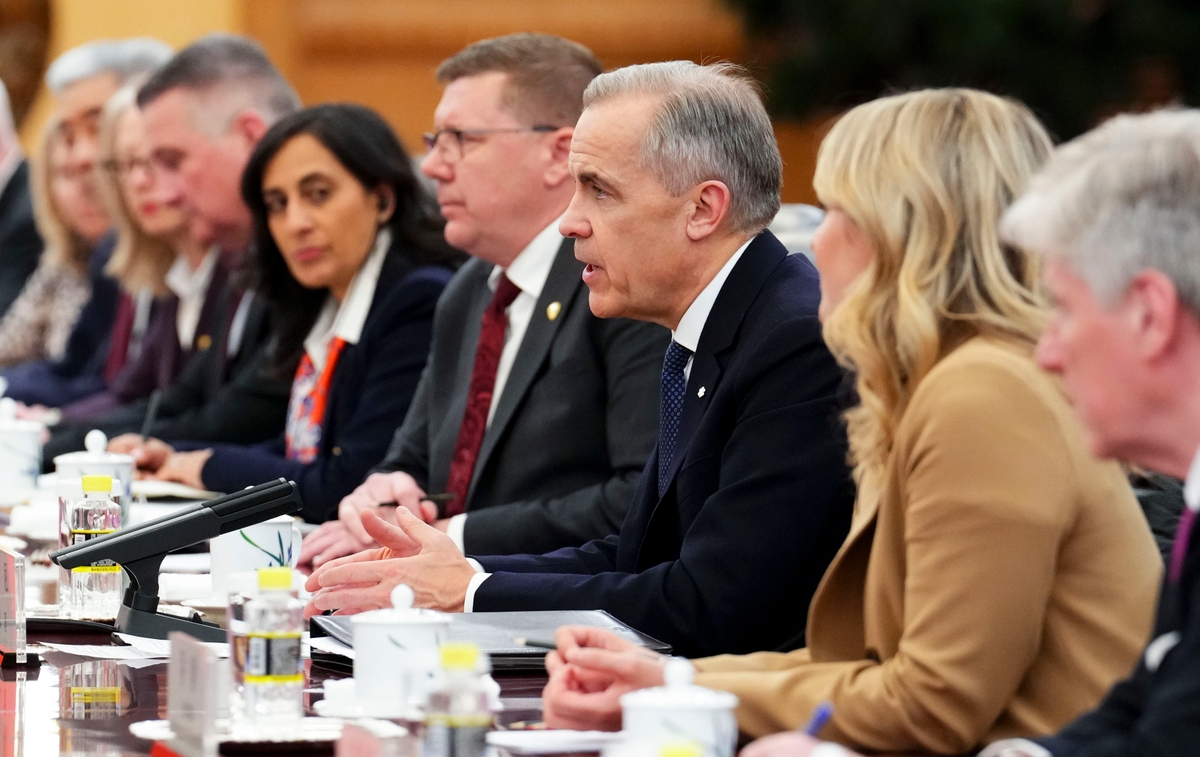
During Prime Minister Mark Carney’s visit to China in January, the issue of human rights wasn’t “proactively” raised during discussions with Chinese officials, according to the Privy Council Office (PCO).
Kuruc had also asked for details of all meetings between Carney and other ministers with Chinese officials during the trip.
The document indicates Carney met with Chinese leader Xi Jinping on Jan. 16 for roughly two hours, including a luncheon. It also lists a private meeting with Chinese Premier Li Qiang and meetings with executives including from the China National Petroleum Corporation, the Industrial and Commercial Bank of Canada, Chinese e-commerce company Alibaba, the National People’s Congress, Rongsheng Petrochemicals, and the People’s Bank of China.
When a reporter asked if concerns about human rights and freedom of expression are things Canada “just can’t afford to think about because we’ve got to diversify our markets,” Carney responded, “no.”
“Look, we fundamentally stand up for human rights. We stand up for democracy, territorial integrity, rights to self-determination,“ Carney said. ”We take the world as it is, not as we wish it to be,” he added, noting that this means Canada calibrates its engagement with countries “depending on our values and interests.”
China Relations
During the 2025 election campaign last April, Carney had called China the “biggest security threat” facing Canada. The next day, he elaborated that China is “one of the largest threats with respect to foreign interference.”During his trip to China in January, Carney said Canada had entered a new “strategic partnership” with Beijing and that relations between the countries had entered a “new era.”
When a reporter asked on Jan. 16 whether he still believes China poses the biggest security threat to Canada, Carney said the “security landscape continues to change” and the government is responsible for managing threats by building resilience and security, and through alliances and engagement.
“While the threat environment has increased, the risks have multiplied, so too has our resilience and our engagement, which is protecting Canadians,” he added.
He was also asked by a reporter whether he received any assurances from Xi that China would not interfere in Canada’s elections and sensitive sectors before deciding to allow more Chinese investment in Canada.
“These are some of the issues that we discuss in terms of our expectations in Canada, our red lines in terms of preventing foreign interference, not tolerating foreign interference, and addressing it when we see it,” Carney said. “As prime minister, I’ve always taken this extremely seriously.”
During Carney’s China trip, Ottawa signed agreements with Beijing on electric vehicles, law enforcement cooperation, energy, finance and other areas.
“We had a discussion on foreign interference,” Carney told reporters the next day.
“I don’t think they recognize the level of concerns we have about these issues,” he added. “But we manage these issues in Canada; we have a structure to manage them.”
What's Your Reaction?
 Like
0
Like
0
 Dislike
0
Dislike
0
 Love
0
Love
0
 Funny
0
Funny
0
 Wow
0
Wow
0
 Sad
0
Sad
0
 Angry
0
Angry
0












Comments (0)