

How the CCP Starved Chinese Peasants to Death in the 1950s


.
If the Chinese Communist Party’s (CCP’s) land reform was the violent expropriation of property from landlords, then its “Unified Purchase and Sale” policy was an extended and systematic plunder of China’s peasants—a policy that, at its core, amounted to legalized seizure under the guise of planned economy.
This policy was characterized by a state monopoly over grain procurement and sales. It forced peasants to sell all “surplus” grain, as well as livestock, eggs, sugar crops, silkworm cocoons, tobacco, hemp, and aquatic products, to the state at artificially low prices. The state then redistributed these goods to urban residents at subsidized rates and in fixed rations.
Apart from the mandatory “public grain” quota, which functioned like a form of rent, peasants could keep only what was left after giving the state its share of “surplus” grain. This leftover grain was for their own food, seeds, and livestock feed. The state decided how much grain counted as “surplus.”
The system began in 1953 and remained in place until the end of 1992.
The state didn’t stop at grain. A total of 132 agricultural products were placed under state monopoly. Peasants were prohibited from selling these products on the market, and the state set the prices. Meanwhile, both urban and rural residents could access daily necessities—such as food, clothing, cooking oil, and pork —only through government-issued coupons. These ration coupons essentially became a second currency in China.
The policy’s roots lay in the grain shortages that followed the founding of communist China in 1949. Before then, large cities relied heavily on imported wheat. After 1949, the CCP halted grain imports to conserve foreign currency, even as urban populations and industrial grain consumption increased. With more than 100 million rural households scattered across China at the time, the state found direct procurement too difficult. It came up with the solution of collectivized agriculture. Peasants were forced into cooperatives, then into communes, placing them under total political and economic control.
The CCP set prices to ensure that it bought low and sold high. Farm products were priced far below their value, while industrial goods sold to peasants were priced far above cost. Chinese scholars estimated that tens of billions of dollars were siphoned from the countryside in this manner.
Surplus in Name Only
In theory, the CCP only requisitioned surplus grain. In reality, however, it routinely set quota targets far above any reasonable surplus. Grain was seized on site without distinguishing between surplus and subsistence grain; even seeds and livestock feed were confiscated.After the policy began, the proportion of grain collected by the authorities nationwide increased by about 10 percent. Rural grain supplies became critically low. For decades, China’s peasants lived on the brink of hunger.
The CCP did not deny this. In fact, senior leaders acknowledged it.
.
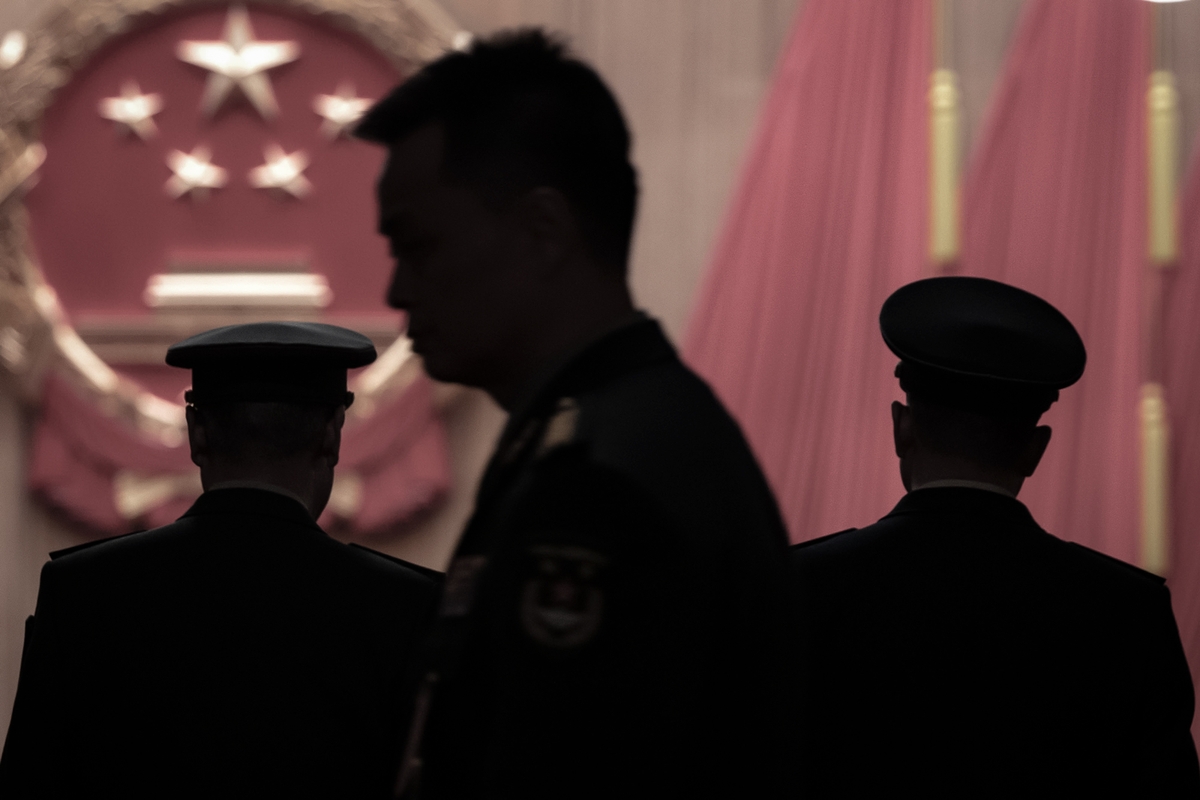
According to “The Selected Works of Liu Shaoqi,” a book officially published by the CCP, former Chinese leader Liu Shaoqi frankly admitted in his 1959 speech at the Seventh Plenary Session of the Eighth Central Committee that peasants did not have enough to eat.
“There is a sharp contradiction between the amount of grain the state needs and how much the peasants are willing to sell,“ Liu said. ”If the peasants had their way, they would only sell grain once they had eaten their fill. However, if they all ate their fill first, there would be nothing left for the rest of us—workers, teachers, scientists, and city residents. Without food, industrialization fails, the army shrinks, and national defense collapses.”
Mao Zedong, the founder of communist China, put it even more bluntly. After renowned Chinese philosopher Liang Shuming expressed sympathy for peasants at the 1953 National Committee of the Chinese People’s Political Consultative Conference, Mao replied: “Caring for the peasants is petty kindness. Developing heavy industry and defeating American imperialism are acts of grand kindness. To show only petty kindness and not grand kindness is to help the Americans.”
Coercion, Violence, and Death
Of course, peasants were unwilling to sell their food because they didn’t have enough for themselves. To enforce the quotas, the CCP applied immense political pressure.The Party combined grain collection with “socialist education” campaigns aimed at rooting out “capitalist thinking.” In practice, these campaigns turned grain procurement into political persecution.
In many areas, peasants who failed to meet quotas were denounced as “anti-socialist” or even “counterrevolutionaries.” Door-to-door searches, property seizures, public shaming, beatings, and torture were common.
According to official figures, in 1954 alone, 710 people died in grain collection incidents, 566 of whom died by suicide. Most of these deaths were the result of pressure and abuse. In Hubei, 150 people died; in Hebei, 130; and in Henan, 108. The actual numbers are certainly higher, given the CCP’s record of concealing and manipulating data.
In Shandong’s Yuncheng County, the actual grain surplus was 20.22 million jin, but authorities demanded 33 million jin. Jin is a unit of weight equivalent to approximately 1 pound. Officials collected 29 million jin through coercion and abuse. In Zhejiang’s Jinhua area, officials ransacked or sealed 257 homes; 178 peasants were tied up, beaten, or tortured. Others were illegally detained or fined.
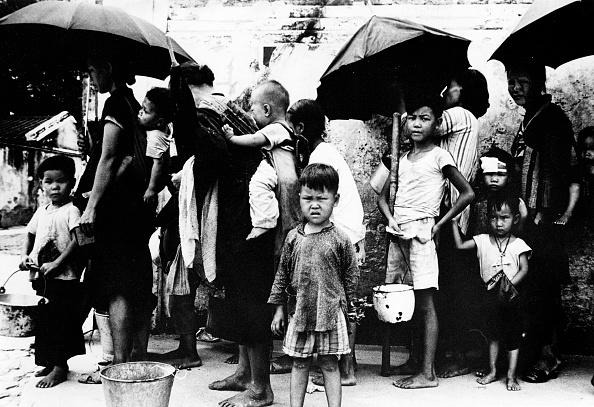
In 1955, at least 134 people died in Zhejiang alone while resisting grain quotas. Four people starved to death in Longyou County. In Kaihua County, among 126 villages, 39 reported that villagers were eating bark and grass. Malnutrition was rampant.
Guangxi Province saw some of the worst outcomes. Local cadres inflated harvest figures to impress their superiors, leading to extreme over-collection. Thousands starved. In places like Pingle, Lipu, and Hengxian, famine and disease outbreaks were widespread.
But no matter how desperate the situation became, the CCP dismissed all complaints as “anti-socialist” agitation—or worse, as counterrevolutionary propaganda.
Suppression During the Anti-Rightist Campaign
During the Anti-Rightist Campaign, which targeted intellectuals and lasted from 1957 to 1959, the brutality was actually worse in the countryside than in the cities. Many were hounded to death in the name of enforcing the grain monopoly.In 1957, the so-called “Great Socialist Debate” began in rural areas alongside the Anti-Rightist Campaign. It was presented as a national discussion about the merits of the Unified Purchase and Sale policy. However, there was only one acceptable answer: support. Those who criticized the policy were denounced and persecuted—sometimes to death.
According to a research paper by Song Yongyi, a Chinese American historian who specializes in the study of the Chinese Cultural Revolution, more than 1,300 rural suicides were recorded in just one month (September 1957) during the campaign. Hunan reported more than 400 deaths, Sichuan reported 217, Shandong reported 93, Henan reported 77, Hebei reported 58, Guizhou reported 181, Guangxi reported 276, and Qinghai reported 11.
In the years that followed, the CCP launched the Great Leap Forward, a campaign whose radical policies deepened the existing crisis. Taking place between 1957 and 1961, the movement aimed to rapidly surpass Western industrial powers but was marked by unrealistic production targets, falsified reports, and coercive grain requisitions. The subsequent depletion of rural grain reserves and the collapse of agricultural output led to the starvation of millions.
The Unified Purchase and Sale system, combined with the disastrous policies of the Great Leap Forward, directly caused the Great Chinese Famine (1959–1961)—one of the darkest chapters in modern history. Some sources say that approximately 40 million people died during that period.
What's Your Reaction?
 Like
0
Like
0
 Dislike
0
Dislike
0
 Love
0
Love
0
 Funny
0
Funny
0
 Wow
0
Wow
0
 Sad
0
Sad
0
 Angry
0
Angry
0













Comments (0)