

Eight Dead, 38 Still Trapped After Gas Explosion Rocks Chinese Coal Mine
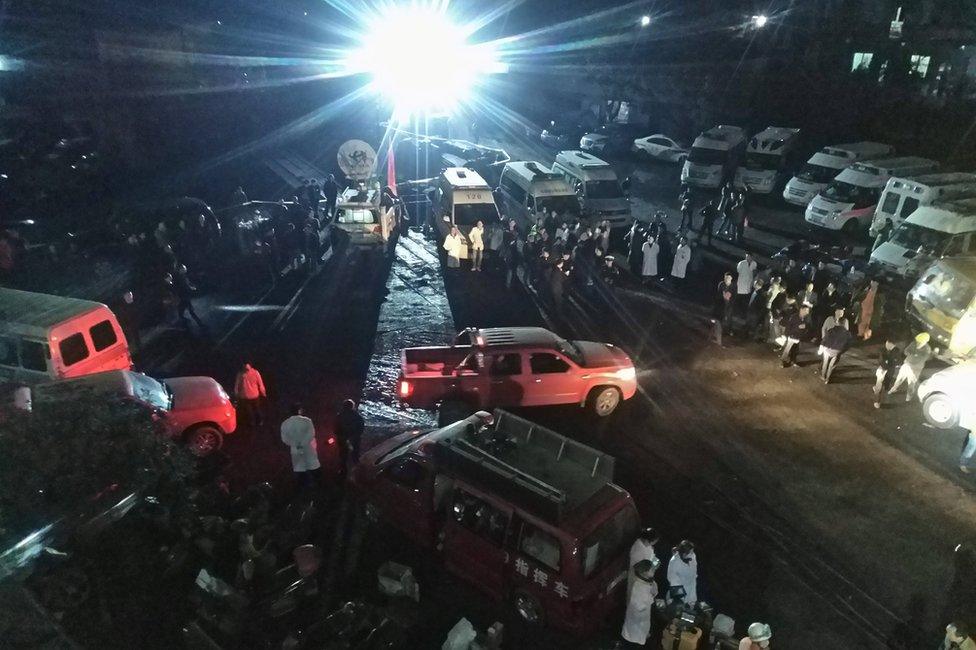
A powerful gas explosion tore through the Liushenyu coal mine in China's Shanxi province on Friday evening, killing at least eight miners and leaving 38 others trapped deep underground. With 247 workers on duty at the time of the blast, the disaster has renewed urgent questions about mine safety in a country where fatal accidents remain disturbingly common.

.
Explosion Hits During Night Shift
The blast struck at approximately 7:30 p.m. local time on Friday, May 22, 2026, at the Liushenyu coal mine located in Qinyuan County, Shanxi province. At that moment, 247 miners were working underground — a full night-shift crew.
Emergency crews responded immediately, working through the night to reach survivors. By 6:00 a.m. Saturday morning, at least 201 people had been brought to the surface. Eight of them were confirmed dead. Thirty-eight miners remained unaccounted for, still trapped underground.
State media reported that carbon monoxide levels inside the mine had exceeded safe limits — a common and deadly consequence of underground gas explosions, as the toxic gas can incapacitate or kill miners before rescuers can reach them.
Rescue Race Against Time
Rescue teams from local emergency services continued operations into Saturday. The exact location of the 38 trapped miners has not been publicly confirmed, and the cause of the explosion is still under official investigation.
Carbon monoxide poisoning is one of the gravest dangers in such disasters. The gas is colorless and odorless, meaning miners may lose consciousness quickly without warning. Time is the most critical factor in any underground rescue operation.
Chinese state authorities have not publicly disclosed whether communication with the trapped workers has been established.
Shanxi: China's Coal Heartland — and Its Most Dangerous
Shanxi province sits at the center of China's coal industry. With approximately 11.7% of all recorded mine accidents in the country between 2010 and 2025, Shanxi leads all other provinces in accident frequency — a grim distinction for a region that produces a significant share of the nation's energy supply.
Gas explosions and roof collapses are the most common types of accidents in Chinese coal mines, and Shanxi has consistently ranked among the worst-affected provinces.
From 2017 to 2021 alone, Shanxi recorded 102 coal mine accidents — more than any other province in China during that period.
A Pattern Beijing Has Struggled to Break
China has made measurable efforts to reduce mining deaths over the past two decades. Official statistics show a significant decline in total fatalities compared to the peak years of the early 2000s. Yet deadly incidents continue with troubling regularity.
In 2023, China experienced a surge of deadly coal mine accidents, forcing the country's mine safety administration to revamp existing safety legislation — with one official publicly acknowledging the law had "prominent problems."
Research published in Scientific Reports found that higher mortality rates tend to occur during periods of increased production intensity — a pattern critics link directly to production quotas and economic pressure on mine operators to maximize output.
The Chinese Communist Party-led government has repeatedly pledged tougher enforcement and stricter inspections. However, structural incentives — including local government ties to mine operators and inadequate independent oversight — continue to undermine meaningful accountability.
What Comes Next
Authorities have launched a formal investigation into the Liushenyu blast. Whether those responsible will face serious consequences remains to be seen. In past incidents, prosecutions have been selective, and transparency from Chinese state agencies has been limited.
For the families of the 38 still missing, the wait continues. Every hour underground with elevated carbon monoxide reduces the chances of survival.
This story is developing. We will update as new information becomes available.
.
Sources:
- Reuters — Coal mine accident, Shanxi, May 22, 2026: https://www.reuters.com/world/china/four-dead-90-trapped-north-china-coal-mine-accident-xinhua-reports-2026-05-22/
- CNN — Eight dead, dozens trapped, gas explosion Shanxi: https://www.cnn.com/2026/05/22/china/four-dead-china-coal-mine-latam-intl
- CGTN — 8 dead, 38 trapped, Qinyuan County: https://news.cgtn.com/news/2026-05-23/8-dead-38-trapped-in-coal-mine-accident-in-Shanxi-1Nn1WcYImIw/p.html
- ScienceDirect — Analysis of coal mine safety accident features in China, 2017–2022: https://www.sciencedirect.com/science/article/pii/S2949741824000189
- MDPI — China's 15-Year Mine Accident Report Dataset (2010–2025): https://www.mdpi.com/2306-5729/10/12/202
- PMC / NIH — Coal mine accident statistics and prevention, China 2017–2021: https://pmc.ncbi.nlm.nih.gov/articles/PMC10111318/
- Nature / Scientific Reports — Safety policies and coal mining accidents, China 2008–2021: https://www.nature.com/articles/s41598-024-54241-3
.
What's Your Reaction?
 Like
0
Like
0
 Dislike
0
Dislike
0
 Love
0
Love
0
 Funny
0
Funny
0
 Wow
0
Wow
0
 Sad
0
Sad
0
 Angry
0
Angry
0












Comments (0)