

Chinese Military Purges and the Taiwan Question


.
Chinese leader Xi Jinping’s purge of the People’s Liberation Army (PLA) has secured obedience at the top but at the cost of combat effectiveness, leaving China facing the same logistical, economic, and alliance-driven obstacles that have constrained attempts to invade Taiwan for decades.
In late January, the Chinese Communist Party (CCP) launched an investigation into Zhang Youxia, vice chairman of the Central Military Commission and a Politburo member. While speculation has centered on corruption or factional infighting, the deeper purpose appears to be ideological purification and administrative restructuring rooted in Maoist and Stalinist precedents.
Based on past experience with Party investigations, the likelihood that Zhang will be found guilty and purged from the PLA is close to 100 percent.
Since 2022, Xi has removed most of the Central Military Commission’s senior leadership and a large share of the Party’s top generals, weakening the military in the short term while, in Xi’s view, increasing long-term reliability. Xi is clearing out the old generation to make room for a new cohort of officers who are personally loyal and capable of achieving the PLA’s modernization goals, including mastery of advanced warfare domains such as artificial intelligence, drones, cyber, space, and undersea operations.
The ultimate objective is to build a force capable of conquering Taiwan and prevailing in a potential confrontation with the United States. These purges have reduced the seven-member Central Military Commission to just two figures—Xi and General Zhang Shengmin—raising serious questions about China’s near-term capacity or willingness to wage a war for Taiwan.
The purges have removed a great deal of knowledge from PLA leadership. The 75-year-old Zhang Youxia, a veteran of the brief 1979 war with Vietnam, is one of the few PLA commanders with actual combat experience. In the short term, the high command is in disarray, with critical vacancies in the Central Military Commission and theater commands, which fragment the chain of command and increase the risk of major near-term operations.
In addition to leaving the PLA without an experienced senior leadership corps, the purges are likely to have caused paralysis within the ranks. Officers throughout the chain of command may hesitate to report honest deficiencies in readiness levels for fear of being labeled “disloyal.”
Although China has the world’s largest navy by ship count, it lacks sufficient specialized amphibious landing craft to transport the hundreds of thousands of troops required to seize and hold the island. Reliance on civilian roll-on, roll-off ferries is a potential workaround, but these vessels would be highly vulnerable to Taiwanese missile strikes.
.
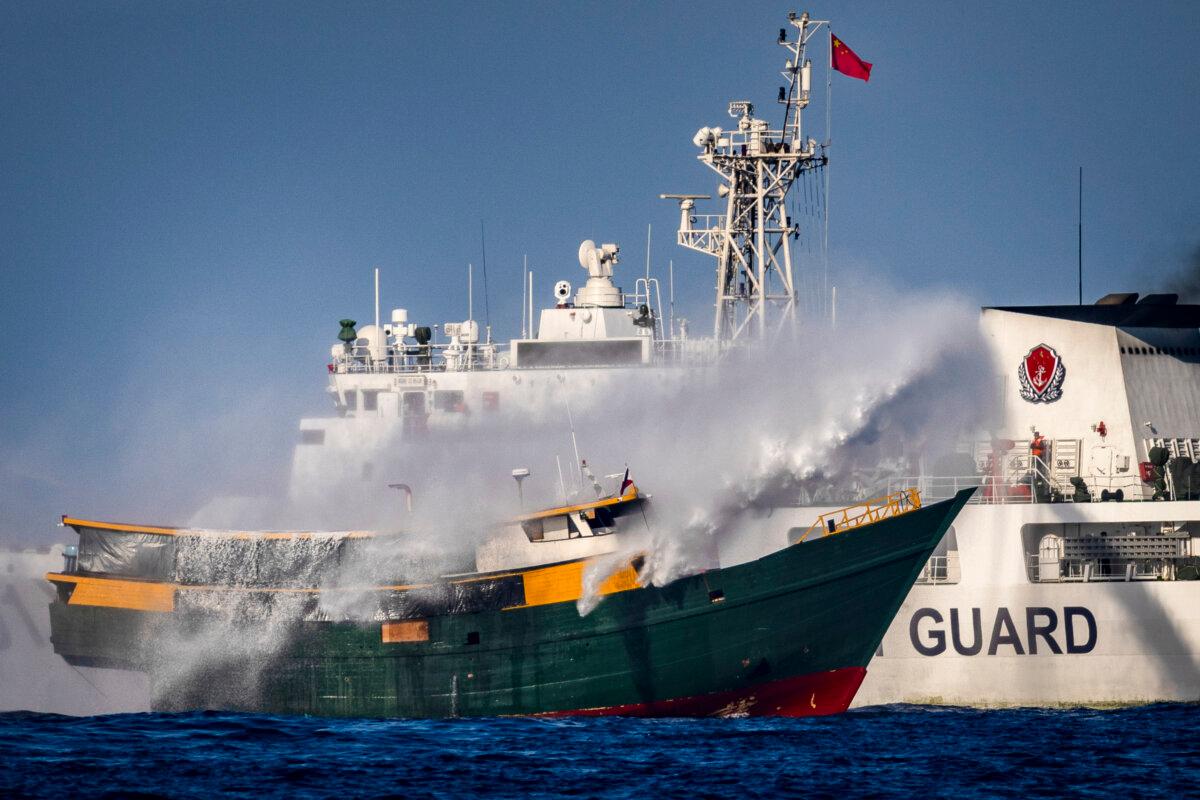
Another major constraint is China’s economic fragility and Taiwan’s so-called silicon shield. China’s economy faces significant headwinds that make a high-risk war far less attractive. Taiwan produces more than 90 percent of the world’s most advanced semiconductors, and any major conflict would likely destroy these facilities. The resulting supply shock could trigger a global depression, hitting China’s technology and manufacturing sectors harder than those of any other country.
China is also highly vulnerable to sanctions. It remains dependent on Western markets for key agricultural imports, such as soybeans, and on access to the SWIFT banking system. Ukraine-style sanctions would likely have rapid, destabilizing effects on the Chinese economy, increasing the risk of domestic unrest at a time when the CCP is already struggling to maintain growth and social stability.
On the military front, China may not be prepared to overcome Taiwan’s “Porcupine Strategy.” Taiwan has shifted toward a small, mobile force, stockpiling thousands of low-cost asymmetric weapons such as anti-ship missiles, sea mines, and drone swarms that are difficult to target and could inflict unacceptable losses on an invading fleet. Geography further favors the defender: Taiwan has only about 14 beaches suitable for large-scale landings, all heavily fortified and backed by mountainous terrain.
The final and possibly greatest constraint on China for the past 70 years has been the risk of U.S. intervention. Chinese military planning must also account for a high probability of involvement by U.S. allies, including Japan, Australia, the Philippines, South Korea, and potentially the United Kingdom. Although China has more ships by number, the U.S. Navy remains the world’s most powerful and retains a decisive advantage in undersea warfare, a critical factor in any Taiwan invasion scenario.
The removal of experienced commanders further concentrates authority in Xi’s hands, creating an “emperor has no clothes” problem for combat effectiveness by eliminating voices that might have warned the PLA is not ready for war with the United States.
In the near term, these purges have likely weakened the PLA’s deployability while ensuring greater personal loyalty to Xi. However, this enforced loyalty does nothing to resolve the longstanding structural weaknesses and deterrents that make an invasion of Taiwan a costly gamble that Beijing may be unable to win.
Ultimately, the timing rests with Xi himself. He may launch an attack to secure his place in history, but such a decision could just as easily make him the man who brought down the CCP.
What's Your Reaction?
 Like
0
Like
0
 Dislike
0
Dislike
0
 Love
0
Love
0
 Funny
0
Funny
0
 Wow
0
Wow
0
 Sad
0
Sad
0
 Angry
0
Angry
0











Comments (0)