

Chinese EMP Strikes Could Rapidly Disable US, Allied Forces in Conflict, Expert Says

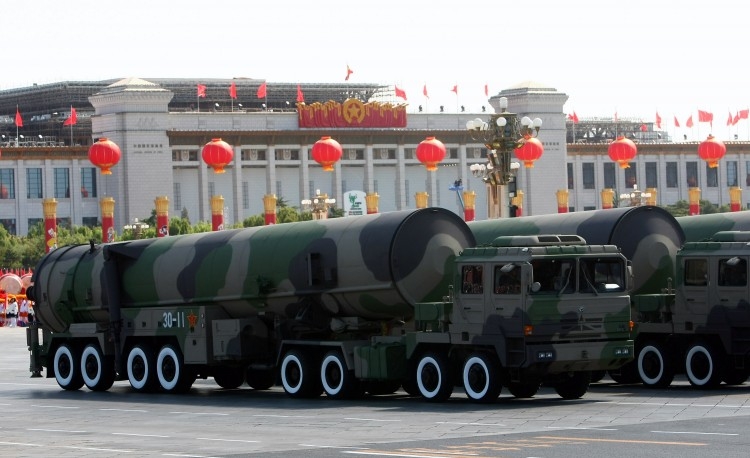
The Chinese regime could deploy nuclear warheads to cause electromagnetic pulse (EMP) attacks targeting U.S. military bases or allies in the Pacific, potentially securing a victory in a conflict by isolating those countries from U.S. support, according to retired Navy Capt. Carl Schuster, who served as a director of operations at the U.S. Navy Pacific Command’s Joint Intelligence Center.
But a limited deployment of such weapons—utilizing the intense electromagnetic pulse generated by nuclear explosions to knock out power grids and electronics across broad swaths of territory—could prove decisive should the Chinese Communist Party (CCP) pursue its geopolitical ambitions through military means.
In particular, EMP attacks over the central Pacific would “devastate the space-based communications and sensor systems the U.S. uses to alert, control, and inform its forces,” Schuster told The Epoch Times.
This would “allow the PRC to isolate Japan and Taiwan,” he said, using the acronym for the People’s Republic of China.
Beijing views democratically governed Taiwan as a rightful part of communist China, and frequently conducts naval and aerial maneuvers near the island’s territory.
Lights Out
Nuclear weapons used to create EMPs—also called HEMPs because of the high altitude of the strike—would have little, if any, direct destructive impact, but would cause widespread devastation by crippling the electrical and digital infrastructure that modern industry, logistics, and communications rely on to function.With most electrical equipment and energy sources—including motor vehicles—disabled, millions of people in areas affected by an EMP would face starvation or exposure to the elements.
China currently possesses about 600 nuclear warheads, and according to the Pentagon, is on track to expand its arsenal to 1,000 bombs by 2030.
Any of these could be deployed for an EMP strike, with the size of the affected area depending on the warhead’s yield and the altitude at which the detonation occurs.
China is also leading in the development of high-powered microwave (HPM) devices, which are directed-energy weapons designed to disable or destroy electronics on a smaller scale. A common application for HPM devices is air defense against drones and missiles, but they can also be used in an offensive role by being installed on missiles or aircraft to target enemy infrastructure.
.

Between Conventional and Nuclear War
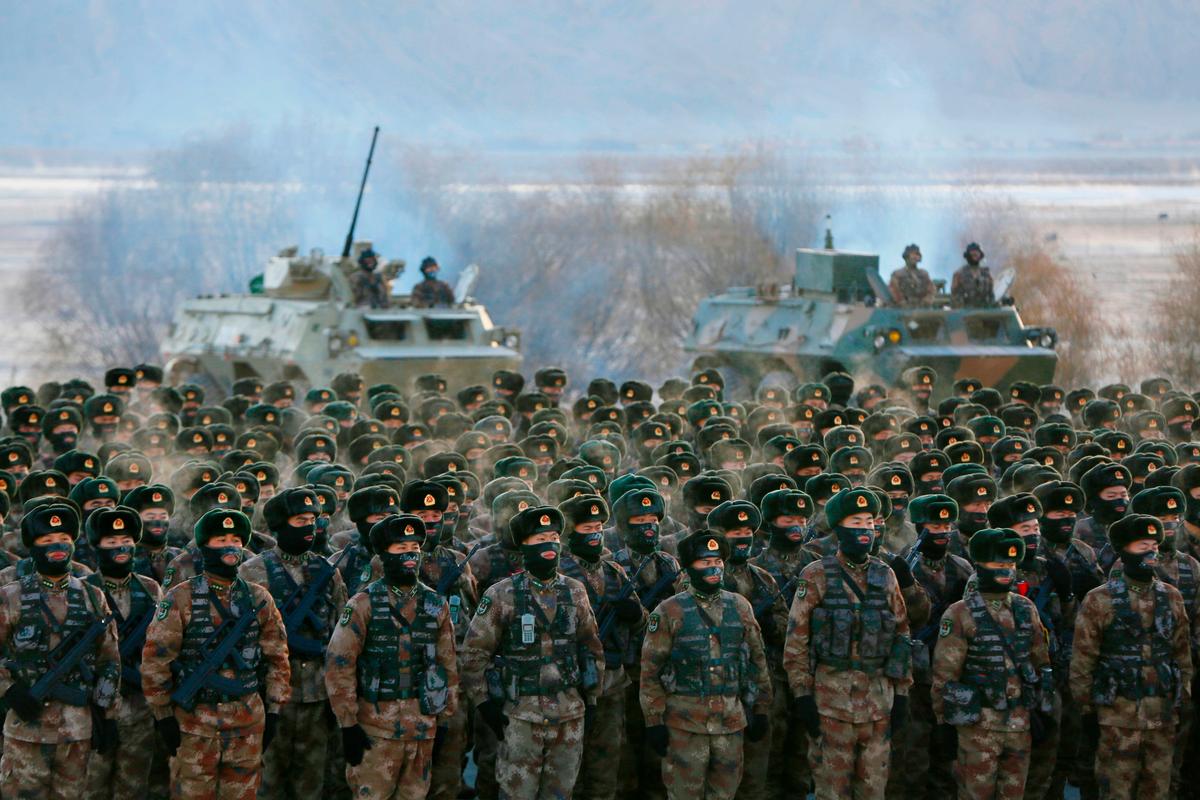
Tin Pak, a visiting scholar at Taiwan’s National Defense University, pointed out in a paper published by the University of Washington in 2024 that military authorities in both China and the United States have not clearly stated their official stance on whether using nuclear explosions to generate EMPs would be regarded as an act of nuclear war.Military literature published recently in both countries suggests that EMP strikes by a nuclear bomb are below the threshold of direct nuclear attack, but the PLA places heavy emphasis on the use of EMP in offensive operations, according to Pak.
He noted that Chinese military writings often describe EMP strikes using the term “assassin’s mace,” referring to a hidden weapon used by a warrior to defeat an otherwise stronger opponent in one blow.
The paper cites a guiding document of the CCP’s Central Military Commission, which identifies informational warfare as the main form of war that China employs. The document, published by the PLA National Defense University, calls cyberattacks targeting the enemy’s communications and infrastructure a “trump card for a weak country to deal with a powerful country.”
“As the Japanese sought to deliver a devastating first strike against the US’s forward-deployed naval forces in Hawaii during WWII, it seems that the PRC has considered a similar surprise attack using HEMPs as well,” Pak wrote.
.
‘Pearl Harbor Lesson’
Striking the United States directly would “risk a U.S. counter-strike that Beijing cannot afford,” Schuster told The Epoch Times.“[However,] if a HEMP can inflict the desired effect in a desired operational area or region without affecting U.S. national territory, the risk of nuclear retaliation is considerably reduced,” he said, adding that the CCP may have learned a “Pearl Harbor lesson” from Japan’s World War II experience.
Although U.S.–Japan relations were already worsening prior to the Japanese surprise attack that took place on Dec. 7, 1941, the American public was ambivalent about the prospect of war. But after the unprovoked strikes at the Hawaiian naval station that killed nearly 2,400 U.S. service members and civilians, public opinion was largely united in pursuing the total defeat of Imperial Japan.
Communist China tested its first nuclear bomb in 1964.
“For the United States, it would be much harder to rally the population against China,” following a strike that targets only U.S. allies or U.S. military and intelligence assets deployed outside the United States, Schuster said.
He said that while CCP leader Xi Jinping places “high priority” on seizing Taiwan, he considers nearby Japan a more likely target for Chinese EMP strikes.
Alongside the United States, Japan, which possesses its own military forces and hosts U.S. troops, would be another potential ally to come to Taiwan’s aid should the Chinese regime attempt to take the island by force.
Whereas “the PRC would have to repair an EMP-devastated Taiwan” by rebuilding its “electrical and digital infrastructure, destroying Japan’s would impede any American intervention on Taiwan’s behalf and send a very strong geopolitical message to Taipei’s political leadership that would reduce, if not devastate, their will to resist,” Schuster said.
.
What's Your Reaction?
 Like
0
Like
0
 Dislike
0
Dislike
0
 Love
0
Love
0
 Funny
0
Funny
0
 Wow
0
Wow
0
 Sad
0
Sad
0
 Angry
0
Angry
0












Comments (0)