

China’s Aggressive Rhetoric Against Japan Doesn’t Align With Its Actual Military Strength


.
China’s Ministry of National Defense on Nov. 27 issued a sharp warning in response to comments made by Japanese Prime Minister Sanae Takaichi regarding a potential crisis in Taiwan.
Takaichi stated that a Taiwan contingency could directly endanger Japan’s security and constitute a “survival-threatening situation,” in which Japan could invoke its right to collective self-defense. The Chinese defense ministry declared that any Japanese military intervention over Taiwan would face a severe, head‑on blow from China.
China’s Military Weakness Laid Bare in the First Sino-Japanese War
The symbolism was hard to miss.The Yellow Sea was once the site of the First Sino-Japanese War (1894–1895)—a conflict often referenced in the Chinese Communist Party’s (CCP’s) rhetoric against Japan.
For China, that war was a profound humiliation. The Qing Dynasty was overconfident and suffered a crushing defeat that exposed its military weakness. Ships were outdated, and the command’s strategy and structure were flawed.
Current State of Chinese and Japanese Navies
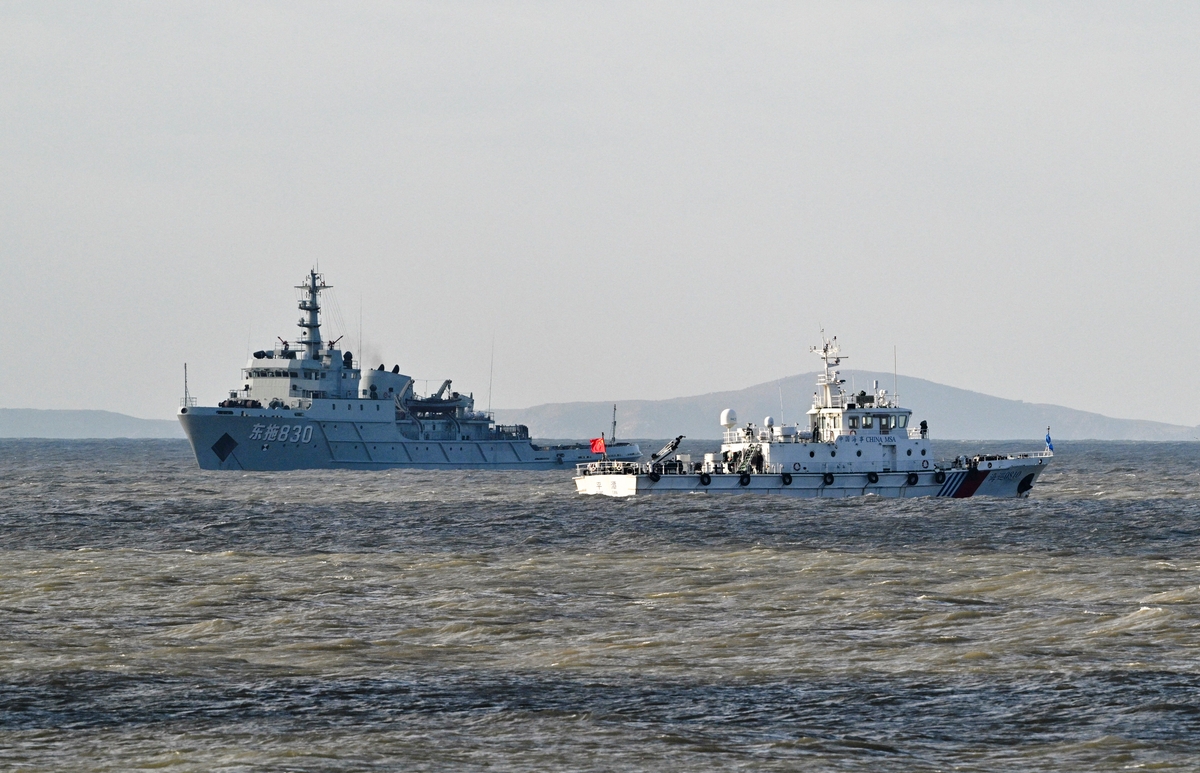
China’s navy is large and is modernizing quickly. It is often portrayed as a rising challenger to the United States.However, size alone does not determine strength. China’s naval forces are divided among three coastal commands, and only the Eastern and Northern Theater Commands are positioned to confront Japan.
Of these two commands, only a fraction of China’s highest-end ships could be committed. Geography, logistics, and the need to guard other regions limit what Beijing can realistically deploy.
Japan’s smaller Maritime Self-Defense Force is better trained, better integrated with U.S. forces, and designed for high-tempo defensive operations in its immediate region.
The United States Seventh Fleet would join Japan in any conflict, which means China would face a combined force with far stronger surveillance, missile defense, and maritime awareness.
Raw ship numbers matter far less under these conditions.
Technologically, China still trails. Its Type 055 and Type 052D destroyers are often advertised as near-peers to U.S. and Japanese Aegis ships, but the reality appears more complicated.
China’s engines rely on older Ukrainian designs. Its sensors and radars, despite ambitious claims, face persistent reliability issues, which Chinese military articles occasionally hint at. Air-defense systems built on Russian foundations are unlikely to match the performance of the U.S. Standard Missile interceptors deployed by Japan.
The gap widens further in underwater capabilities. Japan’s submarines are among the quietest in the world, while China’s diesel-electric boats are easier to detect. The East China Sea is shallow and heavily monitored. A Chinese submarine heading toward Japan could be tracked.
Airpower is even more decisive. China’s J-20 fighters are advanced but limited. They lack a cannon, cannot carry anti-ship missiles internally, and must split their focus between potential missions in the East China Sea and the Taiwan Strait.
China’s fourth-generation fighters are numerous, but their coordination and support systems lag behind Japan’s. China’s aerial refueling capacity is thin, and its pilots train in more constrained environments.
When History Repeats Itself
If the conflict were limited to ships and aircraft, China would already be at a disadvantage. The situation becomes even more complicated when considering China’s political climate.The People’s Liberation Army (PLA) has faced unusual turmoil, including corruption scandals, purges of senior officers, procurement failures, and shortcomings in missile programs once touted as “game-changing.” Beijing’s high-profile testing and propaganda videos have often inadvertently revealed shortcomings within China’s own system.
Yet the CCP’s rhetoric toward Japan continues to grow louder.
By invoking past wars and projecting strength, Beijing appears intent on shaping public opinion amid rising tensions over Taiwan. But strong rhetoric can cut both ways. These displays may reveal unease rather than confidence.
Today’s Chinese officials confront a risk similar to that of the Qing Dynasty: a clash with Japan could expose weaknesses within the PLA, undermine deterrence, and damage the image of strength Beijing has worked to build.
For now, the CCP seems more interested in intimidation than in action. But as its rhetoric grows louder, it is worth asking what is behind it—and why Beijing keeps talking tough while avoiding an actual clash.
The historical parallel with the First Sino-Japanese War is therefore not about who would win a modern conflict—it is about what a conflict could reveal.
What's Your Reaction?
 Like
0
Like
0
 Dislike
0
Dislike
0
 Love
0
Love
0
 Funny
0
Funny
0
 Wow
0
Wow
0
 Sad
0
Sad
0
 Angry
0
Angry
0











Comments (0)