

China Launches Arctic Shipping Route to Europe Amid Poland Border Closure


.
The Chinese communist regime launched an Arctic shipping route to Europe this week, state media reported on Sept. 22, renewing world attention to its “Polar Silk Road” ambitions.
The container line Sea Legend sent its first ship, the Istanbul Bridge, through the Arctic’s North Sea Route (NSR), from the Ningbo Zhoushan Port in eastern Zhejiang Province to the UK’s Port of Felixstowe, according to state-run Xinhua News Agency.
Analysts said that the route has more strategic significance for the regime’s geopolitical expansion in the Arctic than commercial shipping.
The new Arctic route is expected to take about 18 days one way, which is significantly faster than the China-Europe freight train (about 25 days), the Suez Canal route (about 40 days), and the Cape of Good Hope route (about 50 days), according to Xinhua.
The editorial compared China’s “opening a Northern Sea Route across the Arctic Ocean” with the opening of the Panama Canal and the Suez Canal. It also articulated the Chinese regime’s long-term ambitions in the Arctic, while criticizing other countries for treating the Arctic “as their own ‘backyard,’ competing for energy resources and strengthening military deployments.”
The editorial rehashed the regime’s political and economic expansion strategy in the region. The “Polar Silk Road” strategy, first touted in 2017 by Chinese Communist Party (CCP) leader Xi Jinping, is now being realized through the opening of the China-Europe Arctic Express.
The Polar Silk Road is an extension and integral part of the Chinese regime’s Belt and Road Initiative (BRI).
BRI, formerly known as the “One Belt, One Road,” is the CCP’s global foreign policy project launched in 2013. It aims to recreate ancient China’s two main trading routes, the land Silk Road and the maritime Silk Road, connecting countries in Asia, Europe, and Africa in the 21st century. The initiative invests Chinese capital in the construction of various high-cost projects in more than 60 participating countries. It has been criticized for creating debt traps for those countries and for serving as a means to extend the Chinese regime’s political influence.
Dual Function
China’s BRI strategy is to expand geopolitical influence through land and sea routes, as well as to expand economic and trade transportation routes, Shen Ming-shih, a research fellow at the Division of National Security Research at Taiwan’s Institute for National Defense and Security Research, told The Epoch Times.The China-Europe Arctic Express, which is a major development of the Polar Silk Road, actually has the dual functions of economic trade and geostrategic expansion and naval shipping, Shen said.
“In addition to transporting cargo to Europe through the relatively short Arctic Ocean route, it can also deploy the Chinese navy in the Arctic Ocean and even project long-range forces from the Arctic Ocean to the Atlantic Ocean,” he said.
“It will have a great impact on future activities in the Atlantic Ocean on the east coast of the United States,” Shen said, adding that “this is the main reason why Trump attaches great importance to Greenland.”
.
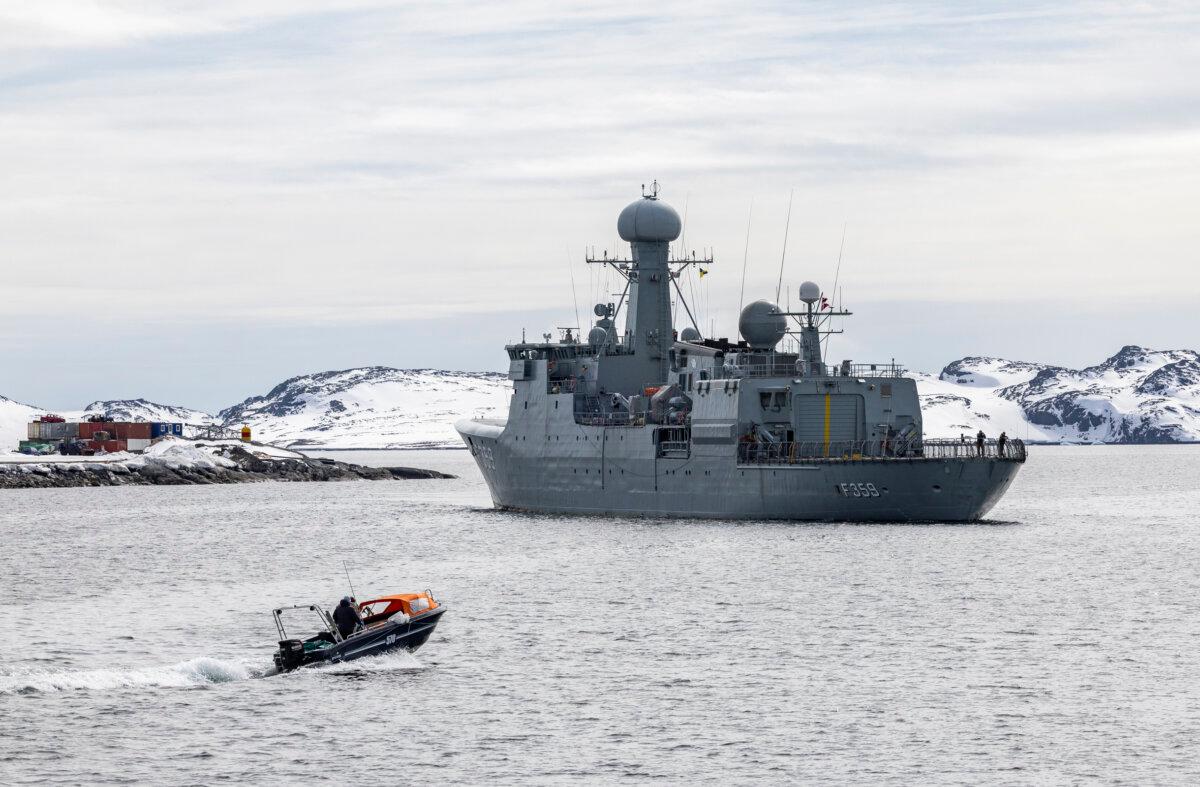
This is the main reason why the Global Times says that the Arctic Ocean route is more than just a shipping channel, Shen said.
“For Russia or the United States, if the Chinese Communist Party expands its influence in the Arctic Ocean route, it will inevitably impact their geostrategic security and maritime power in the region,” Shen said. “This cannot be underestimated.”
Geopolitically, the Arctic region is rich in natural resources, and as the ice melts, the region’s navigation capacity and resource development potential will increase, Sun Kuo-hsiang, a professor of international affairs and business at Nanhua University in Taiwan, told The Epoch Times. China’s insertion into Arctic affairs “is intended to ensure a role in future resource development and shipping rule-making,” he said.
More Symbolic Than Practical
The China-Europe Arctic Express has more strategic significance than actual shipping capacity, U.S.-based independent economist Davy J. Wong told The Epoch Times. It can only provide “marginal capacity” and, in the short term, is unlikely to replace the scale of sea transport or the China-Europe Railway Express, which is the main line of the BRI land route, he said.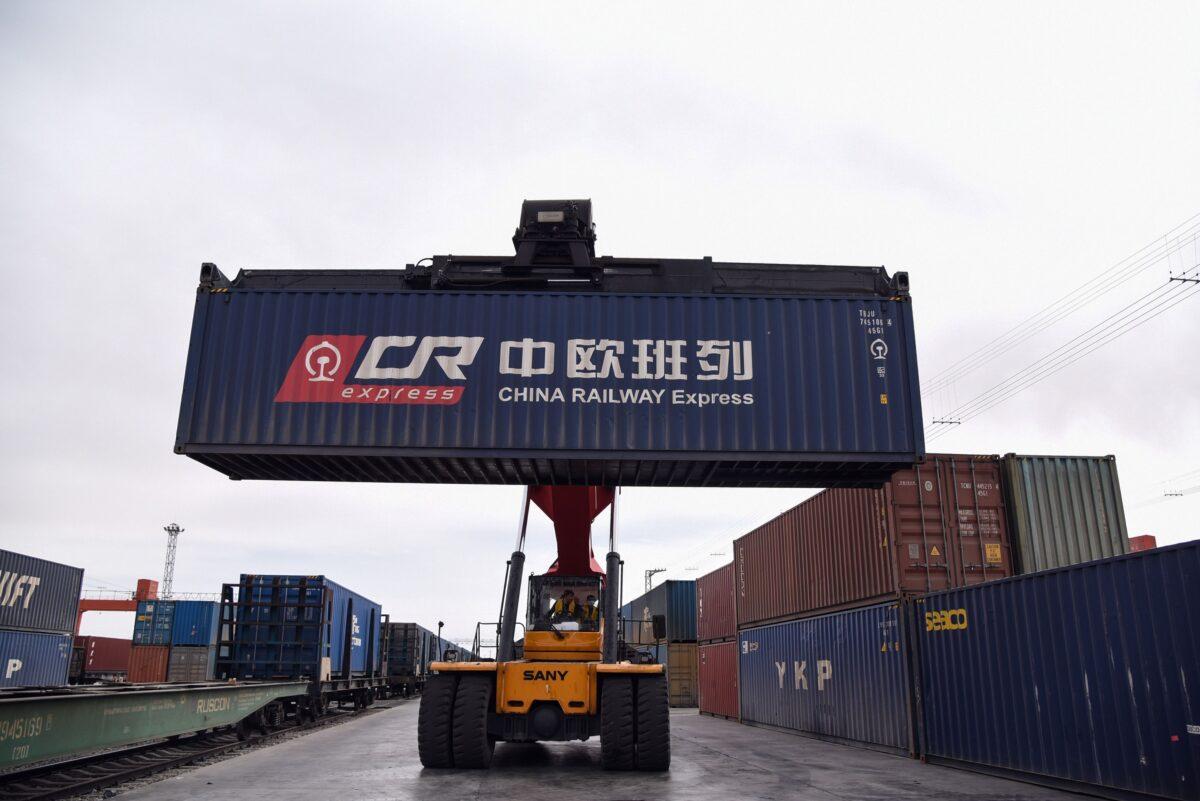
“The commercialization and regularization of the Arctic route is constrained by seasonality and the cost of icebreaking, insurance, and support infrastructure,” Wong said. “In the short term, it can only be considered a supplementary route, not [a] substitute for the main shipping routes.”
Shen said that shipping across the Arctic Ocean, or along the Strait of Malacca in the South China Sea and the Indian Ocean, is extremely expensive.
“The Arctic Ocean shipping route hasn’t yet become maturely established, so its transport capacity is relatively low,” he said.
Sun also noted that, besides the high cost incurred by seasonality, ice-class vessels, icebreaking, and related insurance, “[China’s Arctic route] raises environmental and geopolitical security issues such as black carbon, oil, ecological problems, and labor issues, which are currently drawing significant attention from the European side and environmental protection groups.”
What's Your Reaction?
 Like
0
Like
0
 Dislike
0
Dislike
0
 Love
0
Love
0
 Funny
0
Funny
0
 Wow
0
Wow
0
 Sad
0
Sad
0
 Angry
0
Angry
0
















Comments (0)