

China Intensifies Non‑Military Pressure Campaign to Force Taiwan Toward Unification, Analysts Warn
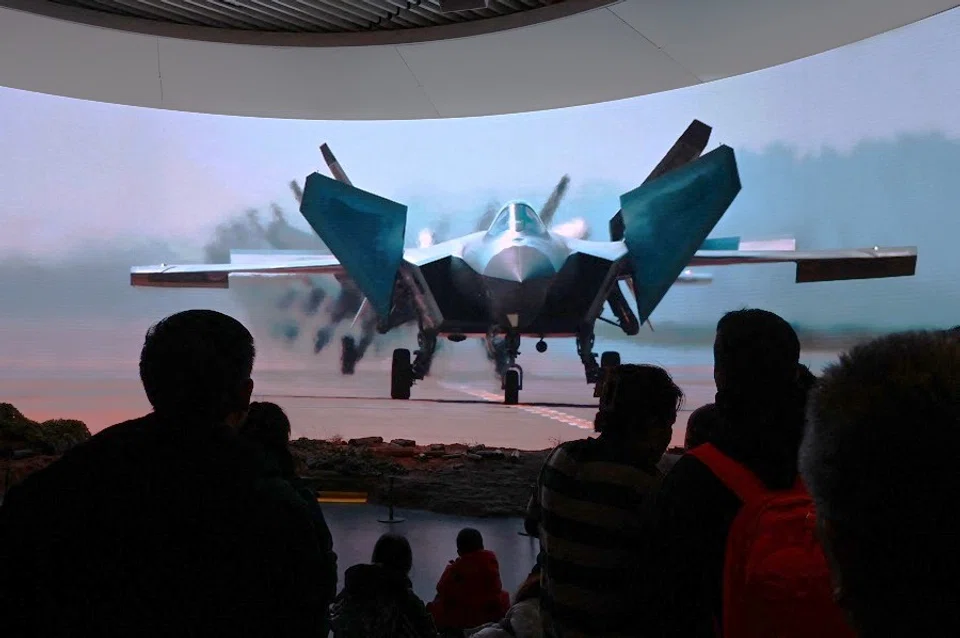
China Intensifies Non‑Military Pressure Campaign to Force Taiwan Toward Unification, Analysts Warn - Beijing is accelerating a broad set of non‑military coercive tactics aimed at pushing Taiwan toward unification without triggering a direct conflict, according to analysts who say China is shifting from deterrence to a long‑term strategy of political, economic, and psychological pressure.

.
Lede
Beijing is accelerating a broad set of non‑military coercive tactics aimed at pushing Taiwan toward unification without triggering a direct conflict, according to analysts who say China is shifting from deterrence to a long‑term strategy of political, economic, and psychological pressure.
A Strategy Built on “Winning Without Fighting”
U.S. intelligence assessments and independent research groups agree that Beijing’s preferred path to absorbing Taiwan is non‑kinetic — using pressure, infiltration, and manipulation rather than an outright invasion.
This aligns with a long‑standing principle in Chinese military doctrine:
subdue the enemy without battle.
Analysts say China’s current approach includes:
- Political interference
- Diplomatic isolation
- Economic coercion
- Information warfare and disinformation
- United Front influence operations
- Cyber intrusions and gray‑zone harassment
These tactics aim to gradually weaken Taiwan’s confidence, fracture its political cohesion, and create a sense of inevitability about unification.
Diplomatic Pressure: Shrinking Taiwan’s International Space
Beijing has intensified efforts to peel away Taiwan’s remaining diplomatic partners.
According to the Global Taiwan Institute, Taiwan’s formal allies have dropped from 22 to 12 since 2016, with Beijing using:
- Financial incentives
- Political pressure
- Strategic timing around Taiwan’s elections
The goal is to portray Taiwan as isolated and internationally irrelevant — a psychological tool to undermine public morale.
Economic Leverage: Coercion Through Dependency
China remains Taiwan’s largest trading partner, giving Beijing leverage to:
- Impose sudden import bans
- Restrict tourism
- Pressure Taiwanese companies with mainland exposure
Analysts warn that Beijing uses these tools to influence Taiwan’s business elite, encouraging them to lobby for policies that reduce confrontation with China.
RealClearDefense notes that this “elite persuasion” is central to Beijing’s strategy:
not to convince Taiwan that unification is just, but that resistance is futile.
Information Warfare and Cognitive Manipulation
China’s information operations target:
- Taiwanese media
- Social networks
- Local political groups
- Overseas Chinese communities
These campaigns aim to:
- Spread disinformation
- Amplify internal divisions
- Undermine trust in Taiwan’s government
- Promote narratives of inevitable unification
CFR analysts describe this as an “anaconda strategy” — slowly tightening pressure until Taiwan’s political space is constricted.
Gray‑Zone Military Pressure Without Crossing the Threshold
While Beijing prefers non‑military tools, it continues to use gray‑zone military activity to exhaust Taiwan’s defenses without triggering war.
Reuters reporting shows:
- Near‑daily PLA air incursions
- Naval patrols around Taiwan
- Drone flights over outlying islands
- Sand‑dredger swarms near Kinmen and Matsu
These actions are designed to normalize intimidation and strain Taiwan’s readiness.
Why Analysts Believe Beijing Is Accelerating
Several factors point to a more aggressive non‑military push:
1. Xi Jinping’s timeline
Xi has repeatedly said the Taiwan issue “should not be passed down generation after generation.”
Analysts interpret this as a desire for progress within his political era.
2. High risk of military failure
U.S. and allied assessments indicate the PLA still lacks the amphibious and joint‑operations capability needed for a successful invasion.
3. Global scrutiny
A military attack would trigger massive international backlash — something Beijing wants to avoid as it faces economic slowdown and demographic decline.
4. Effectiveness of non‑military tools
Beijing’s pressure campaigns have already:
- Reduced Taiwan’s diplomatic partners
- Increased economic dependence
- Amplified internal political divisions
These successes reinforce the strategy.
Implications for Taiwan and the International Community
For Taiwan
- Increased political polarization
- Economic vulnerability
- Constant psychological pressure
- Erosion of international space
For the U.S. and allies
- Need for stronger deterrence
- Support for Taiwan’s resilience
- Counter‑disinformation strategies
- Economic diversification initiatives
For Beijing
- A low‑risk path to long‑term strategic goals
- Ability to avoid triggering a U.S. military response
- A narrative of “peaceful unification” for domestic audiences
The Bigger Picture
Analysts warn that China’s non‑military campaign is not a temporary tactic but a long‑term strategy designed to reshape Taiwan’s political environment from within.
The goal is not sudden conquest — but gradual absorption.
As one CFR expert put it, Beijing is not trying to win a battle; it is trying to win the environment.
.
Sources
- Global Taiwan Institute — Non‑military pressure and diplomatic erosion
- Reuters — Gray‑zone military activity and Taiwan pressure campaign
- Council on Foreign Relations — “Anaconda strategy” and coercive tactics
- RealClearDefense — “Beiping model” and political absorption strategy
.
What's Your Reaction?
 Like
1
Like
1
 Dislike
0
Dislike
0
 Love
1
Love
1
 Funny
0
Funny
0
 Wow
0
Wow
0
 Sad
0
Sad
0
 Angry
0
Angry
0













Comments (0)