

China, India to Resume Direct Flights Amid Tariff Tensions With US


.
India and China will resume direct flights between designated cities after a five-year suspension, India’s Ministry of External Affairs announced on Oct. 2.
The direct air service is “subject to commercial decision of the designated carriers from the two countries” and fulfillment of other operational criteria, the ministry said.
India’s largest airline, IndiGo, said it would launch daily direct flights between Kolkata and Guangzhou from Oct. 26. It also plans to launch a route connecting New Delhi with the Chinese city.
Indian Prime Minister Narendra Modi visited China for the first time in seven years in August, attending the Shanghai Cooperation Organization summit in Tianjin and meeting with Chinese Communist Party (CCP) leader Xi Jinping. Both leaders emphasized that India and China are development partners, not competitors.
Modi’s visit to China came as both countries are facing steep tariffs from Washington.
In an Aug. 6 executive order, the Trump administration implemented an additional 25 percent tariff on India, saying its government is “currently directly or indirectly importing Russian Federation oil.”
The resumption of direct flights represents a “limited warming up and cautious recovery” in India-China relations, Sun Kuo-hsiang, a professor of international affairs and business at Nanhua University in Taiwan, told The Epoch Times.
While the timing of the restart of the non-stop flights corresponds to the upcoming winter flight season, Sun said tensions on the India-China border have cooled over the past year, and official talks and high-level governmental interactions have steadily resumed.
‘Rebalancing Options’
India’s decision to resume direct flights with China “does not equate to strategically leaning towards China,” Sun added.“India’s positioning toward China remains competition plus control,” Sun said. “New Delhi presents the resumption of flights as ‘normalization of personnel exchanges’ and driven by ‘market demand,’ maintaining commercial options with China, while maintaining alignment with Western partners on key technological and security cooperations.”
In the context of great power competition, “restoring flights acts as a signal that India keeps space between both sides [China and the United States],” U.S.-based independent economist Davy J. Wong told The Epoch Times.
“This is a phase of limited repair, not full warming,” he said.
.
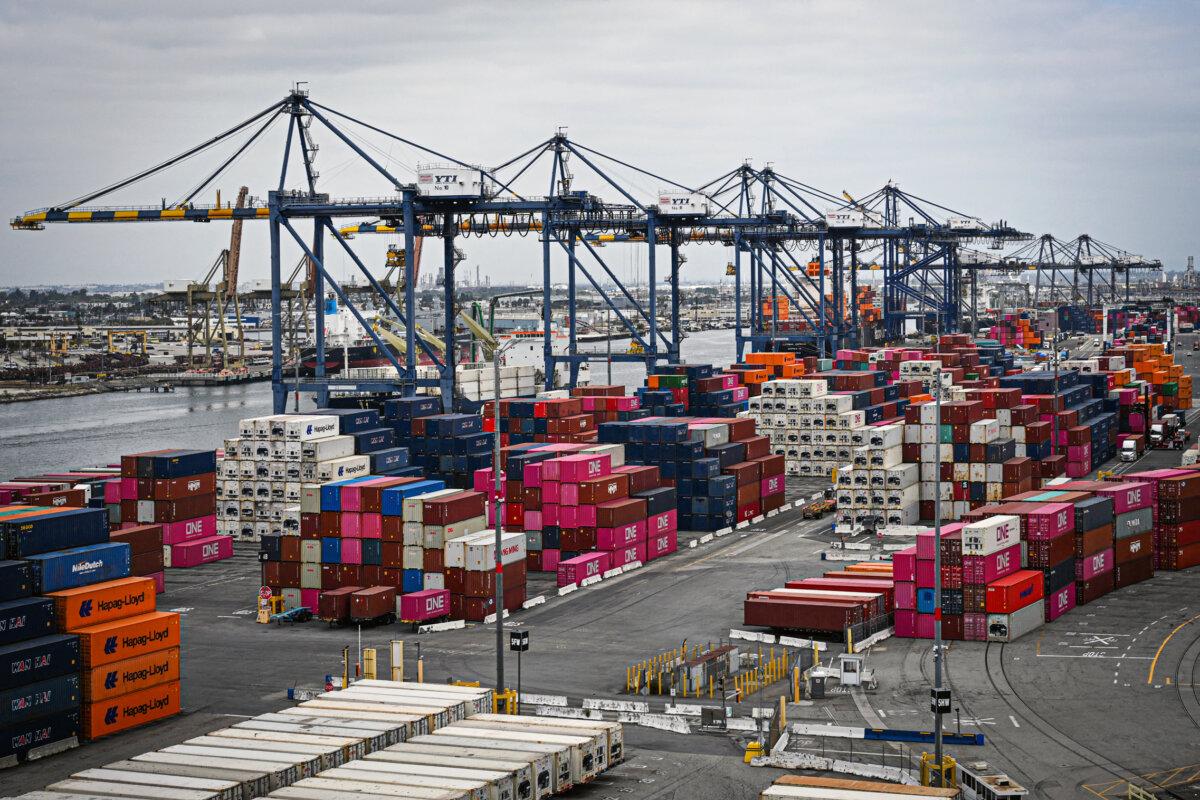
The United States has recently taken stricter tariff and pressure measures against India, especially regarding energy imports and Russia-related trade, leaving India under stress, Wong noted.
“Restoring flights can be read as India rebalancing options, keeping channels with China open while still maintaining cooperation with the United States,” he said.
India’s long-standing principle is “strategic autonomy,” he said, “so this move is more about preserving autonomy than siding with China.”
Wong predicted that India-China relations “may warm in symbolic, commercial, and cultural exchanges, but uncertainty persists in security and strategic domains.”
What's Your Reaction?
 Like
0
Like
0
 Dislike
0
Dislike
0
 Love
0
Love
0
 Funny
0
Funny
0
 Wow
0
Wow
0
 Sad
0
Sad
0
 Angry
0
Angry
0







Comments (0)