

CCP’s Latest Trade Moves Reveal Political Infighting, Say Analysts


.
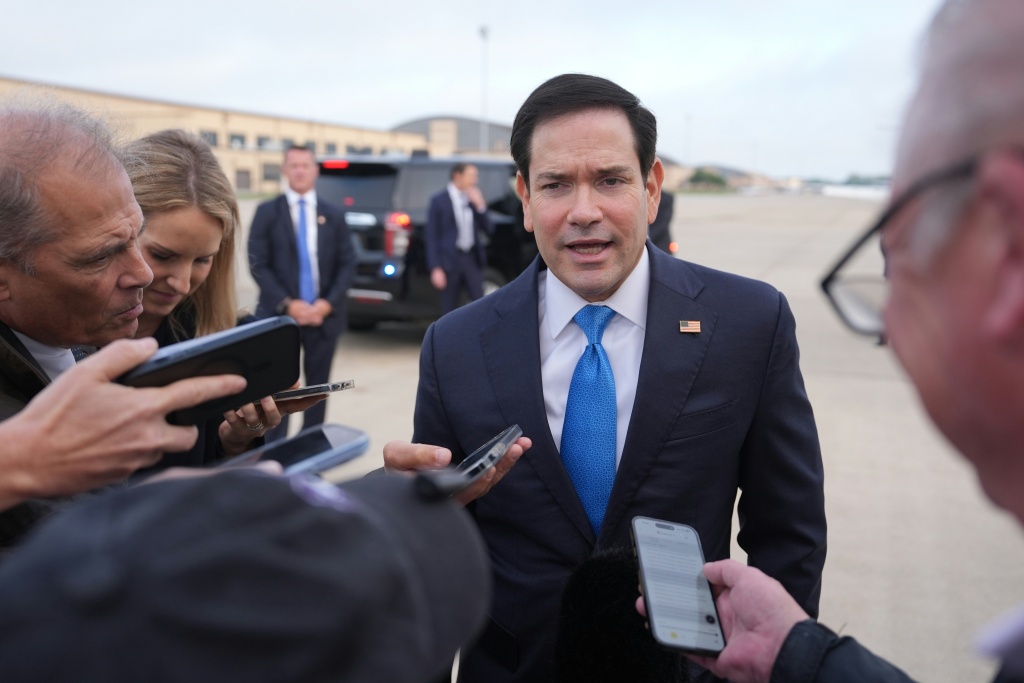
Bessent indicated that amid this trade dispute, the United States is watching as two factions of the Chinese Communist Party (CCP) grapple to determine the future of U.S.-China relations.
Analysts told The Epoch Times that hardliners are trying to rock the boat ahead of the CCP’s critical Fourth Plenum meeting, while another faction led by the old guard are hoping to smooth things over with the United States.
Tables Turned
The Chinese regime’s latest round of Oct. 9 export restrictions were met with swift rebuke from the United States. The Chinese regime’s Ministry of Commerce stated it would require licenses for items using more than 0.1 percent rare earth ingredients from China, and would deny use to semiconductor and defense companies.Who Ordered Rare Earth Restrictions?
The announcement on rare earths came from the Ministry of Commerce, which analysts say is known to be more dovish on the United States compared to Xi’s faction and agencies under his direct oversight like the Ministry of State Security.Shen says that’s not the typical reading of Beijing’s actions, saying it’s even odds whether Trump was aiming to provide Xi and Beijing a graceful exit, or truly believes the restrictions were not Xi’s call.
“Xi Jinping, in order to maintain his power, wanted to create problems to maintain his grip on power,” Shen said.
The researcher points to statements from the “veteran faction” of the CCP accusing members of Xi’s faction of “deliberately causing trouble” immediately after Trump announced the additional tariffs.
Ye Yaoyuan, professor and chair of the international studies and political science departments at the University of St. Thomas, told The Epoch Times it is possible that “someone is trying to sabotage from within” as Trump suspects.
Ye said it’s clear that some in the CCP believe the regime must use its monopoly on rare earths as leverage in the trade war, while others have concerns about the domestic economy and are willing to negotiate with the United States.
But the CCP officially speaks with one voice, and certainly “won’t officially acknowledge the existence of such a split,” even punishing officials who indicate internal disagreement, Ye said.
“This isn’t something that just started today; it’s always been the case,” he said. “Bessent’s remarks represent, to some extent, the implications of these different voices slowly surfacing.”
“Contradictions within China’s stance and policy are becoming increasingly apparent,” he said.
Shen believes that Xi, vice premier He Lifeng, and the Ministry of State Security could have pressured the Ministry of Commerce to make the announcement.
The strategy mirrors what the Chinese military has done in the South China Sea, Shen said, where Chinese coast guard vessels rammed Philippine ships in deliberate provocation that ends up pushing or influencing negotiations.
Shen said the export restrictions amounted to a “huge risk” that reveal the decision was not a rational one.
“It’s not driven by economic considerations, but rather by power struggles or political considerations,” he said.
Ye said that some CCP elites “have already concluded that they no longer have the confidence to continue competing with the United States,” and this shows China is at a “watershed” moment.
CCP’s Critical Meeting
Beijing’s provocation comes ahead of a closed door where 370 senior CCP officials will come out with the next five-year plan. The meeting, known as the Fourth Plenum, will start on Oct. 20 and span four days, according to state media.Ye said the indicators of infighting, seen by Beijing escalating trade tensions, suggests “the Fourth Plenum will be extremely difficult.”
“It’s possible that it will be a clash between doves and hawks,” said Ye, who believes the officials who wanted to provoke the United States were trying to influence the outcome of the upcoming meeting.
China observers will be looking to see if a fresh wave of investigations take place after the meeting, resulting in the removal of officials from one faction.
“China is stuck in limbo. Doves know that the Chinese economy is on the verge of collapse, and if it doesn’t engage in constructive discussions and negotiations with the United States, it’s unclear how long China can hold out,” Ye said. “Hawks always feel that reputation is more important than substance, and that they can’t afford to lose face.
“The tug-of-war between these two forces has really surfaced, and we may even see some interesting discussions at the upcoming Fourth Plenum,” Ye said.
However, Ye added that since Xi came to power, discussions have held little value, as Xi will make his own call if the discussion doesn’t back his views.
“Xi Jinping is still positioned as a hawk,” Ye said. “If Xi Jinping positions the relationship with the United States as one of competition or a Cold War, then these dovish voices may disappear at the Fourth Plenum.”
Shen said China’s dire economic situation would suggest the old guard, who wants the United States to soften its stance, currently has the upper hand. He pointed to news media reports that favor officials from this faction, using metaphors that appear “increasingly unfavorable” to Xi.
Both sides are likely trying to sway as many officials as possible in their favor in the six days before the meeting, Shen said.
“That outcome could result in a change of leadership and policy,” Shen said.
Trump has directed his administration to negotiate from a position of strength, and Shen said recent events have only given Trump more reasons to be confident.
“With increasing confidence, he will naturally play off Xi Jinping’s current predicament. He’s waiting to see what happens at the Fourth Plenum, whether Xi Jinping will be punished or step down,” he said.
.
What's Your Reaction?
 Like
0
Like
0
 Dislike
0
Dislike
0
 Love
0
Love
0
 Funny
0
Funny
0
 Wow
0
Wow
0
 Sad
0
Sad
0
 Angry
0
Angry
0













Comments (0)