

Canada’s Barrick, China’s Shandong Gold Seek to Add $400 Million Investment in Argentine Mine


China’s Shandong Gold and Canada’s Barrick Gold have submitted an application to the Argentine Ministry of Economy to add an investment of $400 million to their jointly controlled Veladero gold mine.
The investment plan submitted to Argentina’s Large Investment Incentive Scheme earlier this month aims to increase the mine’s total production to 1.6 million ounces between 2025 and 2028.
The Veladero, the largest gold mine in Argentina, began production in September 2005. It produced 504,000 ounces of gold last year and is forecasting production of between 380,000 and 440,000 ounces this year.
The proposed investment will be used to build a new mining phase, which is expected to add 89.2 million tons of stockpiling and processing capacity and generate $3.8 billion in export revenue by 2033.
China’s state-owned Shandong Gold Mining Co., Ltd. acquired a 50 percent stake in Barrick Gold Corporation’s Veladero gold mine in San Juan province, Argentina, for $960 million in 2017, forming a 50–50 joint venture with the Canadian miner.
The Large Investment Incentive Scheme program is a key part of Argentine President Javier Milei’s economic reforms to attract large investments. It took effect last year, offering tax, customs, and foreign-exchange incentives to foreign investors, and promising legal stability for 30 years.
China’s attempt to increase investment in the Argentine gold mine comes amid ongoing tensions with the United States and the West.
Within the larger framework of China–U.S. tensions, Milei has close ties with the United States, and especially with Trump, Sun Kuo-hsiang, a professor of international affairs and business at Nanhua University in Taiwan, told The Epoch Times.
“Milei has rejected joining the [China-led] BRICS, and his diplomatic narrative leans toward the West,” he said. “However, reality demands that Buenos Aires adopt pragmatic financial and trade interactions with Beijing.”
U.S.-based independent economist Davy J. Wong shares Sun’s view.
“Argentina is in dire need of foreign investment, foreign exchange, and jobs amid its economic difficulties, so Milei has been pragmatic in [economic] cooperation with China, even though he has openly criticized the Chinese regime. He has kept business and politics separate.”
Sun noted that gold is a “financial asset-type” metal, unlike lithium and copper, which are listed as supply chain security focal points by the United States. In addition, Veladero mine is a 50-50 joint venture, making it harder to be interpreted as a “deepening strategic dependence” on China, he said. “This would make it more politically acceptable to Washington and Buenos Aires.”
As to China’s goal, Wong said that through Shandong Gold, “China is simultaneously developing gold and lithium assets in Latin America, to safeguard its foreign exchange reserves and mitigate risks associated with a single market.”
The joint venture structure with Canada’s Barrick reduces sensitivity and avoids a situation where “sole Chinese capital” dominates, Wong said.
If U.S.–China frictions escalate, the risk of Chinese-owned companies being contained will increase; however, the joint venture structure has a “desensitizing” effect, and gold prices continue to be supported by central banks’ demand, Wong said of China’s attempt to increase investment in Veladero mine.
Wong added that China is strengthening precious metal resource development in Latin America as “a strategic asset to hedge against U.S. dollar risk.”
He said that instead of completely rejecting Chinese investment, it’s better to maintain influence and checks and balances through joint ventures like Canada did.
.
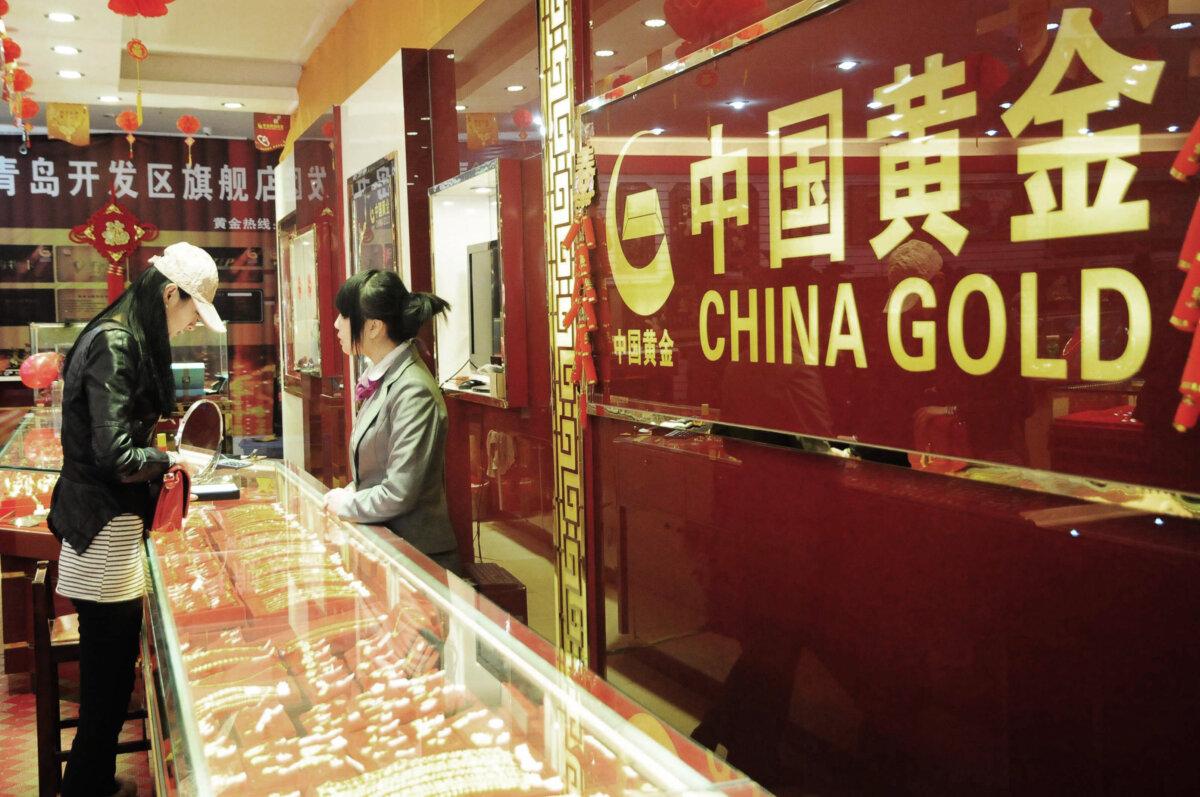
Veladero’s gold is mostly exported to Switzerland and the United States for refining before being released to the international market.
What's Your Reaction?
 Like
0
Like
0
 Dislike
0
Dislike
0
 Love
0
Love
0
 Funny
0
Funny
0
 Wow
0
Wow
0
 Sad
0
Sad
0
 Angry
0
Angry
0












Comments (0)