

Beijing Struggles to Distance Seoul From US-Led Security Alliance: Analysts


.
As South Korean President Lee Jae-myung wrapped up his four-day state visit to China seeking expanded trade, experts warned that Beijing is likely to use the engagement to pilfer critical technologies and subvert Seoul’s trilateral defense coordination with Washington and Tokyo.
The visit comes as Seoul seeks to lift restrictions on K-dramas and K-pop artists imposed by Beijing after the 2016 deployment of the United States’ Terminal High Altitude Area Defense missile defense system in South Korea.
Wedge Strategy Fails
Taehwa Hong, a fellow at the Foreign Policy Research Institute, said Beijing’s immediate aim during Lee’s visit is to re-anchor Seoul economically and politically before trilateral coordination among Washington, Tokyo, and Seoul hardens further.“In practice, Beijing’s wedge strategy targets the policy seams that matter most: South Korea’s stance on Taiwan and the South China Sea; defense-industrial and shipbuilding cooperation with the United States and Japan; and any discussion of the ’strategic flexibility' of the U.S. Forces Korea in a Taiwan contingency,” Hong told The Epoch Times.
Lin Hsien-sen, a professor at National Taiwan Normal University’s Department of East Asian Studies in Taipei, argued that Beijing is likely attempting to use the ban to stop Seoul from strengthening cooperation with the United States, while signaling that fully lifting restrictions depends on South Korea’s future conduct.
“Beijing’s diplomatic offensive may appeal to Lee as a hedging strategy, and since [South Korean] former President Yoon Suk Yeol aligned with the U.S. on South China Sea issues, if Beijing can successfully prevent Seoul from tilting too close to Washington, it would achieve its goal of fracturing the U.S.–Japan–South Korea relations,” Lin told The Epoch Times.
.

However, Hong suggested that Beijing’s odds of meaningful success are constrained, despite Lee’s reputation as more China-amenable.
“[Lee] has sought rhetorical balance, kept alliance reassurance front and center, and avoided moves that would obviously rupture U.S.–ROK cooperation,” said Hong. ROK refers to the Republic of Korea, an official name for South Korea.
Hong added that the decisive test will be substantive policy choices rather than summit optics, specifically how Seoul contributes to regional security in the Taiwan Strait and South China Sea, and how deeply it integrates with the United States and Japan operationally and industrially.
Beijing’s Fading Leverage
On the nuclear threat, Lee stated on Jan. 7 that he would ask China to convey South Korea’s sincerity to North Korea regarding the denuclearization of the Korean Peninsula, highlighting China’s potential role as a mediator.But Beijing’s recent moves tell a different story, as it excluded the phrase “denuclearization of the Korean Peninsula” from a defense white paper for the first time in 19 years.
On Jan. 4, the same day Lee began his trip, North Korea test-fired hypersonic missiles, stating the move was necessary to maintain a powerful nuclear deterrent.
Xie Tian, a marketing professor at the University of South Carolina Aiken, said Lee naturally hopes this visit will prompt Beijing to use its influence to restrain North Korea’s nuclear ambitions, but such expectations are unlikely to be fulfilled.
“Since the Russia–Ukraine war kicked off, North Korea has really pivoted toward Russia,” Xie told The Epoch Times. “Pyongyang sent troops and got missile and nuclear weapons tech from Moscow in exchange, so Beijing’s sway over the nuclear program is pretty much shot at this point.”
Hong also explained that while Beijing would prefer a non-nuclear North Korea, the likelihood China will pressure Pyongyang into surrendering its existing arsenal remains highly improbable.
“North Korea’s nuclear weapons function as its ultimate deterrent against the U.S.–ROK alliance, and Beijing’s top priority is preventing instability or regime collapse on its periphery,” Hong said.
“Even if China retains some economic and political leverage, it is far more willing to use that leverage to manage escalation and prevent a crisis than to roll back the program.”
Hong added that China has limited appetite to antagonize North Korea because Pyongyang remains a useful strategic asset in broader U.S.–China competition.
Tech Leak Concerns
Beyond seeking Beijing’s help to curb North Korea’s nuclear ambitions, Lee also made economic collaboration a central pillar of his agenda, accompanied by a delegation of over 200 executives from major conglomerates including Samsung Electronics, SK Group, Hyundai Motor Group, and LG Group.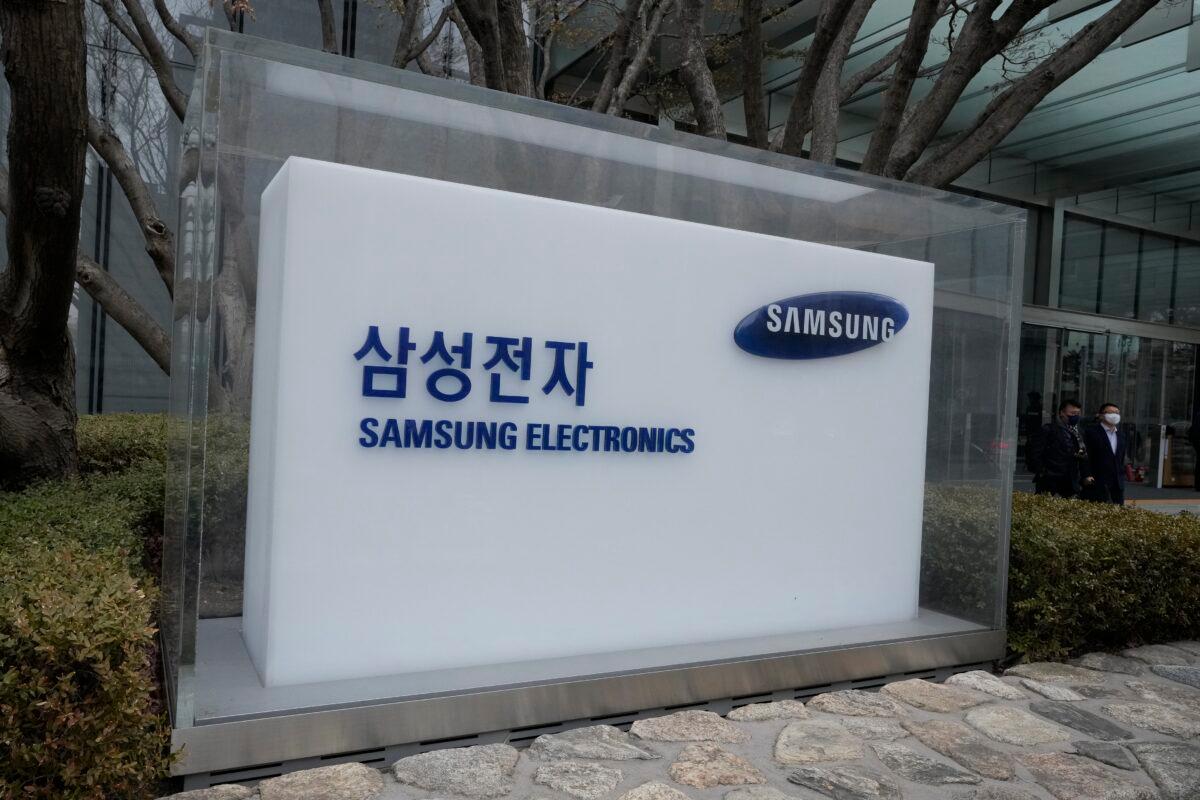
Lee’s visit appeared to secure some tangible results, as the two sides inked 24 export contracts worth a combined $44 million, according to South Korea’s Ministry of Trade, Industry and Resources.
But Wang Guo-chen, an assistant research fellow at the Chung-Hua Institution for Economic Research in Taiwan, cautioned that Beijing may seize the chance to lure away talent and absorb technical know-how from prominent Korean companies.
“If Korean firms expand investments in China, they risk having talent poached through high salaries,” Wang told The Epoch Times. “Beyond that, Chinese joint ventures typically operate on a ’markets for technology' model—within just two to three years, Chinese workers can master most operational processes.”
Wang also pointed out that Chinese law requires enterprises to establish party cells if they employ at least three Communist Party members, raising concerns that expanded Korean operations could become vulnerable as their workforce grows.
“These party secretaries essentially become worker-directors who can enter boardrooms, providing an avenue for intelligence gathering,” Wang said.
China was the destination for 74 percent of technology leaks from South Korea in 2024, accounting for 20 of the 27 total cases, according to data released by the Korean National Police Agency.
Xie noted that as China’s economy continues to struggle, Beijing will likely ramp up exports to South Korea both to find an outlet for its economy and potentially deepen control over Seoul’s economy, making Lee’s push for economic cooperation potentially detrimental to his country in the long run.
“Beijing will continue purchasing South Korean bonds, stocks, and real estate to erode Korea’s economic autonomy through financial infiltration, increasing Seoul’s dependence on China, and using that dependence as leverage to manipulate South Korea in future negotiations and dealings,” said Xie. “There’s no doubt about it.”
.
What's Your Reaction?
 Like
0
Like
0
 Dislike
0
Dislike
0
 Love
0
Love
0
 Funny
0
Funny
0
 Wow
0
Wow
0
 Sad
0
Sad
0
 Angry
0
Angry
0













Comments (0)