

Trump Names China Directly: 50% Tariff If Beijing Arms Iran — And a Navy Blockade Starts Today
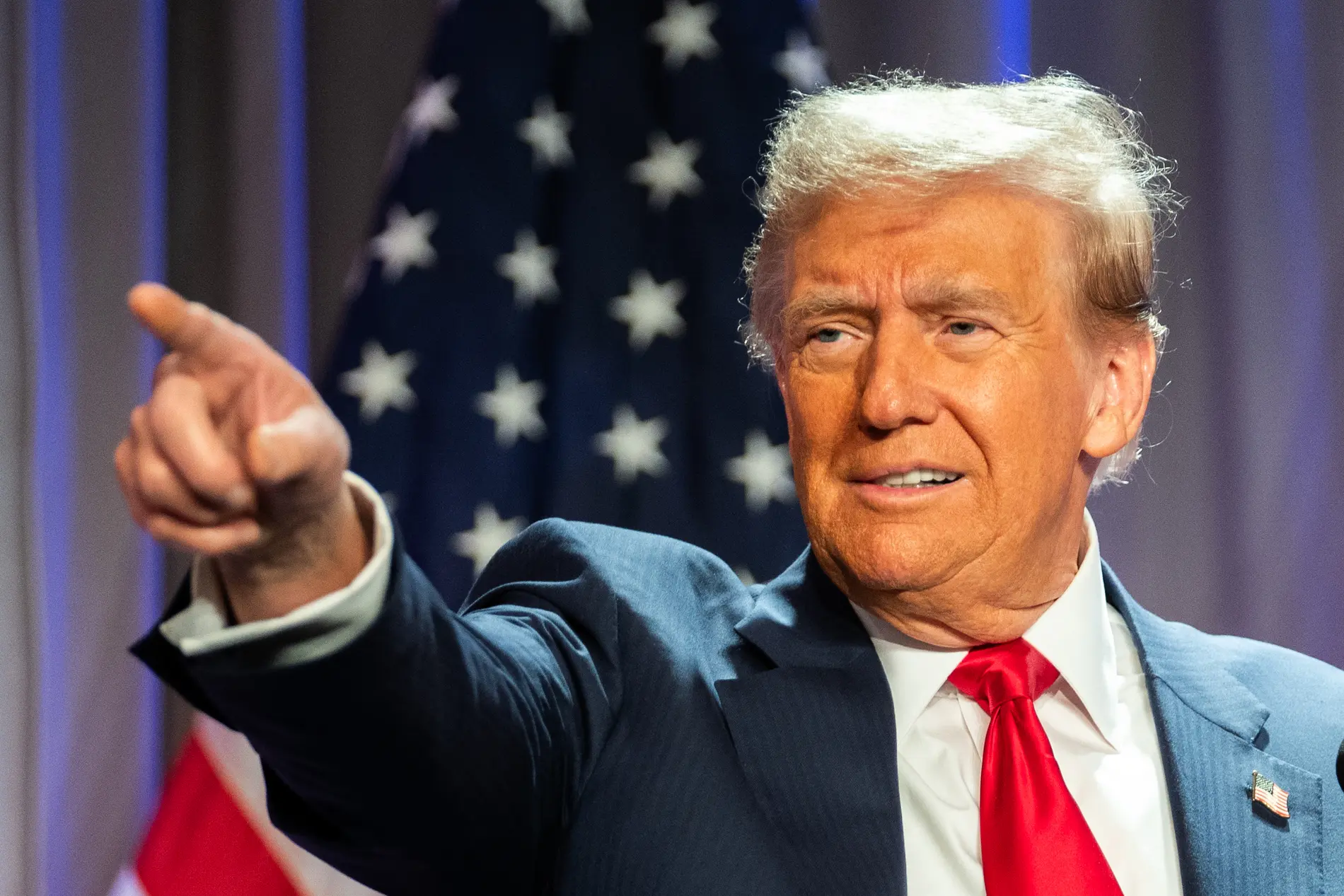
For weeks, the threat had been hovering in the air. Now it has a name. On Sunday, April 13, U.S. President Donald Trump confirmed in a Fox News interview what many had suspected but none had heard him say so plainly: yes, his threat of a 50 percent tariff on countries supplying weapons to Iran applies directly to China. When host Maria Bartiromo asked point-blank whether he meant Beijing, Trump replied with two words: "Yes. And other people. But yes, China too."

.
The U.S. president has linked trade punishment to weapons transfers for the first time by name — while ordering the most aggressive naval operation in the region in decades. The Iran crisis just got a lot more complicated for Beijing.
.
"Yes. China Too."
For weeks, the threat had been hovering in the air. Now it has a name.
On Sunday, April 13, U.S. President Donald Trump confirmed in a Fox News interview what many had suspected but none had heard him say so plainly: yes, his threat of a 50 percent tariff on countries supplying weapons to Iran applies directly to China. When host Maria Bartiromo asked point-blank whether he meant Beijing, Trump replied with two words: "Yes. And other people. But yes, China too."
The exchange appeared to mark the first time Trump had publicly named China when discussing the tariff threat, ending days of uncertainty over which countries could be targeted. It was a moment of unusual diplomatic bluntness — and the markets felt it immediately.
.
Intelligence Reports Trigger the Warning
The direct naming of China did not come out of nowhere. Reports had emerged that China was preparing to deliver new air defense systems to Iran within the next few weeks, according to three people familiar with recent intelligence assessments.
Trump acknowledged having heard these reports — but expressed personal skepticism. He suggested China may have provided limited support earlier in the conflict but said he did not believe it would continue. "Maybe they did a little bit at the beginning," he said. "But I don't think they would anymore."
Still, the warning was unambiguous: if caught, China would face immediate 50 percent duties on all goods sold to the United States, with no exemptions.
Even as he issued the tariff threat, Trump simultaneously pitched an offer: buy cheaper American oil instead, positioning U.S. surplus energy capacity as an alternative to Iranian crude. It was a classic Trump move — threat and deal in the same breath.
.
Beijing's Official Response: Denial
China's position is one of categorical denial. A spokesperson for the Chinese Embassy in Washington stated that Beijing "has never provided weapons to any party to the conflict." China's Foreign Ministry has called for de-escalation and described itself as an active promoter of peace talks.
But Washington and European officials have long accused Beijing of enabling Iran through what they describe as "dual-use" technology — equipment and components that have both civilian and military applications — as well as financial channels that help Tehran bypass Western sanctions.
China's Foreign Ministry spokesperson Mao Ning told reporters at an April 8 press conference that China had been "making active efforts to promote peace talks and end hostilities," but did not confirm an official mediation role.
The position is diplomatically careful. It is also, according to U.S. intelligence assessments, increasingly hard to sustain.
.
The Bigger Picture: Talks Collapse, Blockade Begins
The tariff warning did not emerge in isolation. It came at the end of a weekend that dramatically escalated the entire Iran conflict.
U.S.-Iran peace talks hosted by Pakistan broke down over what the U.S. described as Iran's unwillingness to give up its efforts to obtain a nuclear weapon. Tehran's demands included control of the Strait of Hormuz, payment of war reparations, and a broader regional ceasefire. The U.S. delegation, led by Vice President JD Vance, met with Iranian and Pakistani negotiators for more than 21 hours.
The outcome was zero. And Trump's response was swift.
U.S. Central Command (CENTCOM) forces began implementing a blockade of all maritime traffic entering and exiting Iranian ports on April 13 at 10 a.m. ET. The blockade is enforced impartially against vessels of all nations entering or departing Iranian ports and coastal areas, including all Iranian ports on the Arabian Gulf and Gulf of Oman.
CENTCOM forces will not impede freedom of navigation for vessels transiting the Strait of Hormuz to and from non-Iranian ports. But the message is clear: Iran is being squeezed from the sea.
.
Why China Faces a Dilemma Unlike Any Other
For Beijing, this crisis creates a knot that is extremely difficult to untangle.
The Strait of Hormuz has been largely blocked since February 28, 2026, when the United States and Israel launched an air war against Iran. Before the conflict, about 25% of the world's seaborne oil trade and 20% of global liquefied natural gas passed through the strait. China is the world's largest oil importer — meaning the blockage directly threatens the energy supply that powers its factories and economy.
Oil prices surged sharply after the blockade announcement, with U.S. crude jumping 8 percent to over $104 a barrel and Brent crude rising 7 percent to $102.29.
At the same time, China has deep strategic reasons to maintain its relationship with Iran. Beijing views Tehran as a counterweight to U.S. power in the Middle East and a key node in its Belt and Road infrastructure network. Abandoning Iran entirely carries its own significant costs.
Dylan Loh, an associate professor at Singapore's Nanyang Technological University, noted that China has been "fairly reticent" in its support of Tehran but appears willing to engage more proactively when it sees an opportunity for influence.
That balance — economic caution versus strategic loyalty — is now being tested by direct American pressure.
.
A Summit in May, a Crisis in April
The timing of all this is diplomatically awkward in the extreme. Trump is due to meet Chinese leader Xi Jinping in Beijing next month, in a summit expected to center on trade and geopolitical issues. The Iran crisis has now placed a live grenade in the middle of preparations for that meeting.
Alongside the tariff threat, Trump has also renewed criticism of NATO, saying "we have to reexamine NATO" because alliance members were not there during U.S. and Israeli operations against Iran. The double pressure — on China over Iran, on NATO over burden-sharing — signals a broader American assertiveness that is reshaping relationships across the board.
.
What Comes Next
The Hormuz blockade, which began this morning, marks a new and unpredictable chapter. Iran's armed forces have already declared the U.S. action illegal. Iran's military described the U.S. imposition of restrictions on vessel movement in international waters as "an illegal act" amounting to piracy.
The Wall Street Journal reported that Trump is also considering a resumption of limited military strikes against Iran in an attempt to break the diplomatic stalemate.
For Beijing, the calculation is stark: any verified arms transfer to Iran now carries the potential for a new trade war on top of the existing one. China's economy is already under pressure from previous rounds of U.S. tariffs. A fresh 50 percent hit on all Chinese exports would be, as Trump himself put it, "staggering."
The China-Iran relationship has always been built on shared opposition to U.S. dominance. What it has never had to withstand is the direct, named, and unambiguous threat of economic devastation — delivered personally by the American president, on live television.
That changes the calculus. How much, only Beijing knows.
.
Sources
- Newsweek — Trump Warns China Explicitly Over Iran Weapons, Threatens '50% Tariff' (April 13, 2026): https://www.newsweek.com/trump-china-iran-weapons-50-percent-tariff-warning-11817592
- CNBC — Trump threatens 50% tariffs on China over Iran weapons reports (April 13, 2026): https://www.cnbc.com/2026/04/13/trump-threatens-50percent-tariffs-on-china-as-report-suggests-plans-for-arms-shipment-to-iran.html
- CNBC — Trump says U.S. will blockade Strait of Hormuz after Iran peace talks fail (April 12, 2026): https://www.cnbc.com/2026/04/12/trump-iran-war-strait-of-hormuz.html
- Al Jazeera — US military threatens to blockade all Iranian ports starting Monday (April 13, 2026): https://www.aljazeera.com/news/2026/4/13/us-military-threatens-to-blockade-all-iranian-ports-starting-on-monday
- Naval Today — US Navy to block Hormuz Strait (April 13, 2026): https://www.navaltoday.com/2026/04/13/us-navy-to-block-hormuz-strait/
- South China Morning Post — Trump announces US blockade of Strait of Hormuz (April 13, 2026): https://www.scmp.com/news/china/diplomacy/article/3349813/blown-hell-trump-announces-us-blockade-strait-hormuz
- Wikipedia — 2026 Strait of Hormuz crisis (continuously updated): https://en.wikipedia.org/wiki/2026_Strait_of_Hormuz_crisis
.
What's Your Reaction?
 Like
1
Like
1
 Dislike
0
Dislike
0
 Love
1
Love
1
 Funny
0
Funny
0
 Wow
1
Wow
1
 Sad
0
Sad
0
 Angry
0
Angry
0














Comments (0)