

Beijing May Be Changing How Case Against Top Generals Is Framed, Insiders Say


.
For weeks, speculation has swirled around the fate of two of China’s most senior military figures, Zhang Youxia and Liu Zhenli, after their sudden fall from power.
Beyond that announcement, the Chinese Communist Party (CCP) has released no further information. It remains unclear whether Zhang has been formally detained, and competing accounts have circulated among insiders and observers.
For now, many details remain undisclosed, including the formal status of both men. The way the case is ultimately framed may offer further insight into how the CCP manages discipline and authority within the upper ranks of its military.
According to insiders within China’s People’s Liberation Army (PLA), Beijing may be recalibrating how it frames the case, shifting from politically charged accusations to the more legally manageable charge of corruption.
From Political Disloyalty to Corruption
Within hours after the purge, an editorial in the Chinese military’s official newspaper, the PLA Daily, accused Zhang and Liu of undermining the responsibilities of the CMC chairman, a post currently held by Xi. It further charged them with “endangering the Party’s ruling foundations,” damaging the military’s political loyalty, corrupting its internal command systems, and harming combat readiness.In the CCP’s lexicon, such language carries weight. Allegations of undermining the CMC chairman suggest a political offense that strikes at the core of Xi’s centralized control over the military, a far more serious signal than routine corruption charges.
Lyle Morris of the Asia Society Policy Institute told Reuters last month that invoking that phrase suggested Zhang may have accumulated influence beyond what the leadership deemed acceptable, potentially operating outside the singular command axis centered on Xi.
A source within the PLA told The Epoch Times that the regime now plans to pursue the case by alleging that, over more than a decade, Zhang and Liu used their influence to profit from appointments across various branches of the armed forces. The practice, long rumored within China’s bureaucracy and military, involves accepting bribes in exchange for promotions.
.
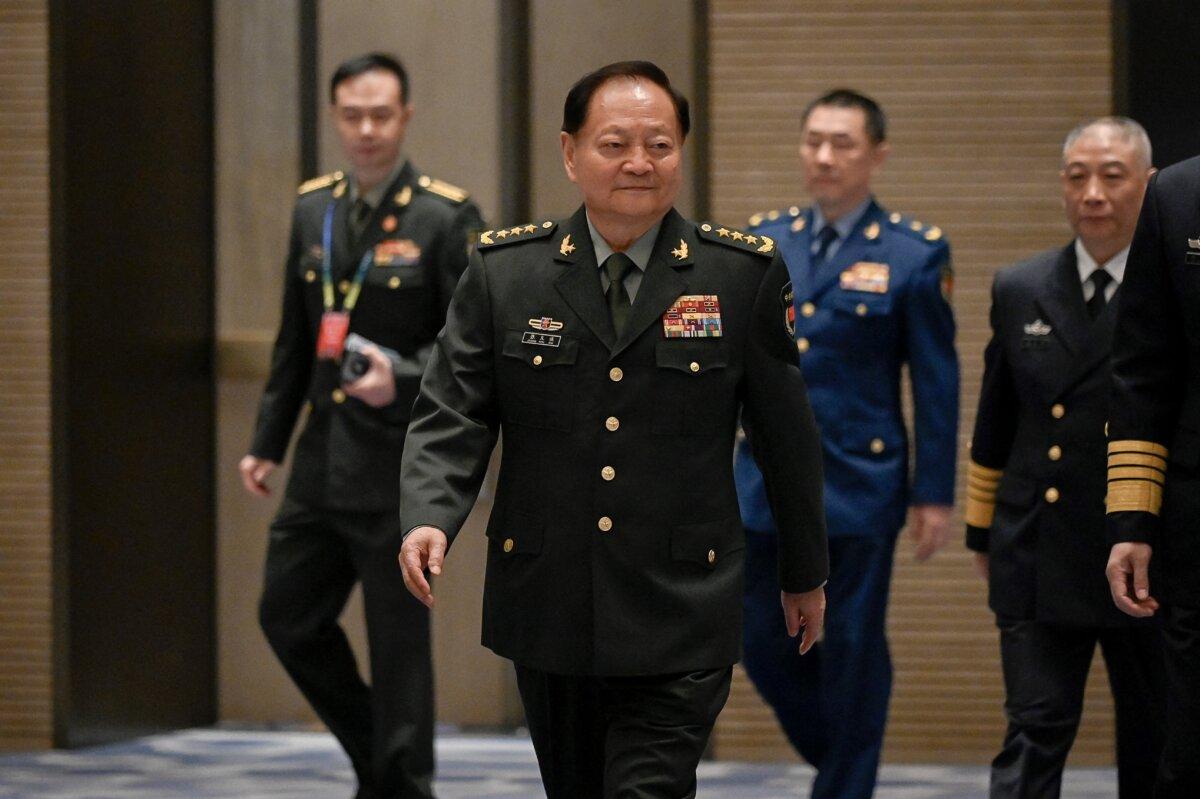
Framed narrowly, that is a corruption case, and framed broadly, it points to faction-building, according to the source within the PLA. Under the CCP’s doctrine, selling government posts is not merely bribery but also evidence of forming political cliques, a taboo offense that implies the creation of alternative power networks within the CCP’s hierarchy.
“For decades, buying and selling official posts has been an open secret at various levels of the CCP’s government, especially within the military,” the scholar said.
“Senior officers often obtained positions through payments and later recouped that through selling appointments to subordinates.
“If such practices were tolerated before, why are they being prosecuted now for violations of Party and military discipline? Obviously, this is about a power struggle.”
An attorney in China’s Guangdong Province told The Epoch Times that China’s criminal code no longer includes overtly political crimes such as “counterrevolution.” Instead, political struggles are typically resolved through nonpolitical charges, with bribery being the most straightforward and easiest to prosecute.
.
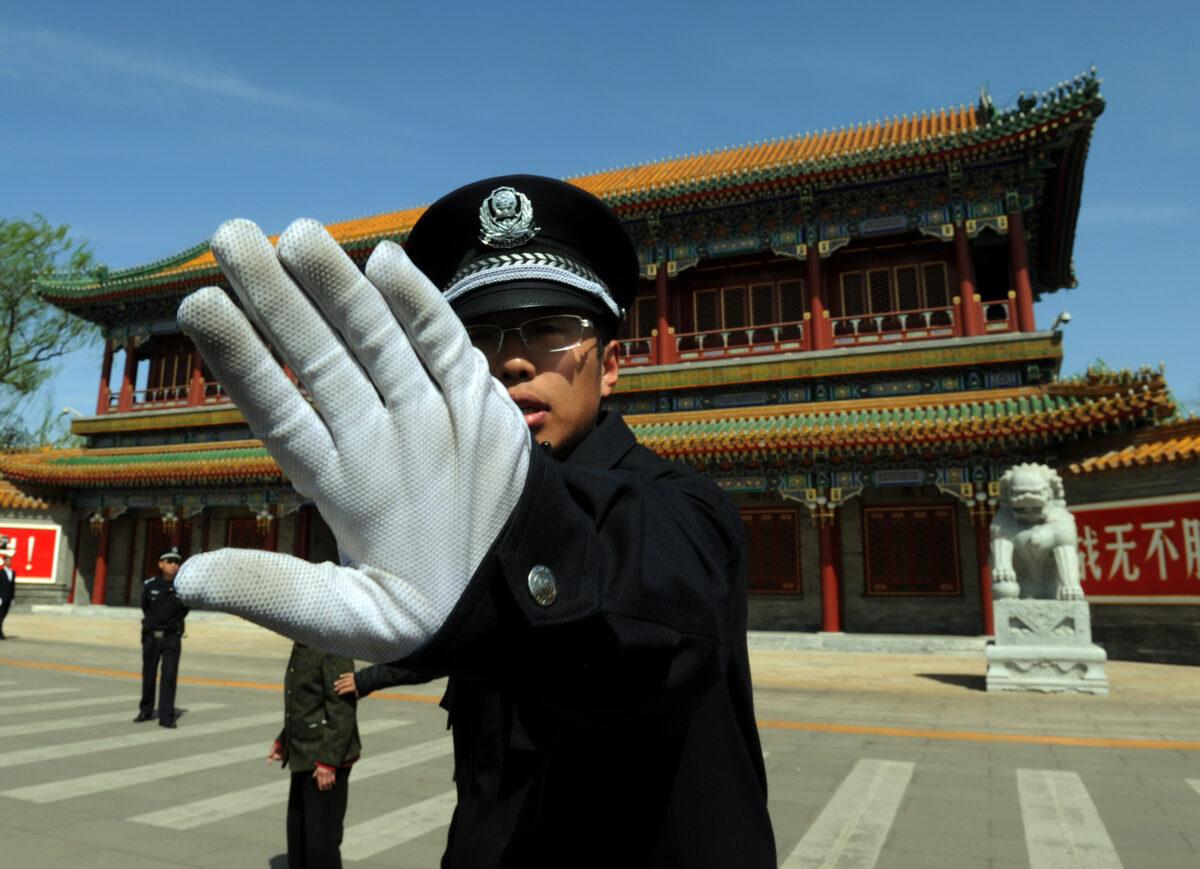
Within China, military scholars say the investigation has already had ripple effects.
A military scholar based in Xiamen, China, told The Epoch Times that after the probe was announced, the CCP’s top leaders repeatedly emphasized loyalty to the party’s central authorities, including within the armed forces.
“When you sell positions, you don’t just gain cash,” the military scholar said. “You gain personal loyalty.”
That dynamic, he suggested, creates a dilemma for the top leadership: The same patronage networks that secure allegiance can also generate independent power bases, and in Zhang and Liu’s case, many lower-level military officers may remain loyal to them.
Unraveling the web of relationships tied to two senior generals could prove complex. According to the military scholar, many officers were promoted directly or indirectly through networks connected to Zhang.
“Many people were promoted by [Zhang], or by his subordinates, or by their subordinates further down the chain,” the military scholar said. “If you start investigating downward, how do you even proceed?”
He suggested that while investigators may struggle to dismantle those networks, key figures are unlikely to escape scrutiny.
What's Your Reaction?
 Like
0
Like
0
 Dislike
0
Dislike
0
 Love
0
Love
0
 Funny
0
Funny
0
 Wow
0
Wow
0
 Sad
0
Sad
0
 Angry
0
Angry
0















Comments (0)