

Automakers Say China’s Auto Industry Poses ‘Clear and Present’ Threat to US Industry


.
“Chinese vehicles pose the same kind of risks in the physical world that TikTok represents in the digital world,” Peter Ludwig, cofounder and chief technology officer of tech company Applied Intuition, told the House Select Committee on the Chinese Communist Party (CCP).
Backed by the Chinese Communist Party (CCP), Chinese automakers have flooded global markets with excessively low-priced copies of popular models, such as Jeep and Land Rover, by stealing intellectual property and using anti-competitive trade practices, American automakers said.
China’s push to dominate global vehicle sales by undercutting competition poses threats to America’s economic foundation but also to its national security by covering the world with vehicles equipped to collect vast amounts of data, experts said.
“Chinese vehicles operating around the world are already collecting enormous volumes of data that could be exploited,” Ludwig said. “Congress and America face a moment where we no longer have the luxury of half measures.”
Committee Chair Rep. John Moolenaar (R-Mich.) warned that the Chinese-made systems integrated into vehicles could be used as surveillance tools.
“They contain cameras, microphones, sensors, and cellular modules that constantly collect data,” Moolenaar said. “Every car is a potential spy platform with a kill switch onboard.”
Hidden malware can also disable fleets of cars or trucks and turn them into weapons, he noted. Massive streams of data—from location histories to private conversations—could also be siphoned directly to Beijing, Moolenaar said.
Moolenaar urged U.S. automakers to take meaningful steps to rebuild U.S. industrial capacity, while lawmakers focus on strengthening regulations to support the domestic industry.
“In just five years, China has gone from a minor exporter to the world’s largest auto exporter, shipping 6 million vehicles abroad last year at below market prices that U.S. and allied automakers cannot match,” Moolenaar said. “With massive subsidies, control over raw materials and supply chains and a predatory regulatory regime, Beijing has turned its auto industry into a tool of the state.”
Chinese automakers are overproducing millions of cars each year and dumping the excess on global markets, according to Rep. Raja Krishnamoorthi (D-Ill.), the ranking member of the committee.
“Their cars appear to be priced below what it would cost to make a car,” Krishnamoorthi said.
.
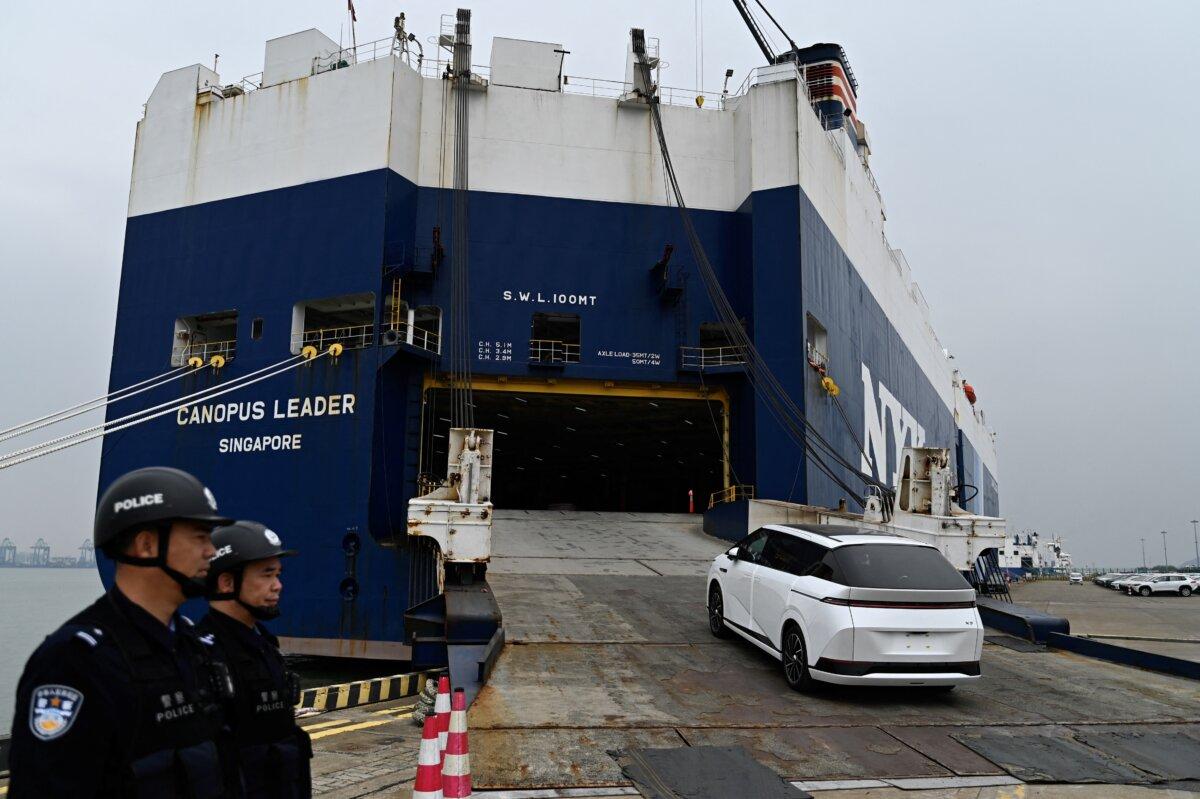
Krishnamoorthi urged his colleagues in Congress to work together to figure out ways to overcome China’s aggressive campaign to control the market, including by using new technologies and investing in the workforce.
The Alliance for Automotive Innovation, which represents major automakers including General Motors, Ford, Toyota, Volkswagen, Hyundai, and others, echoed what experts on the Thursday panel told the committee.
“China poses a clear and present threat to the auto industry in the U.S.,” the group wrote in a statement for the committee hearing.
“No amount of investment by automakers and battery manufacturers operating outside the U.S. can counter a China that is enabled by subsidies to chronically oversupply around the world. This is a recipe for dumping that Congress and the Trump administration must prevent from happening inside the U.S.,” the automakers said.
.
What's Your Reaction?
 Like
0
Like
0
 Dislike
0
Dislike
0
 Love
0
Love
0
 Funny
0
Funny
0
 Wow
0
Wow
0
 Sad
0
Sad
0
 Angry
0
Angry
0
















Comments (0)