

At Least 575 Groups in Canada Linked to China’s United Front, Think Tank Says


.
The Chinese regime has established a global network of organizations linked to its United Front system, which it uses to advance its agenda abroad, including at least 575 such groups in Canada, a new report says.
The Chinese Communist Party (CCP) has built a network of more than 2,000 overseas organizations across Canada, the United States, the United Kingdom, and Germany, according to the Feb. 11 report from U.S. think tank The Jamestown Foundation.
Yu noted the CCP aims to influence democratic societies through its United Front Work Department (UFWD), which she characterized as “the Party’s weapon that it uses to expand control and influence without force.”
“The Party uses the system to shape political, social, and economic environments in ways that serve the Party’s goal, which is becoming the dominant global power and advancing claims such as the annexation of Taiwan,” she said.
Canada has the second-largest network of organizations tied to China’s UFWD after the United States, but the highest density, with at least 575 groups for a population of roughly 40 million, Yu said.
“This number gives a sense of how broad and deeply rooted the network already is, but at the same time, it is likely just the surface,” Yu said, adding that much of the United Front’s work happens through “informal ties, such as personal relationships, invitations to China, honorary titles, and privileged access.”
She also said Canada is important to the CCP because it has “strong institutions, vibrant civil society, and large diaspora communities.”
Former Royal Canadian Air Force Lt. Gen. Christopher Coates also spoke at the press conference and said UFWD operations are “often misunderstood because they do not look like traditional espionage.” Coates, who is also MLI’s director of foreign policy, national defence and national security, said UFWD actions are not primarily about stealing secrets, but about shaping environments so that “resistance to Beijing’s interests is neutralized before it even becomes visible.”
Yu noted that most UFWD activities are not illegal, and have included individuals with strong United Front ties accompanying Canadian prime ministers to visit China and participating in policy consultations ahead of those trips, which she said is technically legal and looks like normal engagement.
.
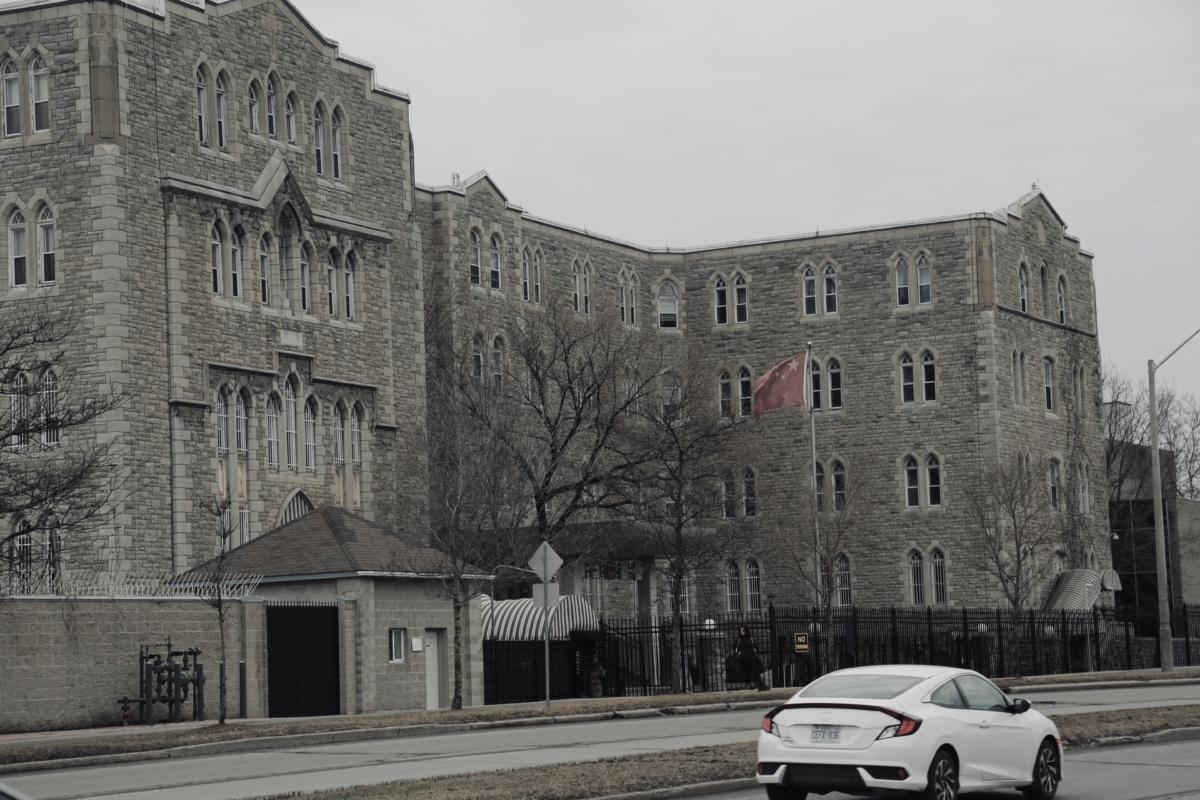
United Front-Linked Organizations in Canada
The report says that while many of the organizations linked to the UFWD began as “ordinary” community, cultural, or professional associations, engagement with the CCP’s UFWD over time has gradually encouraged these organizations to align with Beijing’s narratives and priorities.These organizations’ activities range from shaping local politics and public opinion to facilitating technology transfer, mobilizing resources during emergencies, and enabling transnational repression, the report said. Meanwhile, not all members of these organizations are aware of their role in supporting the CCP.
Coates said these activities affect people’s daily lives, citing examples of Chinese students that may be afraid to speak freely, activists that are harassed or surveilled, and families that are threatened through relatives overseas.
“The activities we are discussing today are not the tip of a hypothetical iceberg. They are part of a documented pattern supported by years of investigative journalism, academic research, and government reporting,” he said.
“The question is no longer whether this is happening. The question is whether Canada is prepared to respond with the seriousness that the evidence demands.”
The report indicates there are at least 182 “identity-based organizations” in Canada that are linked to the UFWD. These include hometown associations, race-based groups, groups formed based on members’ shared last names, and alumni associations. The focus of these groups is to connect and engage with local Chinese communities, and they often host holiday celebrations and other events to bring people together, the report says.
Yu’s research also found there are at least 76 cultural promotion centres and friendship associations in Canada linked to the UFWD, which is more than those in the United States, the UK, or Germany. These groups aim to create a positive image of China overseas and primarily target foreigners and second- and third-generation descendants of Chinese citizens. They host events such as art exhibitions, concerts, and calligraphy classes.
Yu also found there are at least 109 business associations and trade promotion UFWD-linked organizations in Canada. These groups aim to promote economic connections and bring foreign resources back to China, and they organize visits to China with local governments and companies.
There are also at least 21 education organizations, 76 student organizations, 42 professional organizations, 18 political party-focused groups, and 51 media organizations in Canada that have ties to the CCP’s UFWD, the report says.
These types of organizations all share certain characteristics that indicate they are linked to China’s United Front system, the report said. The organizations’ goals and their leaders’ remarks often align with CCP narratives, they host activities that amplify CCP narratives, they harass and monitor Chinese dissidents and activists and interrupt events that are seen to be “discrediting China,” and they hold meetings or share personnel with organizations within the UFWD.
Transparency
Jamestown president Peter Mattis, who spoke at the Feb. 11 press conference, said that through engagement with these organizations, Canada is allowing the CCP to control the narrative of what China is and what it means to be Chinese, and is “accepting the Party’s terms of engagement.”Mattis said this lets the CCP stifle the voice of Canadian citizens and allows Beijing to put the Chinese regime’s voice into Canadian politics and decision making. He said this applies to engagement with China on business, diplomacy, military intelligence, or law enforcement cooperation.
The report says that since a significant amount of the CCP’s UFWD operates “entirely in the open,” it allows organizations involved in these activities to be identified and tracked. To build transparency, the report says Canada needs to actively share information, educate policymakers and the broader public on the issue, engage with Chinese diaspora communities, and implement foreign influence registration schemes.
.
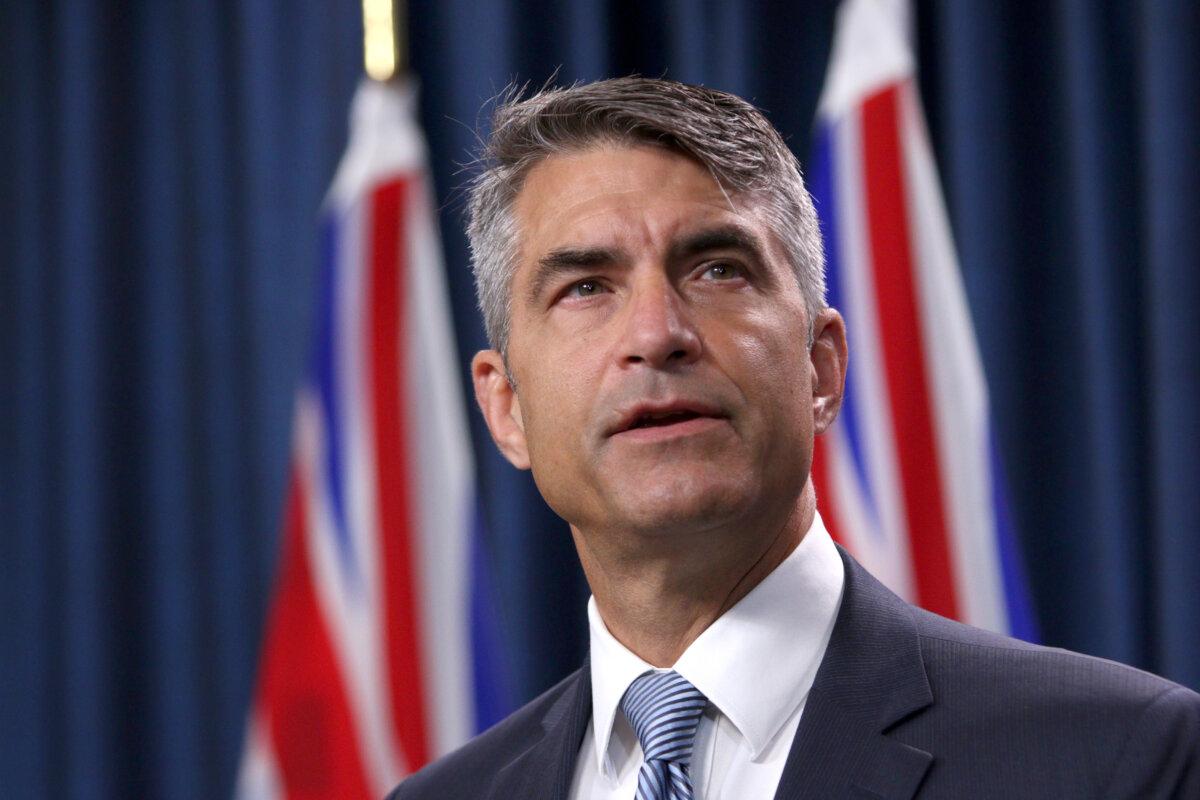
Ottawa recently announced the proposed appointment of Anton Boegman, a former chief electoral officer of British Columbia, as Canada’s first foreign influence commissioner—more than 18 months after Parliament passed Bill C-70, which created the position and a registry to track individuals acting on behalf of foreign governments in Canada.
The federal government has said the registry is needed because countries engaging in foreign interference to advance political goals might employ people to act on their behalf without disclosing those ties. The legislation was passed amid heightened public awareness about China’s meddling in Canada’s affairs via intelligence leaks in the media and the subsequent public inquiry.
“Until more serious, coordinated efforts materialize, CCP influence will continue to grow within Western societies, advancing the Party’s preferences and weakening the resilience of democratic institutions,” the Jamestown report says.
The release of the Jamestown report and its presentation in Ottawa came shortly after Prime Minister Mark Carney visited China in mid-January and declared a “new era” of Canada-China relations and a “strategic partnership” with Beijing.
.
What's Your Reaction?
 Like
0
Like
0
 Dislike
0
Dislike
0
 Love
0
Love
0
 Funny
0
Funny
0
 Wow
0
Wow
0
 Sad
0
Sad
0
 Angry
0
Angry
0












Comments (0)