

As China Claims No Cases of Nipah Virus, It Readies Test Kits and Potential Drug


.
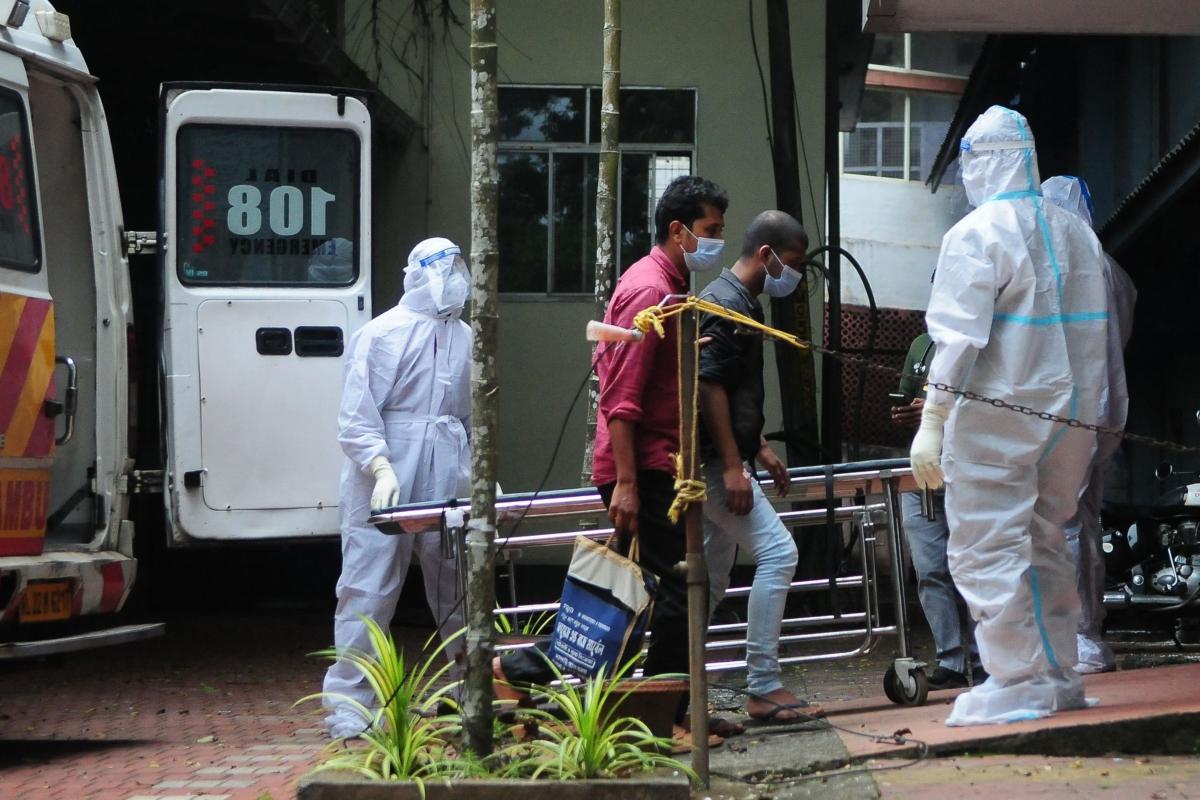
As the Nipah virus outbreak in India set the world on high alert, the Chinese communist regime has claimed that no cases have been detected in China. Meanwhile, the country’s health authorities said they have testing kits ready for the virus.
The Wuhan Institute of Virology (WIV) also said its researchers have found a potential drug for the bat-transmitted virus.
The Nipah virus is a highly pathogenic, zoonotic, single-stranded RNA virus. It has a high mortality rate ranging from 40 percent to 75 percent. It also has an extremely long incubation period, which can last up to 45 days.
The virus spreads from animals to humans mostly through consuming contaminated food, and it’s also transmitted from human to human through person-to-person contact. Fruit bats are the natural hosts of the virus, and it can be transmitted from pigs to humans.
Cases have previously been reported in India, Bangladesh, Malaysia, the Philippines, and Singapore, since its discovery in 1998.
Asian countries have stepped up surveillance in an effort to prevent the deadly virus from spreading.
Testing Kits Rolled Out
Although the Chinese regime claims that there have been no confirmed cases of Nipah virus in mainland China so far, health authorities said that all provincial Centers for Disease Control and Prevention across the country now have the capacity for laboratory testing of the Nipah virus and have stockpiled emergency testing reagents, according to state media Xinhua.Beijing Bohui Innovation Biotechnology is one of the mainland Chinese companies that has launched a Nipah virus nucleic acid detection kit, claiming that it can test whether someone is infected with the virus, as reported by major Chinese media outlets.
.
Just one day after infections of the deadly virus were reported in India, Chinese state media reported that WIV found that VV116, a COVID-19 oral nucleoside drug, showed significant antiviral activity against Nipah virus.
Given WIV’s connections to the COVID-19 outbreak in Wuhan in 2019 and the timing of the announcement, many Chinese citizens expressed concern online.
One post read, “The virus hasn’t even started spreading yet, and they’ve already prepared the medicine! This is terrible!”
Another said in a post, “If the virus has come into China, who will take all these medicines?”
A Chinese resident who didn’t give his name for safety reasons told The Epoch Times that “an unknown virus” is currently spreading in his hometown, Jimo District of Qingdao City in Shandong Province.
Doctors are uniformly claiming it’s “just the common flu,” but the resident said the reality is different. Photos secretly taken by the resident’s mother show that every household is undergoing intense disinfection, with white smoke filling the air. Some elderly people have already succumbed to this “flu.”
VV116 and Nipah Virus
Last year, WIV published an article regarding VV116’s antiviral activities against Nipah.VV116 is a derivative of Remdesivir, a nucleotide analogue drug developed against SARS-CoV-2, Xiaoxu Sean Lin, associate professor of biomedical science at Fei Tian College Northern Campus in New York, told The Epoch Times.
VV116 is not specifically designed against Nipah, Lin said.
“It was found to be able to inhibit different RNA viruses, as it can inhibit RNA virus replication,” he said. “Remdesivir is a U.S. FDA approved drug. VV116 was approved by the China FDA. Both are approved for treating COVID. So, it just needs to extend its usage for Nipah infection cases.”
The Nipah virus infection’s symptoms are mainly similar to those of an upper respiratory tract infection, Dr. Jonathan Liu, a professor at Canada Public College and director of Liu’s Wisdom Healing Centre, told The Epoch Times.
“For example, in the early stages, it may present with fever, headache, muscle aches, or sore throat,” Liu said.
In severe cases, “neurological manifestations may occur, such as altered consciousness, seizure, and coma. The incubation period is four to 14 days, but it can be longer, reaching 45 days. Generally speaking, its mortality rate is quite high.”
Nipah virus is a negative-sense RNA virus and it’s different from SARS-CoV-2, which is a positive-sense virus, Liu said.
“COVID-19 infects people very quickly; the virus can rapidly enter cells and replicate its proteins. The Nipah virus is relatively slower. Because it’s a negative-sense virus, it requires a conversion process.”
.

Lin noted that the WIV’s research was in vitro study and also a preclinical animal study to show VV116 can inhibit Nipah virus growth. There was no clinical trial.
“Based on their published paper, the WIV researchers used hamsters for the animal studies, not bats,” Lin said, adding, “We don’t know whether WIV also [did] studies of Nipah using bat clones, or [if it is] developing other drugs.”
“People who get Nipah can have neuropathic syndrome. They can have severe brain damage. But they don’t die immediately, not like Ebola. So the virus can have a better chance to further propagate from the infected host,” he told The Epoch Times.
“If the host can last longer and spread it more in human-to-human transmission, it would be a better bioweapon. That’s why the CCP is very interested in the Nipah virus, and that’s why I think it’s very dangerous.”
What's Your Reaction?
 Like
0
Like
0
 Dislike
0
Dislike
0
 Love
0
Love
0
 Funny
0
Funny
0
 Wow
0
Wow
0
 Sad
0
Sad
0
 Angry
0
Angry
0









Comments (0)