

Xi Meets Taiwan's Opposition Leader — But Peace Is Not on Beijing's Terms
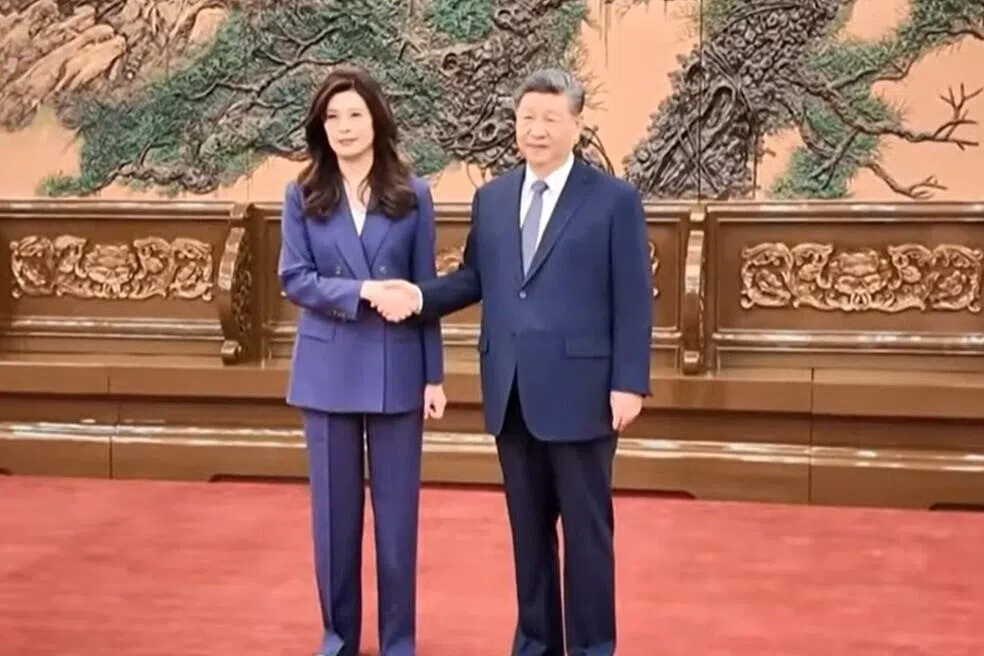
Chinese President Xi Jinping met with Cheng Li-wun, the chairwoman of Taiwan's main opposition party, the Kuomintang (KMT), at Beijing's Great Hall of the People on Friday. It is the first meeting between the leaders of the KMT and the Chinese Communist Party in a decade. Cheng, who calls her six-day trip a "journey of peace," is the first KMT leader to visit China in ten years. Her visit has drawn both cautious hope and sharp criticism — raising fundamental questions about who actually speaks for Taiwan.

.
A Rare Summit in Beijing — With High Stakes for the Taiwan Strait
Chinese President Xi Jinping met with Cheng Li-wun, the chairwoman of Taiwan's main opposition party, the Kuomintang (KMT), at Beijing's Great Hall of the People on Friday. It is the first meeting between the leaders of the KMT and the Chinese Communist Party in a decade.
Cheng, who calls her six-day trip a "journey of peace," is the first KMT leader to visit China in ten years. Her visit has drawn both cautious hope and sharp criticism — raising fundamental questions about who actually speaks for Taiwan.
.
What Xi Said — and What He Really Meant
At the meeting, Xi delivered a carefully framed message. He told Cheng that compatriots on both sides of the Taiwan Strait belong to the Chinese nation and that cross-strait relations should be firmly in the hands of the Chinese people.
The language sounds conciliatory. But experts say it carries a calculated political purpose. Beijing's invitation to Cheng is aimed at challenging the U.S.-Taiwan narrative that only military strength and arms purchases can guarantee stability in the strait. By welcoming the opposition while ignoring Taiwan's elected government, Beijing is effectively trying to set the terms of any dialogue itself.
Xi also emphasized that regardless of how the international landscape evolves, the broader trajectory toward what he calls the "great rejuvenation of the Chinese nation" will not change. In plain language: Beijing's goal of absorbing Taiwan remains non-negotiable.
.
Cheng's Message: Peace — But on Equal Terms
Cheng, for her part, did not simply comply with Beijing's script. She pushed back — carefully, but clearly.
Both sides affirmed the 1992 Consensus — a tacit, never formally documented understanding that Taiwan and China both belong to "one China," though each side interprets that differently. The Communist Party, notably, has never formally acknowledged the KMT's interpretation that both sides can define "China" separately.
Cheng called for institutionalized and sustainable mechanisms for cross-strait dialogue. She also expressed hope that the Taiwan Strait would no longer become, as she put it, a chessboard for outside powers to play on — a veiled reference to U.S. involvement that drew immediate attention.
.
The Backdrop: Military Pressure and Democratic Tensions
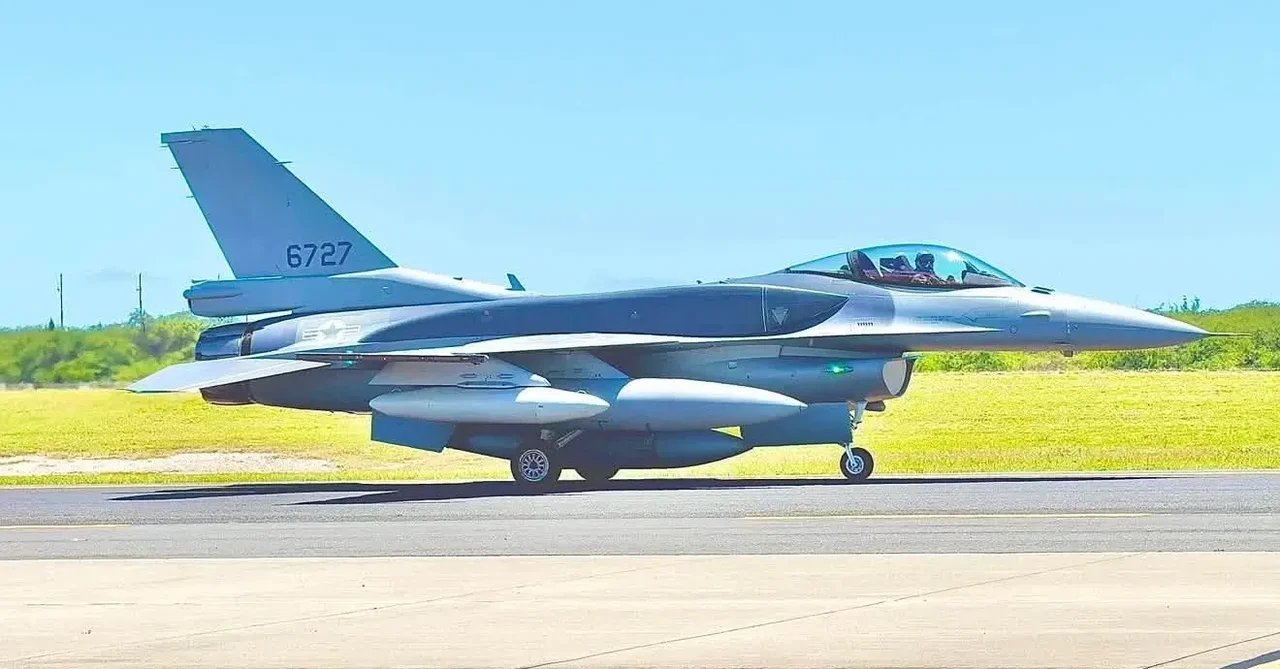
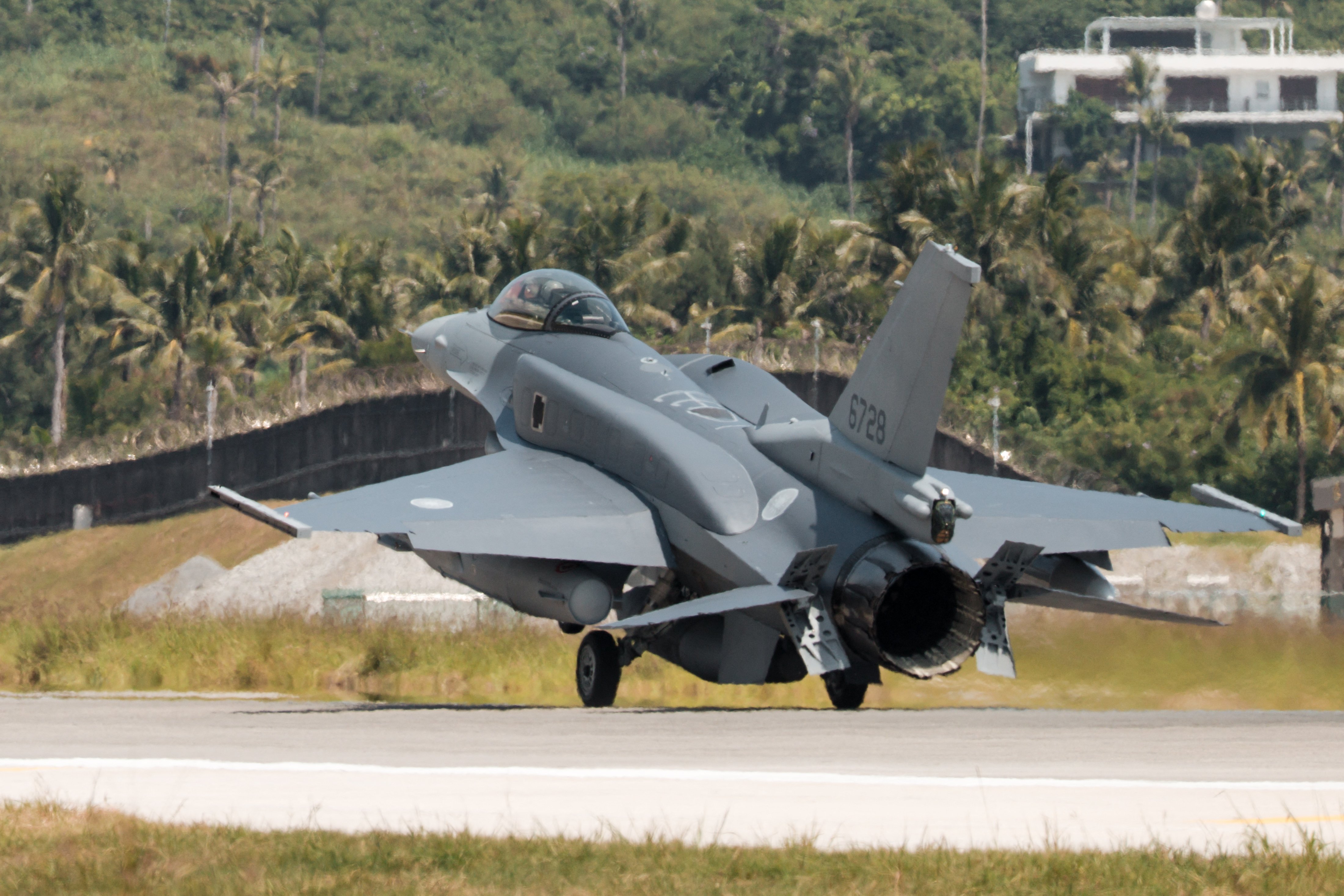
The summit takes place against a backdrop of escalating Chinese military activity. Beijing has been ramping up pressure against Taiwan with near-daily deployments of warships and fighter jets, and regularly stages large-scale military exercises around the island. The most recent major drill took place in December 2025.
At home in Taipei, the political reaction has been mixed. Taiwan's ruling Democratic Progressive Party (DPP) criticized the trip, accusing the KMT of undermining national security, and called on the opposition to stop blocking a proposed $40 billion defense budget.
Taiwan's President Lai Ching-te, whom Beijing labels a "separatist" and refuses to engage with, has consistently argued that security can only be achieved through strength — not through dialogue with a regime that does not recognize Taiwan's democratic government.
.
Beijing's Real Game: Influence, Not Peace
Analysts say the meeting serves Beijing's strategic interests far more than Taiwan's. Critics argue that by hosting the opposition while refusing to speak with Taiwan's elected government, Beijing is attempting to bypass Taiwan's democratic system entirely.
Beijing's more realistic goal is to show U.S. President Donald Trump that Lai and the pro-independence camp do not represent all of Taiwan, and that a political force exists on the island willing to oppose formal independence and support dialogue. This matters because Trump has reportedly suggested he would be open to discussing future U.S. arms sales to Taiwan with Xi at their planned May summit — a remark that has already weakened confidence in Washington among some in Taipei.
Some Taiwanese political scientists warn that Cheng may be playing into Beijing's so-called "United Front" strategy, which uses visits by Taiwanese politicians to reinforce the narrative that Taiwan is a purely internal Chinese matter.
.
A Decade of History — In One Meeting
The KMT's complicated history with the Chinese mainland makes this visit especially symbolic. The party once ruled all of China, before fleeing to Taiwan in 1949 after losing the civil war to Mao Zedong's Communist forces. In 2005, then-KMT Chairman Lien Chan made the first such mainland visit — an "ice-breaking journey" that helped usher in nearly a decade of improved cross-strait relations, until the DPP returned to power in 2016.
Cheng, who served as KMT spokesperson during that 2005 visit, is now attempting to replicate that diplomatic opening. Whether she can do so without surrendering Taiwan's democratic identity — and without being used as a political prop by the CCP — remains the central question.
.
What Comes Next
The meeting is being closely watched not only in Taipei, but also in Washington and Tokyo, ahead of Donald Trump's expected visit to China in May.
The stakes are real. Taiwan is a vibrant democracy of 23.5 million people. It has never been governed by the People's Republic of China. And while dialogue is not inherently dangerous, engagement with a regime that simultaneously encircles the island with warships, blocks its democratically elected president from any contact, and refuses to renounce force — requires clear eyes and firm principles.
Cheng's trip may produce good optics. Whether it produces genuine peace is another matter entirely.
.
Sources
- Bloomberg – Xi Meets KMT Chief, Warns Over Foreign Interference: https://www.bloomberg.com/news/articles/2026-04-10/xi-meets-kmt-s-cheng-as-china-pushes-for-influence-in-taiwan
- Foreign Policy – Xi Jinping-KMT Meeting Is a Signal of Stability From Beijing: https://foreignpolicy.com/2026/04/08/xi-jinping-cheng-li-wun-taiwan-trump-strait/
- Al Jazeera – On rare China visit, Taiwan's opposition leader calls for reconciliation: https://www.aljazeera.com/news/2026/4/8/on-rare-china-visit-taiwans-opposition-leader-calls-for-reconciliation
- AP / ClickOrlando – Taiwan's opposition leader meets China's Xi Jinping: https://www.clickorlando.com/news/world/2026/04/10/taiwans-opposition-leader-meets-chinas-xi-jinping-as-both-sides-call-for-peace/
- Nikkei Asia – Xi Jinping meets new face of Taiwan's opposition as US and Japan watch: https://asia.nikkei.com/politics/international-relations/taiwan-tensions/xi-jinping-meets-new-face-of-taiwan-s-opposition-as-us-and-japan-watch
- Euronews – Taiwan opposition leader makes rare visit to China: https://www.euronews.com/2026/04/08/taiwan-opposition-leader-makes-rare-visit-to-china-in-journey-for-peace
- NPR – Taiwan's opposition leader arrives in China for a 'Journey of Peace': https://www.npr.org/2026/04/07/nx-s1-5776401/taiwan-opposition-arrives-china
- Foreign Policy – Xi-Cheng Meeting Shows China Still Sees Taiwan as a Solvable Dispute: https://foreignpolicy.com/2026/04/08/xi-jinping-cheng-li-wun-china-taiwan-meeting-invasion/
- South China Morning Post – Why KMT leader's planned visit to Beijing is under scrutiny: https://www.scmp.com/news/china/politics/article/3349176/why-kmt-leaders-planned-visit-beijing-under-scrutiny-taiwan
- Xinhua (for factual cross-reference only): https://english.news.cn/20260410/f55e0146871843b9953775ba57ab6d9e/c.html
.
What's Your Reaction?
 Like
1
Like
1
 Dislike
0
Dislike
0
 Love
0
Love
0
 Funny
0
Funny
0
 Wow
1
Wow
1
 Sad
0
Sad
0
 Angry
0
Angry
0











Comments (0)