

Why Taiwan Is the One Issue Beijing Won't Let Trump Ignore
As Chinese leader Xi Jinping prepares to arrive in Washington on September 24 for his first-ever White House meeting with President Donald Trump, Taiwan sits at the center of the agenda. This piece explains why the self-ruled democracy matters so much to Beijing, why the historical case Beijing makes is far shakier than it sounds, and why Washington keeps selling weapons to Taipei no matter how loudly China objects.

.
A Summit With Taiwan Hanging Over It
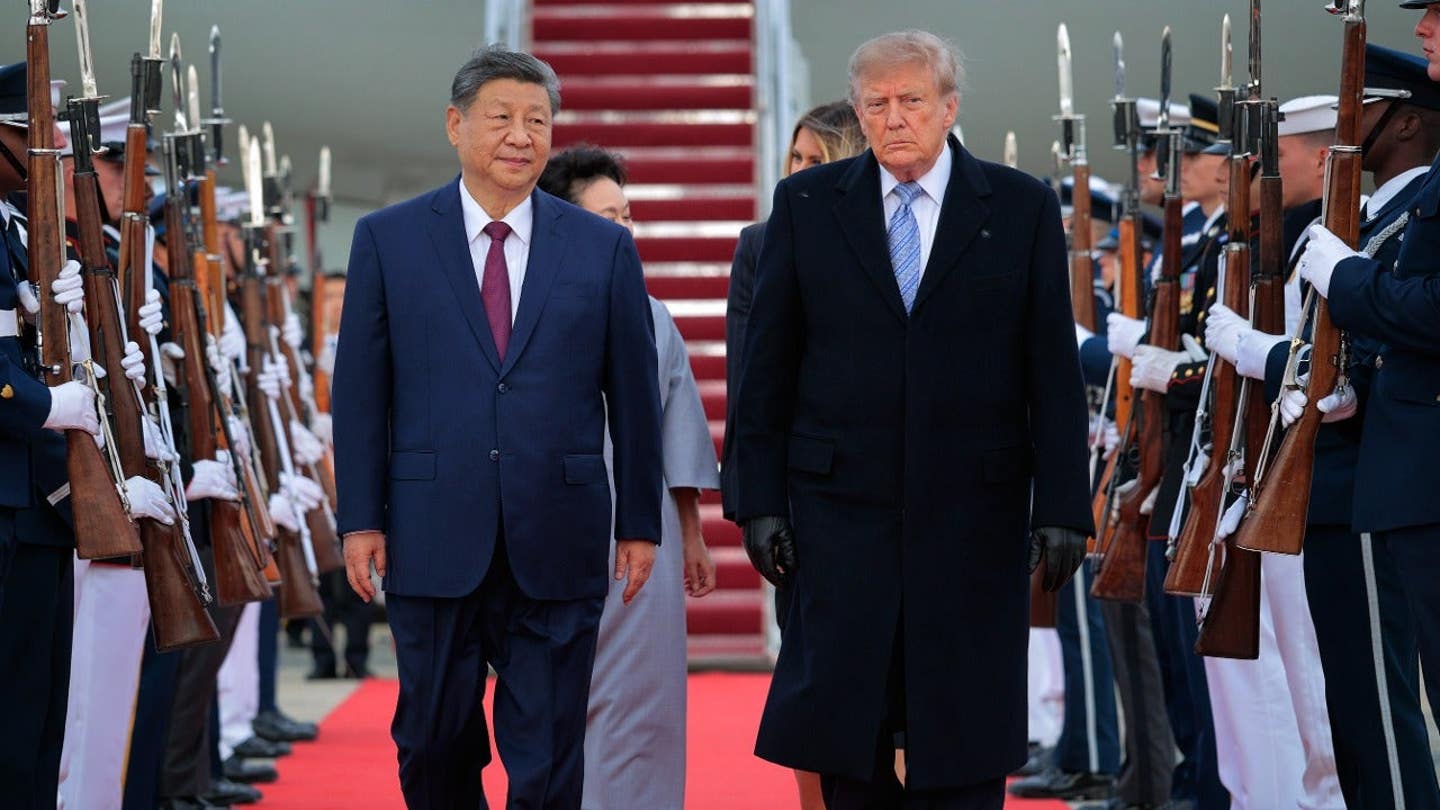
Xi Jinping is due to land in Washington this week for a state visit that both sides have been quietly preparing for months. Trump has confirmed the date, September 24, and officials from both governments have already held preparatory talks to lock down the details.
Arms sales to Taiwan are expected to top Xi's list of grievances. China has spent this year pressing Trump to slow or shrink U.S. weapons deliveries to the island, and Beijing has previously signaled that further sales could complicate the visit itself.
For Washington, though, walking away from Taiwan is not simple. It would mean breaking with decades of U.S. law and quietly rewarding a government that still runs one of the world's last major one-party communist states.
.
Beijing's Claim — And Why It's Weaker Than It Sounds
China insists Taiwan has belonged to it "since ancient times." In practice, the record is much thinner. The Qing dynasty only brought Taiwan under formal Chinese administration in the late 17th century and made it a full province just eight years before giving it up entirely, ceding the island to Japan "in perpetuity" after losing the First Sino-Japanese War in 1895.
Independent historians and legal scholars have pushed back hard on Beijing's framing, noting that neither the Qing empire nor any Chinese government has held uninterrupted sovereignty over the island. Taiwan was governed by Imperial Japan for half a century, and the Chinese Communist Party — founded in 1921 — has never controlled Taiwan for a single day.
That gap matters, because it's the foundation of Beijing's entire case. Strip it away, and what's left is less a historical inheritance than a political claim backed by military threats.
.
1949: The Split That Never Healed
The modern standoff traces back to the Chinese civil war. In 1945, at the end of World War Two, Taiwan was handed to the Republic of China government. Four years later, that same government lost the mainland to Mao Zedong's communists and retreated to the island, while Mao founded the People's Republic of China on the mainland in 1949.
Beijing has treated Taiwan ever since as an unfinished chapter of that civil war — a breakaway province waiting to be brought back under central control. It calls the island its "core of core interests" and has never renounced the option of using force to seize it, even while saying it would prefer "peaceful reunification."
Any foreign government that engages with Taiwan at a senior level, Beijing argues, is meddling in China's internal affairs. It has used that argument to justify major military exercises around the island, including large-scale war games after a 2022 visit by then-U.S. House Speaker Nancy Pelosi, and again in December 2025, shortly after the Trump administration approved an $11 billion arms package for Taiwan — the largest single U.S. weapons sale to the island in history.
.
Taiwan's Answer: We're Already a Country
Taiwan's government rejects Beijing's version outright. It points out that the People's Republic of China has never administered the island for even a day, and it argues that Taiwan — formally still named the Republic of China — is already a sovereign, self-governing state with its own military, currency, elections and foreign policy.
Unlike the mainland, Taiwan is a functioning multiparty democracy. Its 23 million citizens vote directly for their president, its courts operate independently of the ruling party, and its press is free to criticize the government — none of which is true under the Chinese Communist Party's one-party rule, where dissent is routinely suppressed and information is tightly censored.
President Lai Ching-te has repeatedly offered to hold talks with Beijing, only to be rebuffed each time; China refuses to even use his title, branding him a "separatist" instead. Lai has argued that because Taiwan is already independent in every practical sense, there is no need to formally declare it.
.
Washington's Balancing Act
The United States switched diplomatic recognition from Taipei to Beijing in 1979, but Congress immediately passed the Taiwan Relations Act, legally binding Washington to help Taiwan defend itself. The U.S. still takes no official position on who holds sovereignty over the island — its so-called "One China" policy — while continuing to sell it weapons.
Part of that support rests on the 1982 "Six Assurances," a set of Reagan-era commitments to Taiwan that stayed secret for decades until Washington declassified them in 2020. Among them: no fixed end date for arms sales, and no agreement to consult Beijing before approving them.
That last point has become a live issue heading into this week's summit. Trump has floated the idea of factoring Xi's objections into future arms decisions — something that, if it happened, would break with that 1982 assurance and hand Beijing a form of veto power Washington has resisted for more than 40 years.
.
How the Relationship Actually Works Day-to-Day
Since the two governments don't formally recognize each other, they rely on workarounds. The U.S. runs what amounts to a de facto embassy in Taipei, the American Institute in Taiwan, and the two sides maintain deep trade and security ties without a formal treaty.
Taiwanese presidents can't visit the U.S. mainland directly; instead they pass through on "transits" en route to diplomatic allies in Latin America and the Caribbean, using layovers to meet sympathetic U.S. lawmakers. Trump and Lai have never spoken directly, though Trump said in May he intended to call him — a call that still hasn't happened.
The last time a U.S. president-elect spoke directly with Taiwan's leader was in December 2016, when Trump took a 10-minute call from then-President Tsai Ing-wen. Beijing's reaction at the time was a formal complaint rather than a major escalation — a contrast with how sharply it has responded to similar gestures since.
.
What to Watch This Week
Xi is expected to arrive in Washington on September 23 and hold his main talks with Trump the following day, mirroring the three-day format of Trump's own trip to Beijing in May. Officials on both sides have said trade and artificial intelligence will also be on the table, but Taiwan is unlikely to stay in the background for long.
The core tension won't be resolved by one meeting. China wants the arms sales to stop, or at least slow down; U.S. law says they can't simply stop; and Taiwan's 23 million citizens have shown no sign of wanting to trade their democracy for Beijing's promises. Whatever emerges from Washington this week, that basic standoff will still be there once the cameras leave.
.
What's Your Reaction?
 Like
0
Like
0
 Dislike
0
Dislike
0
 Love
0
Love
0
 Funny
0
Funny
0
 Wow
0
Wow
0
 Sad
0
Sad
0
 Angry
0
Angry
0














Comments (0)