

Why China’s Investment Slump May Not End in 2026


.
Chinese Premier Li Qiang on Feb. 6 chaired a State Council executive meeting focused on policies to boost effective investment, which remains a significant challenge for the communist regime in the new year.
In 2025, China’s total fixed-asset investment fell by 3.8 percent year over year, the first annual decline since comparable official data became available. In December, the Chinese Communist Party (CCP) held an economic work conference, attended by Xi Jinping and other top echelons of the CCP, which called for “halting the investment slide and stabilizing it” to prop up growth in 2026.
The Era of Massive Investment Is Over
China’s growth model has long relied on investment far more than most countries—its investment contribution to GDP is roughly double the global average. But when Xi took office in late 2012, that era effectively ended, as rapid industrialization and urbanization were largely complete, and the economy had to shift from investment-driven to consumption-driven growth.According to China’s National Bureau of Statistics (NBS) data, cumulative social fixed-asset investment (FAI) from 2013 to 2021 reached 409 trillion yuan ($58.5 trillion), representing an average annual growth of 9.4 percent. Over the same period, GDP grew by 6.6 percent on average—2.8 percentage points slower than investment growth, indicating a sharp decline in efficiency. The trend sharpened in 2021–2025: total FAI dropped from 54.45 trillion yuan ($7.85 trillion) in 2021 to 48.51 trillion yuan ($6.99 trillion) in 2025. This decline is structural—the inevitable result of economic laws catching up with years of over-investment.
3 Major Drivers Look Weak
China’s investment is dominated by three sectors: real estate, manufacturing, and infrastructure.Real Estate
NBS data show 2025 fixed-asset investment (excluding rural households) at 48.52 trillion yuan, down 3.8 percent year over year. Excluding real estate development investment, overall FAI fell by only 0.5 percent. The sharp drop in property development was the main drag.Real estate peaked in 2021; the bubble burst that year, and both development investment and new home sales have fallen steadily since then. China Index Academy, a Beijing-based think tank focused on China’s land/property sector, forecasts the decline will continue through 2030. In 2026, real estate investment is unlikely to reverse course.
Manufacturing
According to the United Nations Industrial Development Organization, China accounted for about 32 percent of global manufacturing output in 2024—more than double the U.S. share. A South China Morning Post commentary notes that manufacturing remains “key to China’s development goals.”
.
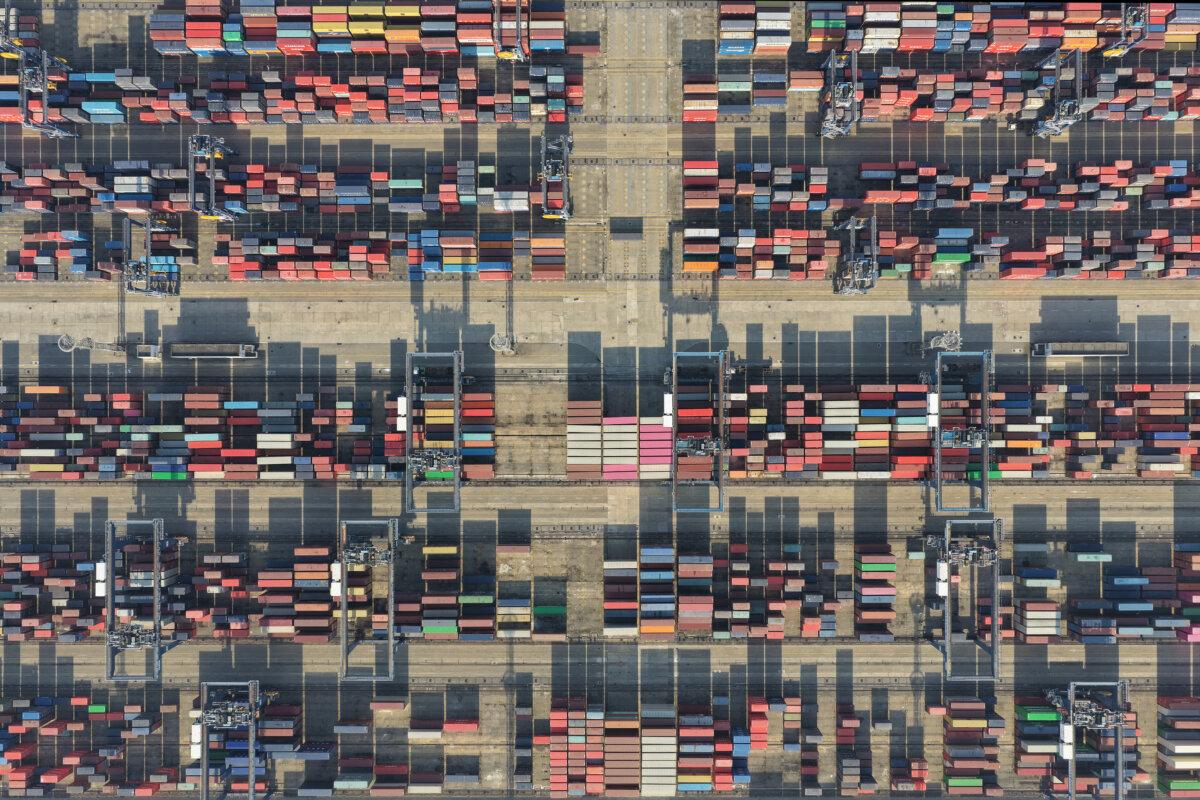
Additionally, on the global front, renewed U.S. tariffs under President Donald Trump have heightened uncertainty for export-oriented manufacturers, reducing investment appetite as higher duties on Chinese goods squeeze margins and prompt supply-chain shifts away from China.
Infrastructure
Infrastructure grew rapidly, averaging 12 percent annually from 2013 to 2021. But as the era of investment-driven growth strategy ended, growth slowed sharply in 2021–2025, turning negative in 2025 at minus 2.2 percent—the first decline since NBS began tracking the category in 2014. Surface reasons include debt-resolution policies that divert special local-government bonds to repay old debt or clear arrears.CCP’s Measures to Stabilize Investment in 2026 Won’t Work
With real estate investment continuing to decline, local governments showing little enthusiasm for infrastructure projects, and manufacturing relying heavily on private-sector investment, any stabilization efforts will likely depend on central government funding and policies. But will these measures be effective?Central Government Spending
In 2025, the central budget investment was set at 735 billion yuan ($103.52 billion). This investment refers to funds allocated directly from the central government’s national fiscal revenue, not from local governments, banks, or enterprises.Central Policies
On Jan. 15, the People’s Bank of China launched eight measures, including a 1 trillion yuan ($144 billion) relending facility for private companies. On Jan. 20, the Ministry of Finance and the central bank issued six additional policies, four of which targeted private investment. The standout is the 1 trillion yuan relending facility for the private sector. But private companies want stable business environments and the rule of law, not these stopgap measures.Concluding Thoughts
If Beijing follows economic reasoning, stable investment in 2026 seems unlikely. Conversely, if authorities prioritize politics over economics, it would be like drinking poison to quench their thirst. This article does not explore that scenario.What's Your Reaction?
 Like
0
Like
0
 Dislike
0
Dislike
0
 Love
0
Love
0
 Funny
0
Funny
0
 Wow
0
Wow
0
 Sad
0
Sad
0
 Angry
0
Angry
0













Comments (0)