

U.S. Senators Warn Trump: Letting Chinese Carmakers Into America Would Be an Irreversible Mistake
Three Democratic U.S. senators are pushing back hard against President Donald Trump — and they're doing it before he boards Air Force One to Beijing. In a letter dated April 3, Senators Tammy Baldwin (Wisconsin), Chuck Schumer (New York), and Elissa Slotkin (Michigan) called on Trump to permanently bar Chinese automakers from manufacturing or selling vehicles on American soil. The timing is deliberate: Trump is scheduled to meet Chinese President Xi Jinping in Beijing on May 14 and 15, making the letter a direct shot across the diplomatic bow.

.
Three Lawmakers Demand a Full Ban Before the Beijing Summit
Three Democratic U.S. senators are pushing back hard against President Donald Trump — and they're doing it before he boards Air Force One to Beijing. In a letter dated April 3, Senators Tammy Baldwin (Wisconsin), Chuck Schumer (New York), and Elissa Slotkin (Michigan) called on Trump to permanently bar Chinese automakers from manufacturing or selling vehicles on American soil. The timing is deliberate: Trump is scheduled to meet Chinese President Xi Jinping in Beijing on May 14 and 15, making the letter a direct shot across the diplomatic bow.
What Prompted the Letter?
The trigger was a comment Trump made in January at the Detroit Economic Club. Warming to the idea of Chinese investment, Trump said he would welcome Chinese automakers if they created American jobs. The letter follows Trump's suggestion that, despite trade tensions with China, he was open to Chinese automakers making investments in the U.S.
The senators are not buying it. In their view, a few assembly jobs would come at far too high a price.
The Economic Argument: A Trap Disguised as a Deal
The senators argued that inviting Chinese automakers to set up shop in the United States would give them an insurmountable economic advantage that American manufacturers could not overcome — and would trigger a national security crisis that could never be reversed.
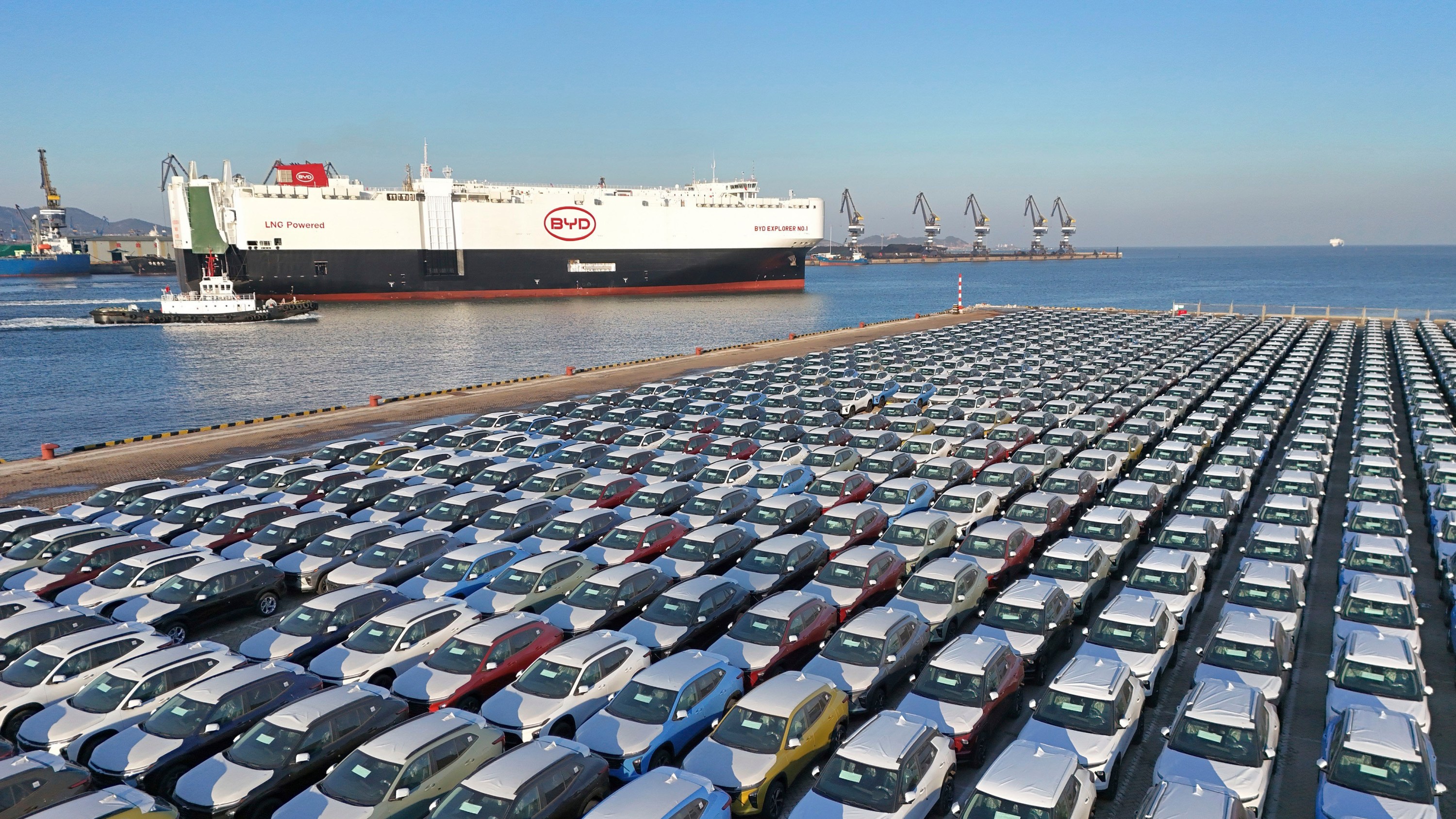
The reason, the lawmakers say, lies in the nature of Chinese state capitalism. Chinese automakers receive heavy subsidies from the Chinese Communist Party (CCP) and benefit from labor conditions that would be illegal in the United States. BYD, for example, has been found to use employment conditions similar to forced labor in a plant in Brazil. With that kind of structural support, competing on equal terms is simply not possible.
The senators also warned that a Chinese factory on American soil would not function like a typical car plant. While a new plant opened by a Chinese automaker may create some assembly and temporary construction jobs, that small number of jobs will not make up for the lasting job loss, the letter states. Chinese manufacturers would likely import parts from China — undermining the tariffs Trump has already imposed on steel and aluminum, and hollowing out the broader supply chain that supports millions of American workers.
The stakes are enormous. The U.S. auto industry directly and indirectly supports nearly 11 million jobs and contributes between 3 and 5 percent of GDP.
The Backdoor Problem: Canada and Mexico
The senators didn't just focus on factories. They also raised alarms about a growing loophole: Chinese cars being assembled in neighboring countries and then shipped into the U.S.
At the urging of the United States, Canada placed a 100% tariff on Chinese automobiles in 2024 to align trade policy and preserve intertwined auto manufacturing sectors. That shared vision is now in jeopardy — Canada recently signed a deal cutting those tariffs, allowing imports of up to 70,000 Chinese cars annually by 2030 at a rate of just 6.1%.
Mexico tells a similar story. Fewer than 500 Chinese electric and plug-in hybrid vehicles were shipped to Mexico in 2021. By 2025, that number reached nearly 100,000 — with BYD alone accounting for 84% of Mexico's EV imports.
The senators urged Trump to close these transshipment routes before Chinese automakers use them to enter the American market through the back door.
The National Security Dimension
Beyond economics, the senators raised what they called an "existential" security concern. Modern Chinese vehicles are essentially rolling data-collection devices. They can map roads, photograph infrastructure, and transmit information about military installations and government buildings to servers outside the United States.
The Department of Commerce's Bureau of Industry and Security issued a final rule in 2025 to restrict the import and sale of certain connected vehicles and related hardware and software linked to Chinese manufacturers, beginning with Model Year 2027. The senators asked the Trump administration to accelerate that timeline and expand the rules to cover commercial vehicles as well.
There are real-world examples of why this matters. Beijing itself banned Tesla vehicles from driving near government buildings until they passed a security review. A public transit operator in Norway discovered that Chinese-made buses could be remotely disabled — a vulnerability with obvious implications if extended to infrastructure at scale.
The senators also pointed to Beijing's "military-civil fusion" doctrine — a policy under which there is no hard line between civilian industry and military research. Under this framework, a Chinese automaker operating in the United States is not just a car company.
BYD in the Crosshairs
The letter specifically singled out BYD, China's largest electric vehicle manufacturer. In February, BYD was among a group of companies briefly added to a list of Chinese firms allegedly aiding Beijing's military. The senators wrote that the administration should move without hesitation to designate BYD and other Chinese automakers as military-connected entities.
The White House Response — and Beijing's
The White House offered a careful non-answer. Asked for comment, the White House said that while the administration is always working to secure more investment into America's industrial resurgence, any notion that it would ever compromise national security to do so is baseless and false.
Beijing, meanwhile, framed the issue very differently. The Chinese Embassy said China's door has been open to global auto companies, but accused the United States of engaging in trade protectionism and setting up obstacles, including discriminatory subsidy policies, to block Chinese-made cars from the U.S. market.
A Battle Over America's Industrial Future
The May summit in Beijing was originally scheduled for late March but was delayed due to the ongoing U.S.-Israeli military operation in Iran. Trump had announced he was delaying the trip so he could remain in Washington to help steward U.S. and Israeli operations against Iran.
The rescheduled meeting is now set for May 14 and 15 — and with trade, Taiwan, and energy all on the agenda, the question of Chinese automakers may or may not come up directly. But the senators want their message on record before Air Force One lands.
Meanwhile, Republican Senator Bernie Moreno of Ohio announced separate legislation to seal off American markets entirely. His goal: ensure there is never a scenario where a Chinese automobile — its hardware, its software, or its manufacturer — gains a foothold in the U.S. market.
The senators' bottom line is blunt: the domestic auto industry took generations to build. Dismantling it, even slowly and indirectly, would take far less time to regret.
.
Sources
- Reuters / Investing.com — Senators urge Trump to bar Chinese automakers from building cars in US: https://www.investing.com/news/politics-news/senators-urge-trump-to-bar-chinese-automakers-from-building-cars-in-us-4597108
- U.S. Senate Democratic Leadership — Official press release, Schumer/Baldwin/Slotkin letter: https://www.democrats.senate.gov/newsroom/press-releases/leader-schumer-baldwin-slotkin-call-on-trump-to-block-chinese-automakers-from-jeopardizing-american-jobs-national-security
- PBS NewsHour (AP) — Trump to travel to Beijing for rescheduled China trip in May: https://www.pbs.org/newshour/politics/after-delay-due-to-iran-war-trump-will-travel-to-beijing-for-rescheduled-china-trip-in-may
- Al Jazeera — Trump to visit Xi Jinping in China on May 14 and 15: https://www.aljazeera.com/news/2026/3/25/trump-to-visit-xi-jinping-in-china-on-may-14-and-15-after-iran-war-delay
- Wall Street Journal / MarketScreener — Democratic Senators Call on Trump to Block Chinese Automakers: https://www.marketscreener.com/news/democratic-senators-call-on-trump-to-block-chinese-automakers-from-manufacturing-in-u-s-ce7e51d2d98bff25
.
What's Your Reaction?
 Like
2
Like
2
 Dislike
0
Dislike
0
 Love
1
Love
1
 Funny
0
Funny
0
 Wow
2
Wow
2
 Sad
0
Sad
0
 Angry
0
Angry
0












Comments (0)